How to Choose a Landscape Design-Build Company
The company you choose matters more than any single material or plant decision, because a good contractor catches problems before they’re built and a bad one buries them under sod. Look for proof of insurance, one accountable point of contact, a detailed written estimate, a portfolio of real completed local projects, and a track record of honest reviews — in that order.
Licensing and Insurance
This is the least glamorous item on the list and the most important. Ask directly: do you carry general liability insurance, and do you have active WorkSafeBC coverage for your crews? A legitimate company will answer without hesitation and can provide documentation if asked. This matters because landscape construction involves excavation, retaining structures, electrical work for lighting, and sometimes plumbing for water features — if something goes wrong on your property, uninsured work becomes your liability, not theirs. A company that gets vague or defensive about insurance questions is telling you something important before the project even starts.
A Single Point of Contact
Design-build projects fail most often not because of bad ideas but because of communication breakdowns — the designer says one thing, the crew builds another, and the homeowner is stuck in the middle relaying messages. A well-run company assigns one project manager or lead who owns your project from initial design through final walkthrough. That person should be reachable, should know the current state of your project without you having to explain it every time, and should be the one who tells you about delays or changes before you notice them yourself — not after.
A Detailed Written Estimate
A verbal number or a one-line total is not an estimate, it’s a guess. A real estimate breaks the project into its components — excavation and grading, base materials, the hardscape or planting scope itself, drainage work, lighting or electrical if applicable, and a note on what could change the price, such as unexpected soil conditions or access constraints. It should also be clear about what’s included and what isn’t. Early conversations and rough budget ranges are normal and useful for figuring out whether a project idea is even feasible, but before you sign a contract, insist on a written, itemized number tied to an actual design, not a phone-call ballpark.
A Portfolio of Real, Completed Local Work
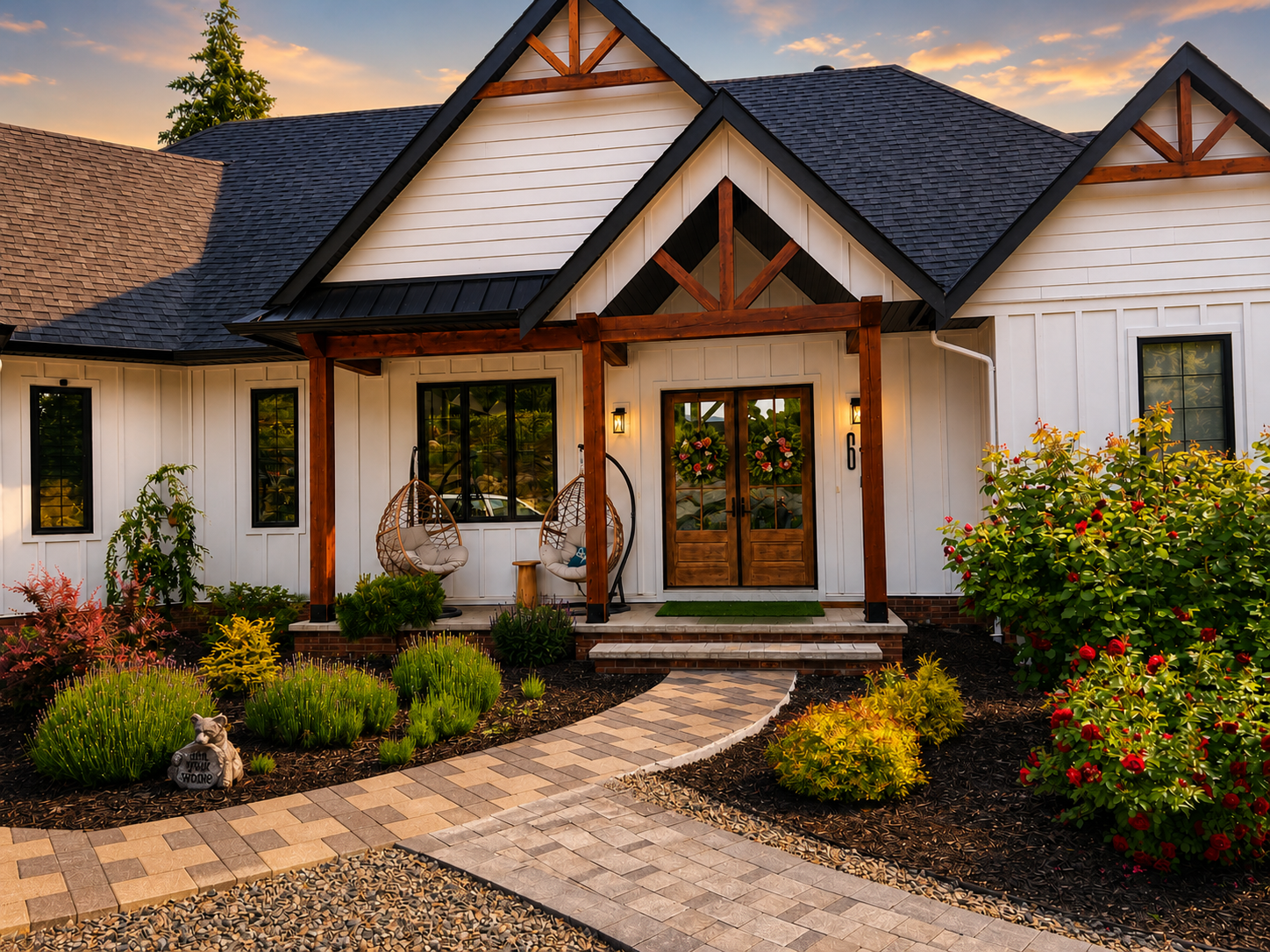
Stock photos and rendering-only portfolios tell you what a company can draw, not what they can build. Ask to see photos of finished projects, ideally ones completed more than a year or two ago so you can see how the work has held up through at least one winter. Local work matters specifically because retaining walls, patios, and plantings that perform well in a coastal or prairie climate don’t necessarily perform the same way through an Okanagan freeze-thaw cycle. A company with a visible gallery of completed local projects is showing you evidence, not just claims.
Reviews You Can Actually Verify
Testimonials on a company’s own website are easy to curate. Third-party reviews on Google are harder to fake at volume and let you read the specifics — what the client actually said about communication, timeline, and how issues were handled, not just a five-star rating with no detail. Kalagan Outdoor Design currently holds
How Long They’ve Been in Business
Longevity isn’t everything, but it’s a real signal. A company that’s been operating continuously for several years has weathered slow seasons, difficult clients, and at least a few projects that didn’t go perfectly — and is still standing. Kalagan Outdoor Design was founded in 2018 in Vernon, BC, and has been doing design-build work in the Okanagan continuously since. Ask any company you’re considering how long they’ve operated under their current name in your area, and be cautious of companies that have recently rebranded or restructured without a clear explanation.
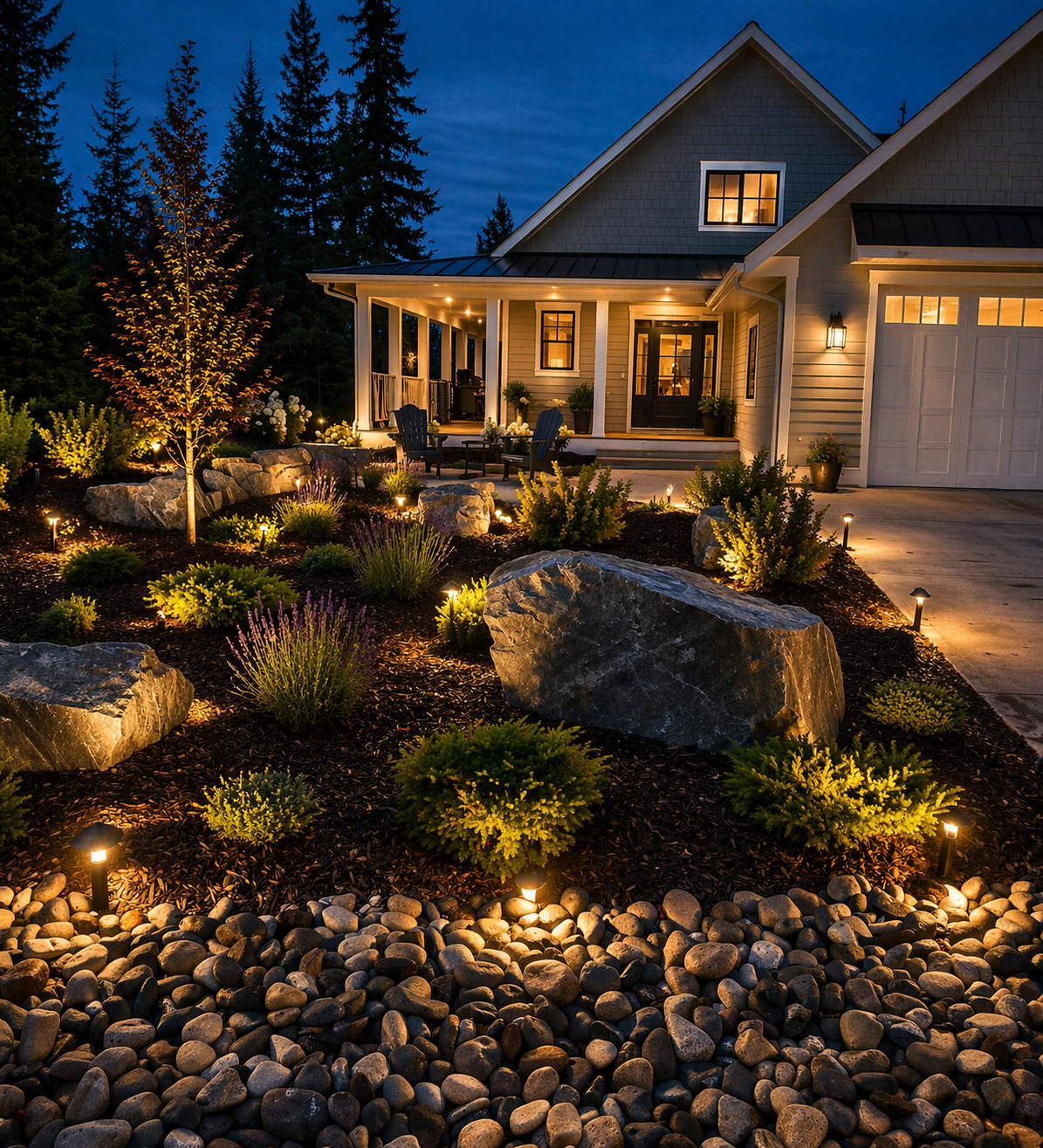
A finished front-yard landscape by Kalagan Outdoor Design
Okanagan-Specific Factors for Landscape Design
Local experience is not a nice-to-have in this region, it’s a functional requirement. The valley’s freeze-thaw cycles are hard on rigid materials and poorly built bases, so a company needs a real track record of retaining walls, patios, and pathways that have survived multiple winters here, not just design experience from a different climate. Many Okanagan lots also involve real slope and hillside grading, which changes drainage, excavation cost, and structural requirements for retaining walls in ways that flat-lot experience doesn’t prepare a contractor for. The region’s semi-arid climate and water-use patterns matter for planting design and irrigation planning, and properties in wildfire-interface areas benefit from a company that understands FireSmart principles as part of the overall design, not as an afterthought. When you’re comparing companies, ask specifically about their experience with Okanagan winters, slopes, and water use — the answer tells you a lot about whether their portfolio photos reflect real local conditions or work done somewhere easier.
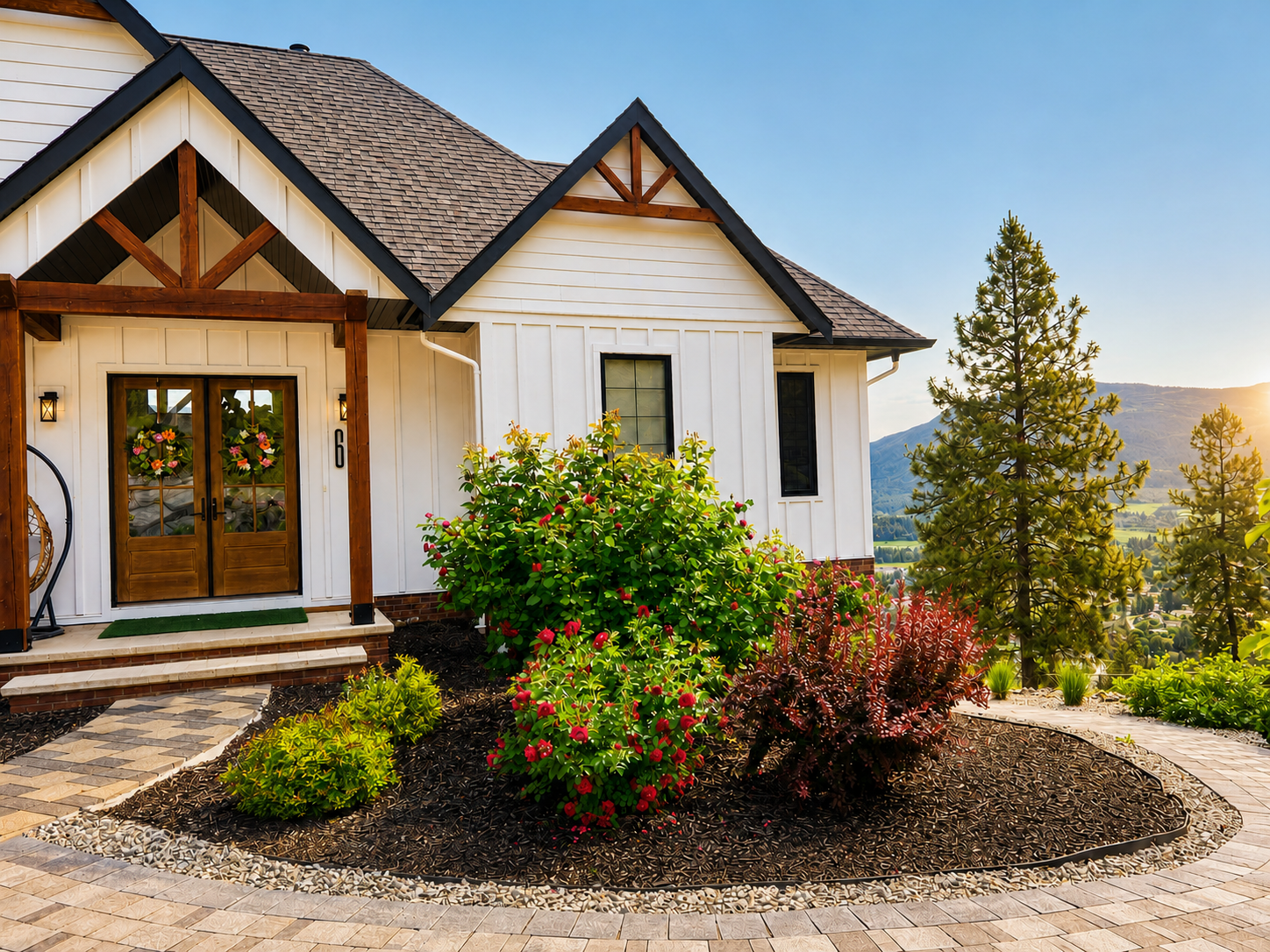
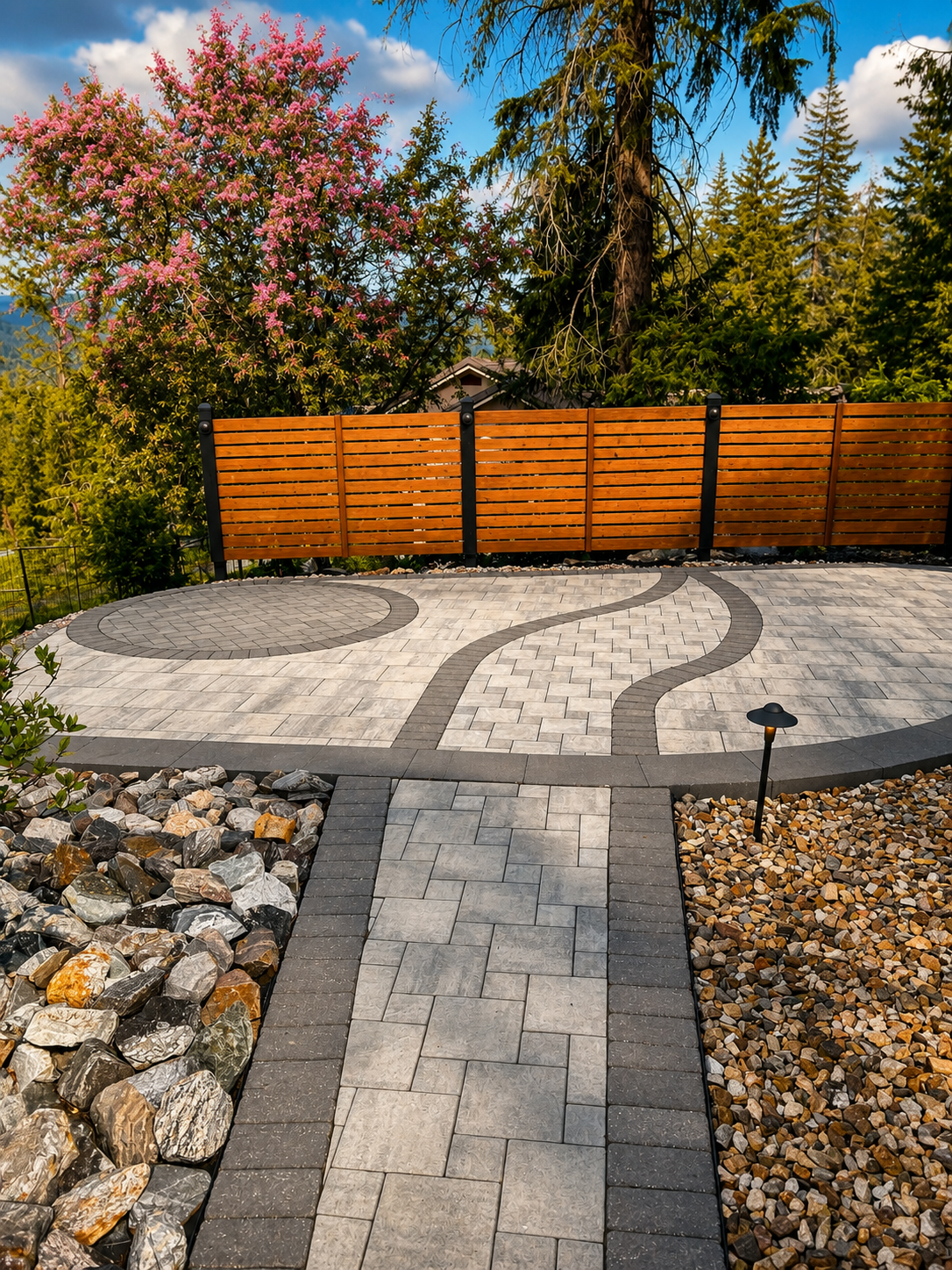
Read more about Kalagan’s background and approach on our About page, and see the specifics behind our trust markers on the Certifications & Guarantees page, including our BBB A+ rating. Once you’ve picked a company, the next decisions are usually material trade-offs — our guides on Pavers vs. Concrete for Okanagan Patios, Block vs. Natural Stone Retaining Walls, and Artificial Turf vs. Sod for BC Lawns walk through the comparisons most clients face next.
Ready to Talk to a Local Design-Build Team?
See how Kalagan measures up on the points in this guide, then book a consultation to talk through your project.
Explore This Service → Book a Consultation