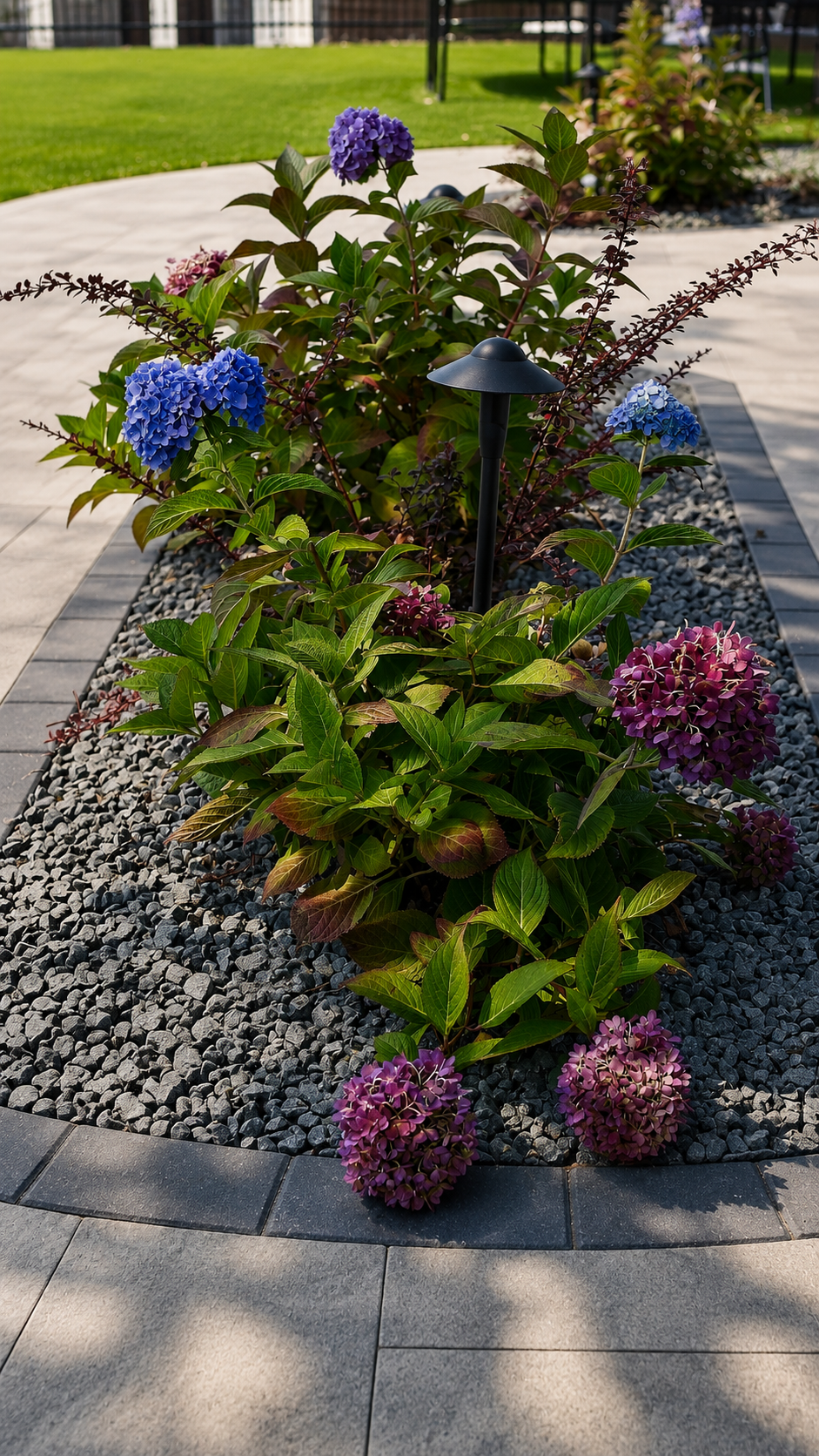
Cost of Xeriscaping vs. a Traditional Lawn
A full xeriscape conversion in the Okanagan typically runs $12,000–$75,000+ ($18–45 per sq ft depending on finish level), well above the upfront cost of a sod lawn. The trade-off: xeriscaping is a one-time investment that lowers irrigation demand and upkeep for the life of the landscape, while a traditional lawn is cheaper to install but keeps drawing on water, time, and equipment every single season.
What Xeriscaping Actually Costs
Xeriscaping is a full landscape conversion — not just swapping grass for gravel. Pricing scales with how much of the design relies on drought-tolerant planting alone versus hardscape features layered in:
- Basic conversion — $18–25/sq ft: Turf removal, soil prep, drip or low-volume irrigation, mulch, and a core planting palette of drought-tolerant shrubs, grasses, and perennials.
- Complete installation — $25–35/sq ft: Broader plant variety, defined planting beds, pathways or stepping-stone work, and more refined irrigation zoning.
- Premium xeriscape — $35–45+/sq ft: Boulder placement, accent lighting, and mature or specimen plants for a landscape that looks established from day one.
Most Okanagan properties land in the $12,000–$75,000+ total range once front and back yard areas, slope, and existing material removal are factored in. These are early budget ranges, not formal quotes — final pricing depends on site access, existing conditions, excavation, grading, drainage, material selections, and the final approved design. Sites with limited access run +10–20% higher, and removing existing lawn, old irrigation, or hardscape typically adds +10–25%.
What a Traditional Lawn Costs — and Keeps Costing
A sod lawn is almost always the cheaper option to install. The real cost comparison isn’t install day — it’s everything after. A traditional lawn needs an irrigation system sized to keep grass green through Okanagan summers, and that system runs regularly from spring through fall for as long as the lawn exists. Add in the fact that turfgrass is one of the thirstiest plantings a property can have, and a lawn’s water demand compounds year after year in a way a xeriscape planting palette simply doesn’t.
Xeriscaping doesn’t eliminate irrigation — drought-tolerant plants still need water, especially while establishing — but a well-designed xeriscape meaningfully reduces long-term irrigation water use compared to a full lawn of the same area, because the plant palette is chosen specifically to thrive on less water once established. That’s the core of the cost trade-off: pay more upfront to redesign the water demand out of the landscape, or pay less upfront and carry a higher water draw indefinitely.
Which One Actually Makes Sense
If budget is the only factor and the yard is small, a traditional lawn install will beat a xeriscape on day-one cost every time. But for larger areas, hillside or boulevard strips that are awkward to irrigate evenly, or properties where reducing water use over time is a real priority, xeriscaping’s higher upfront number is the point — it’s designed to bring the ongoing cost and water demand down for good. Many Kalagan clients also xeriscape only the highest-water-use zones of a property (south-facing slopes, boulevard strips, side yards) and keep a smaller functional lawn area for kids or pets, which blends the two approaches.
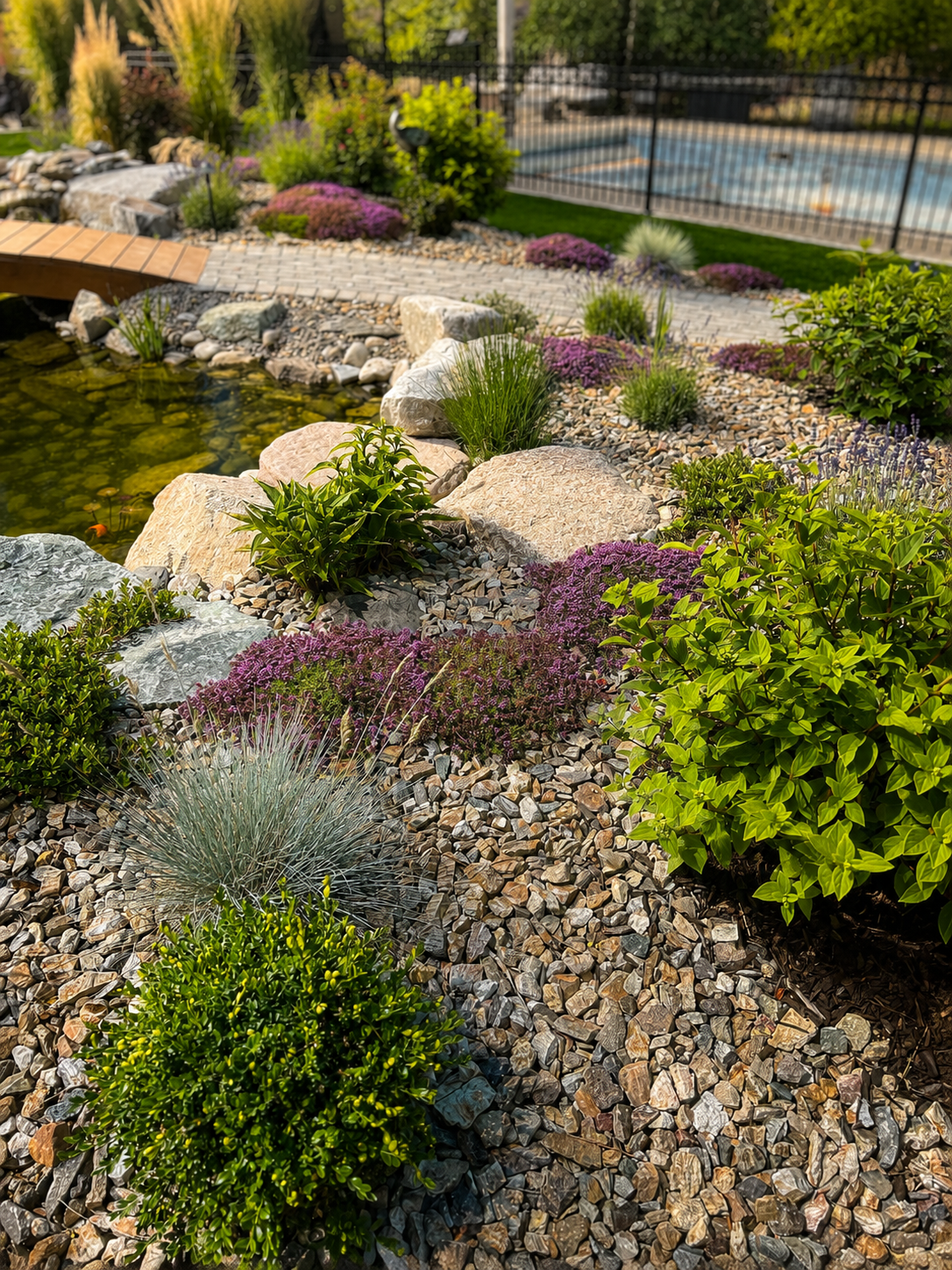
A finished planting bed by Kalagan Outdoor Design
Okanagan-Specific Factors for Planting & Xeriscape Design
The Okanagan’s semi-arid climate is exactly why this comparison matters more here than in wetter parts of the country. Vernon and the surrounding valley see hot, dry summers, and municipal water restrictions are common in peak season, which can limit how often a traditional lawn can legally be watered right when it needs it most. A xeriscape planting palette selected for BC interior hardiness zones sidesteps a lot of that pressure, since the plants are chosen to hold up under restricted watering rather than fight against it. Site grading matters too — sloped properties lose water to runoff faster than flat ones, so drip and low-volume irrigation (standard on a xeriscape conversion) puts water where roots actually are instead of where gravity takes it. Drought-tolerant xeriscape plantings also tend to align well with FireSmart-conscious landscaping goals around a home’s perimeter, since low-moisture-demand plants selected for resilience often double as lower fuel-load choices — though FireSmart defensive landscaping is its own separate scope of work with its own design requirements.
See the full Xeriscaping & Planting Design service page for the design process and plant palette options. If you’re weighing a xeriscape conversion against other hardscape investments, our Cost of a Paver Patio in the Okanagan and Cost of a Retaining Wall in BC guides break down similar per-square-foot pricing. And if you’re still at the planning stage, Cost of Landscape Design: 2D vs 3D vs Oculus Quest explains how a proper design fits into the budget before construction starts.
Ready to Get a More Accurate Estimate?
Every property’s water use, slope, and planting needs are different — talk to our team about what a xeriscape conversion would look like for your yard.
Get a More Accurate Project Estimate → Book a Consultation