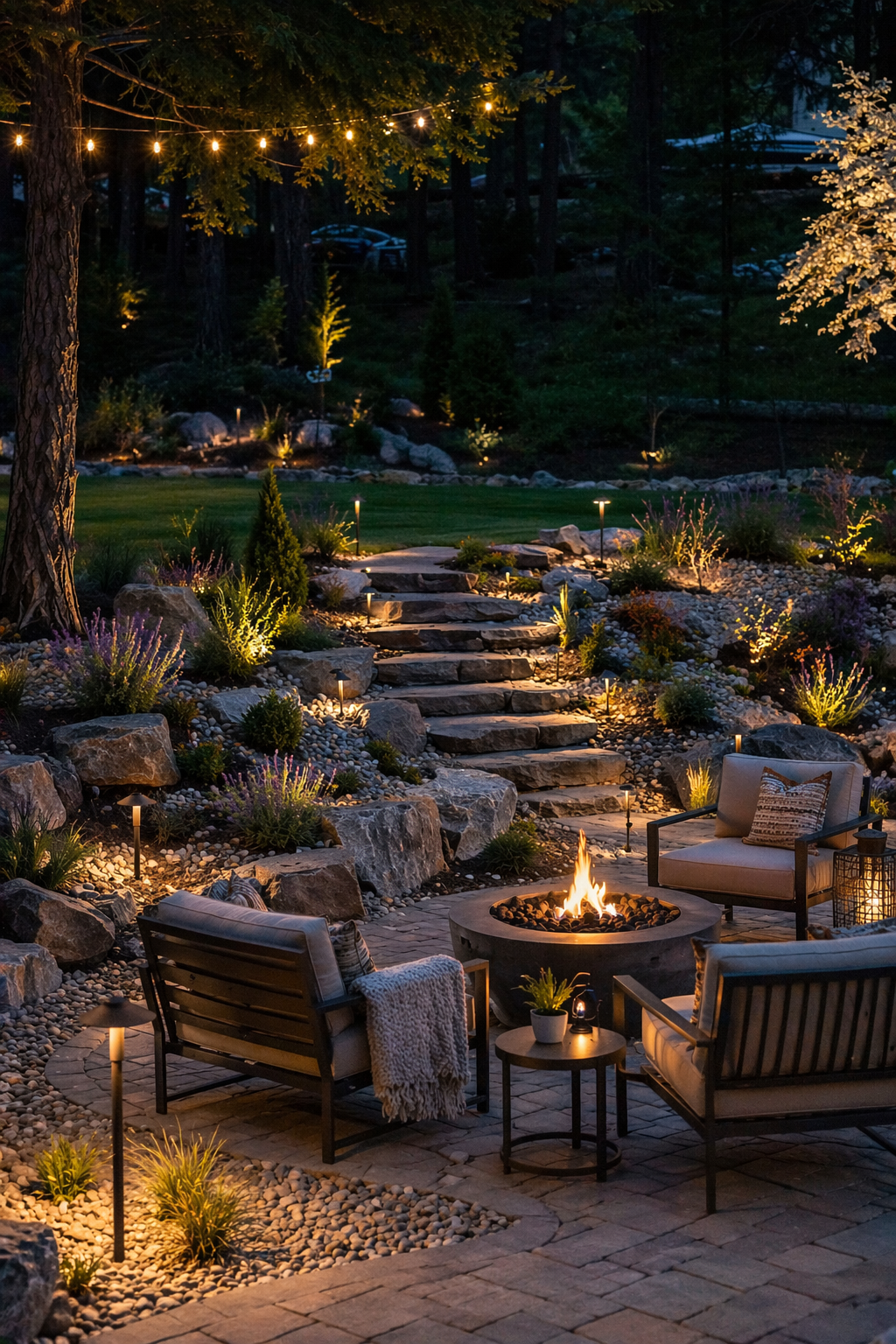
Landscape Lighting: LED vs. Low-Voltage
Nearly all professionally installed landscape lighting today is both low-voltage and LED — the real comparison isn’t LED vs. low-voltage, it’s LED fixtures vs. older halogen low-voltage fixtures. LED wins on energy use, bulb life, and long-term cost; halogen still shows up in budget kits and older installs because the upfront fixture cost is lower.
Clearing Up the Terminology
“Low-voltage” describes the electrical system — a transformer steps household 120V current down to a safe 12V (sometimes 15V) that runs through direct-burial cable to each fixture. “LED” and “halogen” describe the bulb, or lamp, inside the fixture. Almost all outdoor landscape lighting, whether it uses LED or halogen bulbs, is low-voltage; line-voltage (120V) fixtures exist but are far less common in residential landscape work because low-voltage is safer to install, cheaper to wire, and easier to bury near plant beds and walkways. So the practical decision homeowners are actually making is which type of bulb goes into a low-voltage system — not whether to go low-voltage at all.
Energy Use
This is where the two technologies separate the most. A typical halogen landscape bulb draws 20-50 watts per fixture. The equivalent LED fixture producing comparable light output draws 2-9 watts. Across a system of 15-20 fixtures running 5-6 hours a night, that difference adds up to a meaningful line item on a power bill over a year, and it also means an LED system can run more fixtures off the same transformer and cable run without needing to upsize either.
Bulb Life and Maintenance
Halogen landscape bulbs typically last 1,000-2,500 hours — roughly 1 to 3 seasons of typical evening use — before they need replacing. Quality LED landscape fixtures are rated for 30,000-50,000+ hours, which works out to 15-25+ years of typical use. In practice this means a halogen system needs bulbs swapped out repeatedly over its life (and fixtures are often mounted in garden beds, at the base of trees, or up in soffits, so each swap is a small chore), while a well-installed LED system is close to maintenance-free for the life of the fixture.
Brightness and Colour Options
Halogen produces a warm, familiar incandescent-style glow, but it’s fixed — you get one colour temperature, and dimming it shortens bulb life further. LED fixtures are available across a wide range of colour temperatures, from warm 2700K (matching traditional halogen warmth) up through crisp 4000K daylight tones, and many professional-grade fixtures now offer integrated dimming or even colour-changing capability without any loss of bulb life. LEDs also produce more usable light per watt (higher lumens-per-watt efficacy), so a lower-wattage LED fixture can match or exceed the brightness of a much higher-wattage halogen one.
Heat and Safety
Halogen bulbs run hot enough to be a genuine burn hazard on contact and can scorch nearby mulch, leaves, or low-hanging branches if a fixture is aimed or positioned poorly. LEDs run cool by comparison, which makes them safer near plantings, kids, and pets, and gives more flexibility in how tightly a fixture can be tucked into a planting bed.
Upfront Cost vs. Long-Term Cost
Halogen fixtures and bulbs are generally cheaper to buy off the shelf, which is why they still show up in big-box lighting kits and older installed systems. LED fixtures carry a higher upfront cost per fixture. Over a 15-20 year horizon, though, LED typically comes out ahead once you account for the electricity saved and the bulbs that never need replacing — a halogen system’s ongoing bulb and energy costs tend to overtake the LED price difference within the first several years. As a general reference point, a full outdoor lighting project in our service area runs $4,500-$8,000 for 6-10 fixtures, $8,000-$15,000 for 11-20 fixtures, and $15,000-$30,000 for 21-35 fixtures, with custom estimates for larger systems — these are early budget ranges, not formal quotes, and final pricing depends on site access, existing conditions, excavation, grading, drainage, material and fixture selections, and the final approved design.
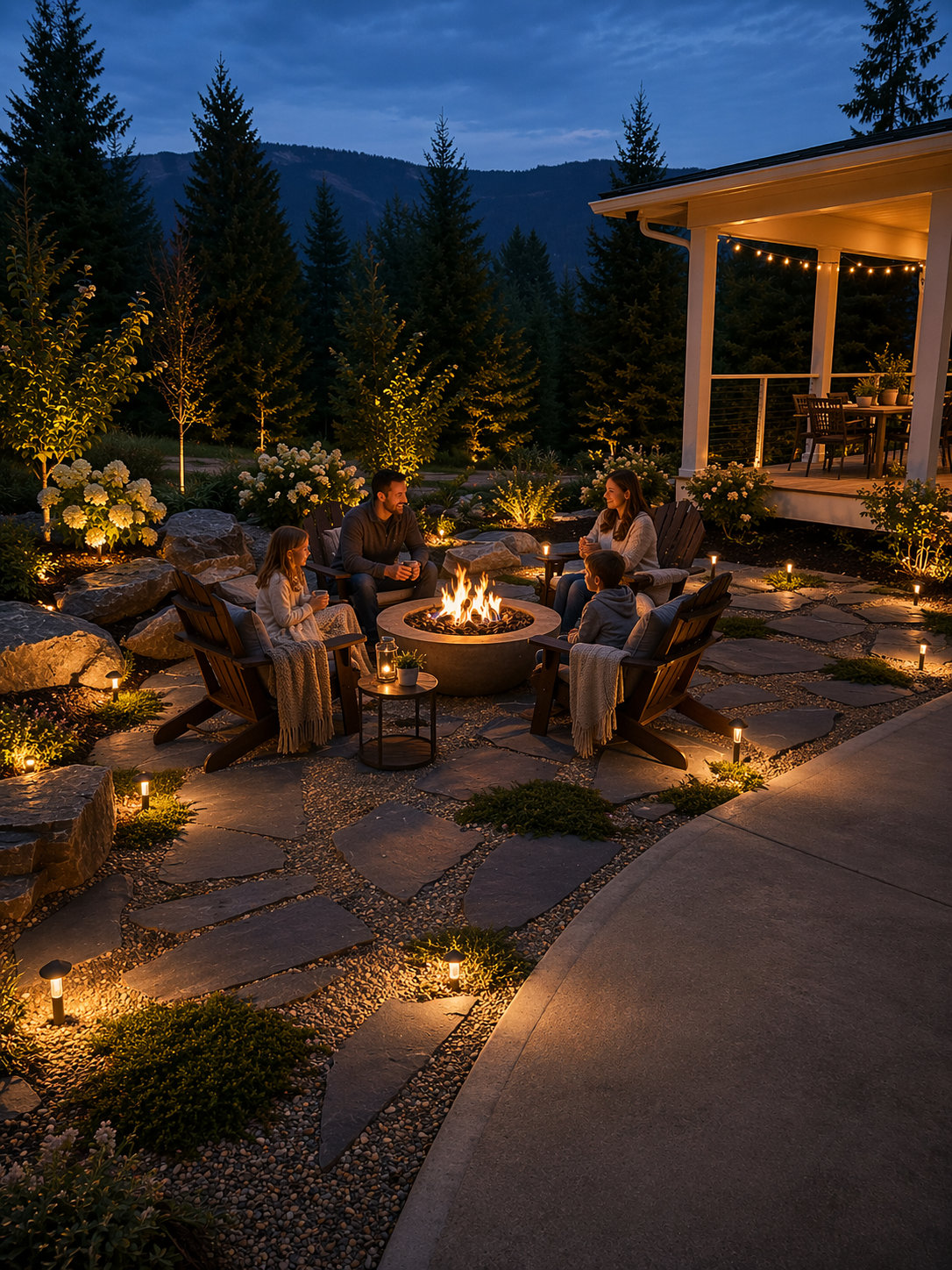
Architectural landscape lighting by Kalagan Outdoor Design
Okanagan-Specific Factors for Landscape Lighting
Vernon and the wider Okanagan see wide seasonal temperature swings, from hard winter freezes to hot, dry summers, and that freeze-thaw cycling is tough on fixtures with fragile components or poor seals. LED fixtures generally handle cold starts better than halogen, since they don’t rely on a heated filament, and their lower heat output means less thermal stress on the fixture housing through repeated freeze-thaw cycles. On sloped or terraced Okanagan properties, where fixtures often need to run longer distances from the transformer to light stairs, retaining walls, or a lower patio level, LED’s lower current draw also matters practically: it reduces voltage drop across long cable runs, which keeps fixtures at the far end of a run from looking noticeably dimmer than fixtures near the transformer. Long summer daylight hours in the interior also mean lighting systems here get used efficiently rather than constantly, which further favours the low running cost and long bulb life of LED over a halogen system that would otherwise need frequent bulb changes each season.
See Real Lighting Projects
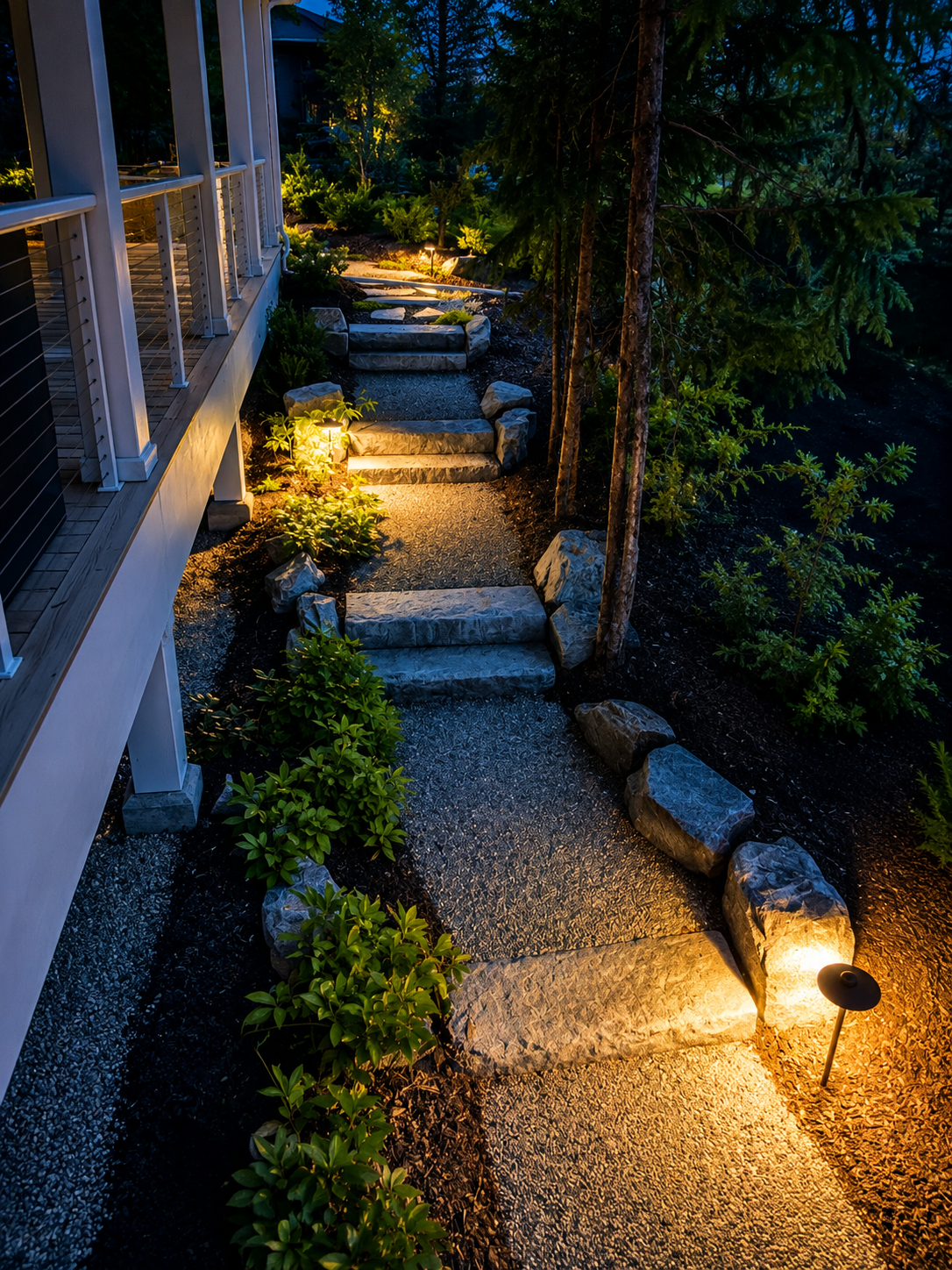
For the full range of fixtures, layouts, and pricing tiers we install, see our Outdoor Lighting service page. If you’re weighing other material decisions for the same project, our guides on Pavers vs. Concrete for Okanagan Patios and Artificial Turf vs. Sod for BC Lawns cover similar upfront-cost-vs-long-term-value tradeoffs for other parts of your yard.
Ready to Get a More Accurate Estimate?
Tell us how many fixtures and what areas of your property you’re looking to light, and we’ll put together a real project estimate built on LED fixtures from the start.
Get a More Accurate Project Estimate → Book a Consultation