Understanding weather conditions is crucial for successful concrete curing, impacting the longevity and durability of your outdoor spaces. Weather drives how concrete cures; get it wrong and you shorten the life of patios, driveways, and walls. In the Okanagan Valley, plan your pour and your protection to match heat, cold, wind, and rain for long-term performance.
The real choice: poured slab or paver system?
If you need a hard surface this season, you’re weighing two practical paths: poured concrete slab or interlocking pavers. A poured concrete slab is strong, monolithic, and cost-effective at scale, but it is highly sensitive to temperature, humidity, wind, and precipitation during early curing. On the other hand, interlocking pavers are factory-cured units that eliminate slab curing risk; while weather still matters for base preparation and joint stabilization, you’re not protecting a chemical cure in the ground.
If your schedule or site makes weather control tricky, pavers reduce the failure modes tied to curing while still delivering design flexibility. To see what that looks like locally, explore Paver Patios & Driveways in Kelowna, BC.
What does weather actually do to fresh concrete?
Heat speeds up set and evaporation, which can cause plastic shrinkage cracking and weaker near-surface paste if not managed. Cold slows hydration; early-age freezing can permanently damage the matrix. Wind increases evaporation and surface cooling, raising cracking risk without proper curing measures. Rain can weaken the surface and disrupt finish if it hits before the slab has set; runoff can contaminate or pit edges.
These aren’t abstract risks; they are why timing, protection, and patience matter.
DIY pour or professional oversight?
DIY is realistic when you can control placement time, shade, wind breaks, surface moisture retention, and temperature moderation, and you’re ready to postpone if the forecast shifts. Professional oversight becomes the smarter call when the pour is large, access is tight, edges are exposed to wind, or the calendar forces work in heat waves or cold snaps. A pro can stage, pace, and protect the work so the critical first 48 hours go to plan.
If a move-in or event date is driving your decision, it helps to understand sequencing. This guide on how long a paver patio installation takes outlines weather-related timing considerations that also apply to site prep for slabs.
PAA: Can I pour a DIY patio in peak summer and still get a durable finish?
Yes, if you can place early or late in the day to avoid peak heat, provide shade and wind screening, maintain surface moisture without washing out paste, and keep foot traffic, pets, and sprinklers off until the surface is ready. If that sounds like too many plates to spin, a paver system sidesteps slab curing while still delivering a refined look. Review local options under Paver Patios & Driveways in Kelowna, BC.
PAA: Will weather derail a retaining wall project?
It can, depending on design. Segmental block walls (with proper base, drainage, and geogrid where specified) aren’t dependent on a large, field-cured concrete mass, so scheduling can be more forgiving than a poured wall. If your design includes cast-in-place elements or concrete footings, you’ll need temperature and moisture controls, and the patience to wait for strength gain before backfilling.
If your hillside or lakeside lot adds exposure to wind and runoff, bring that up early while you review Retaining Walls in West Kelowna. The layout, drainage, and staging plan should reflect those conditions.
PAA: Do pavers avoid all weather risk?
Not all of it. You avoid slab curing, but you still need a stable, well-compacted base at the right moisture content, dry, calm weather for polymeric joint sand to set, and protection from heavy rain that can wash bedding or joints before lock-up. The advantage is that you can stage work around short windows more flexibly than with a slab that depends on uninterrupted curing.
PAA: How does curing affect outdoor kitchens and built-ins?
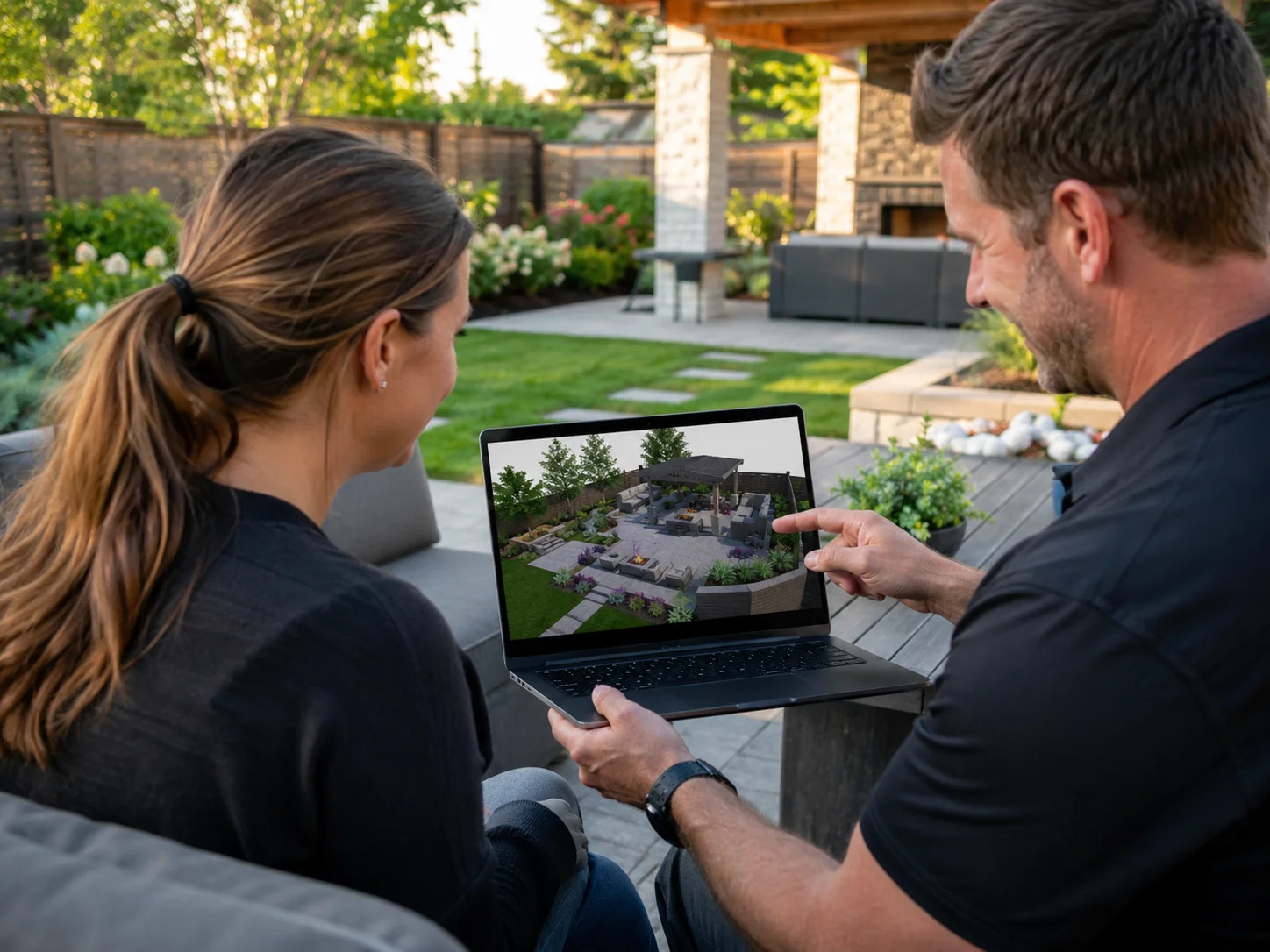
Any structure that bears on a slab or sits over a paver field depends on a stable foundation. The safe rule: anchor heavy features only after the base reaches its intended performance, either the slab has cured sufficiently, or the paver system is compacted, edged, and jointed per spec. If you’re planning appliances, seating walls, or a grill station, align that timeline with the weather window for the base. For design-first planning that lets you visualize footprints and clearances before you commit, take a look at 3D Landscape Design in Kelowna.
Quick decision rules for Weather and Curing for Concrete Success in Okanagan Valley
If you can’t confidently control temperature, wind, and moisture for two days after placement, rethink a slab or reschedule. If the calendar is tight, a paver installation reduces curing risk and offers phasing flexibility. If your project includes walls or built-ins, let the foundational element reach its target readiness before loading or backfilling. When in doubt, prioritize protection over speed. A day of delay beats years of premature maintenance.
Choosing between a poured slab and a paver system isn’t just about look and cost, it’s about how much weather risk you can realistically manage on your site and schedule. Aim for the option that keeps curing (or its equivalent) under control, and you’ll get the durable, low-maintenance outdoor space you wanted in the first place.