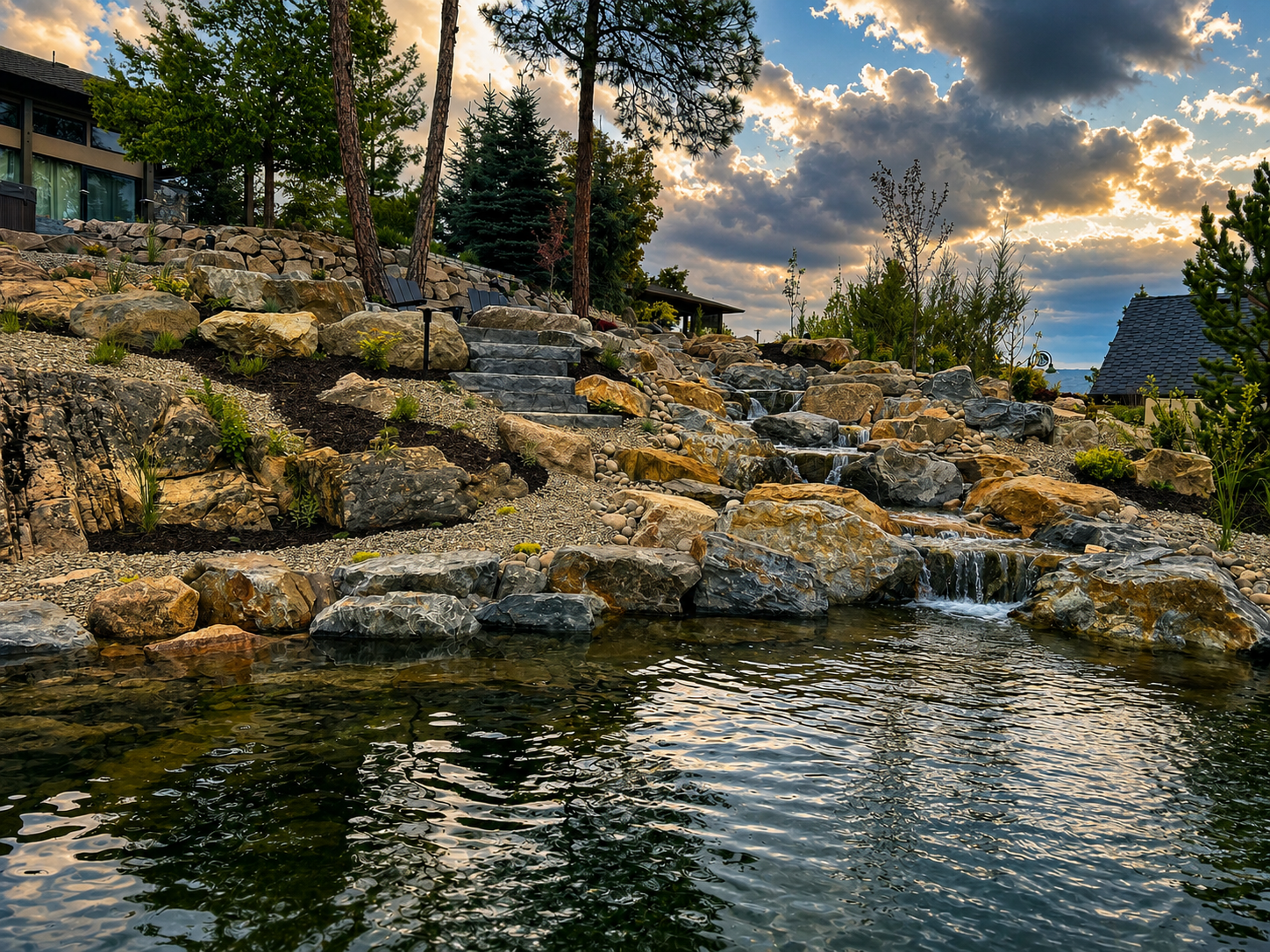
Pondless vs. Full Pond Water Features
A pondless waterfall gives you the sound and look of moving water with no open water for kids or pets to fall into, less maintenance, and a lower starting cost around $20,000–$35,000. A full ecosystem pond adds fish, aquatic plants, and a larger visual centerpiece, but comes with more upkeep and a wider price range of roughly $20,000–$150,000+ depending on size and complexity.
How They Actually Compare
Both features use the same core mechanics — a pump recirculates water over rock and gravel to create a waterfall or stream. The difference is what happens at the bottom. A pondless waterfall directs the water into a hidden underground reservoir (a buried basin filled with gravel or a storage vault), so there’s no standing pool at the surface. A full pond directs that same water into a visible basin lined with fish-safe liner, holding anywhere from a few hundred to several thousand gallons of open water.
Safety
This is usually the deciding factor for families with young children or dogs. A pondless waterfall has no open water deep enough to be a drowning hazard — the reservoir is buried beneath rock, so there’s nothing for a toddler or pet to fall into. A full pond, even a modest one, is open water and needs to be treated the same way you’d treat a pool from a supervision standpoint. Some clients add safety netting or grating under the surface of a pond, which adds cost but doesn’t fully replace supervision.
Maintenance Burden
Pondless waterfalls are the lower-maintenance option by a wide margin. There’s no fish to feed, no water chemistry to balance, and far less debris collection since there’s no open surface for leaves and organic matter to settle into and decompose. Seasonal cleaning is mostly limited to clearing the intake grate and checking the pump. A full pond is a living ecosystem: it needs regular water testing, algae management, seasonal cleanouts, fish care if stocked, and winterizing procedures to protect fish and equipment through freeze-thaw cycles. If Kalagan didn’t offer ongoing maintenance service, this is worth factoring in up front — a full pond is a bigger long-term commitment than a pondless feature, whether you handle the care yourself or hire it out.
Cost
Pondless waterfalls and ponds fall in the same overall service category and price band, but scale differently. As an early budget range (not a formal quote):
- Small pondless waterfall or compact pond: $20,000–$35,000
- Medium ecosystem pond with waterfall: $35,000–$65,000
- Large pond, stream, or multi-waterfall system: $65,000–$150,000+
Pondless waterfalls tend to land at the lower end of this range for a given visual impact, since the build doesn’t need fish-safe liner sizing, biological filtration, or the excavation volume that a real pond basin requires. If you’re thinking bigger — a true recreational or estate-scale pond meant to anchor the whole backyard — that moves into a different tier entirely, in the $150,000–$500,000+ range; see Recreational Ponds for that scope. Final pricing for any water feature depends on site access, existing conditions, excavation, grading, drainage, material selections, engineering, and the final approved design.
Sound and Ambiance
Both deliver the sound of moving water, which is the main reason most clients want a water feature in the first place. A pondless waterfall can actually produce a more concentrated, louder splash for its footprint, since all the water is funneled through the drop rather than spreading across an open surface. A full pond adds a different kind of ambiance — reflections, aquatic plants like water lilies, and the movement of fish — that a pondless feature can’t replicate. If the primary goal is background sound near a patio or entry, pondless usually wins. If the goal is a living, visual centerpiece you can sit and watch, a full pond delivers more.
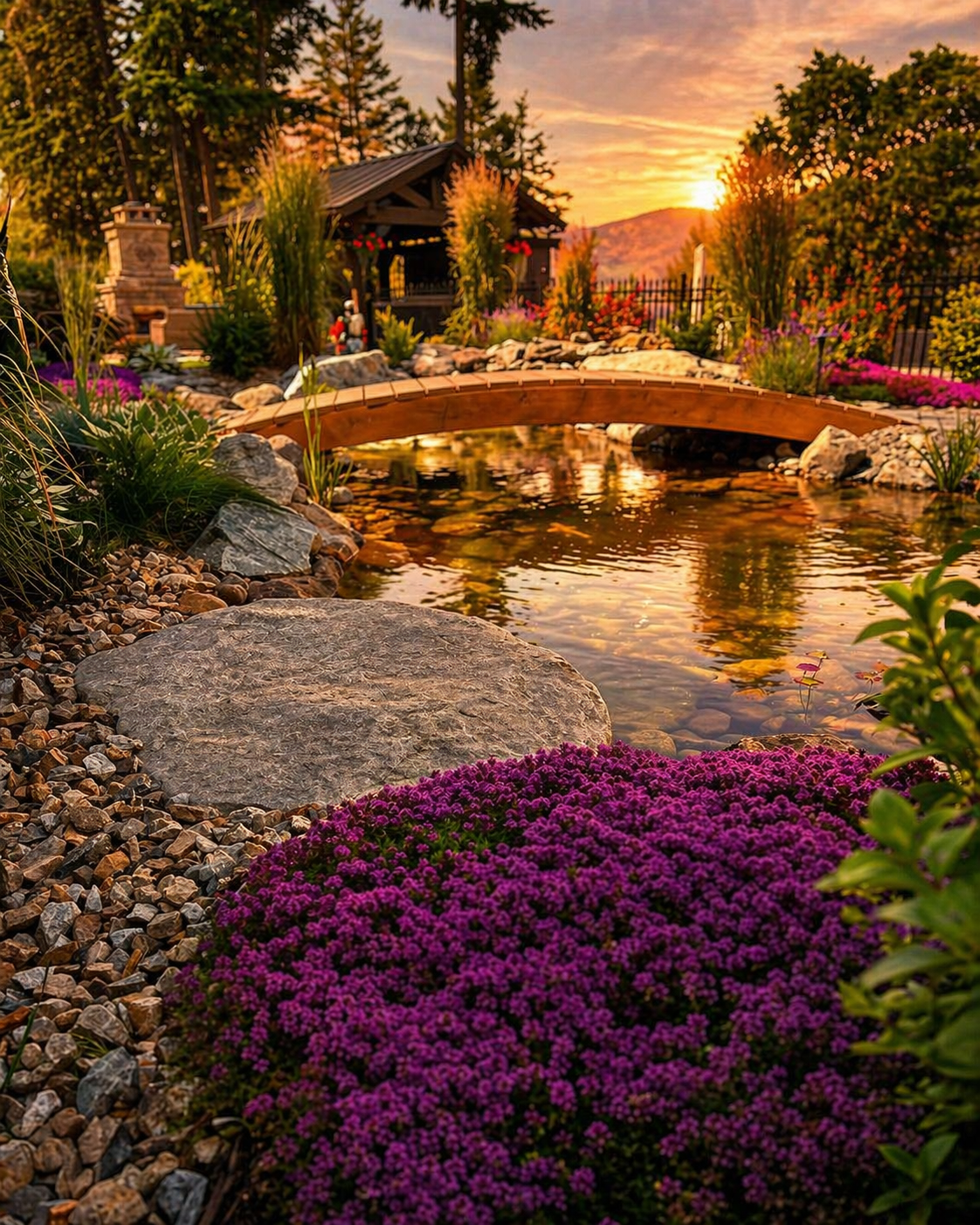
A custom water feature build by Kalagan Outdoor Design
Okanagan-Specific Factors for Water Features
Vernon and the wider Okanagan go through hard freeze-thaw cycles each winter, which matters more for a full pond than a pondless waterfall. Open water needs proper depth and aeration planning to keep fish safe through winter, and shallow ponds are more prone to ice damage to liners and edging. Pondless systems are simpler to winterize since there’s no fish to overwinter and less exposed water surface to manage. The region’s dry summers and water-use awareness are also worth considering: a full pond has a larger exposed surface area and loses more water to evaporation over the season than a pondless waterfall, which recirculates through a mostly enclosed reservoir and needs less frequent topping up. On sloped Okanagan properties, both feature types can work with the grade, but a pondless waterfall is often easier to tuck into a hillside without the excavation volume a full pond basin requires.
See Real Water Feature Projects
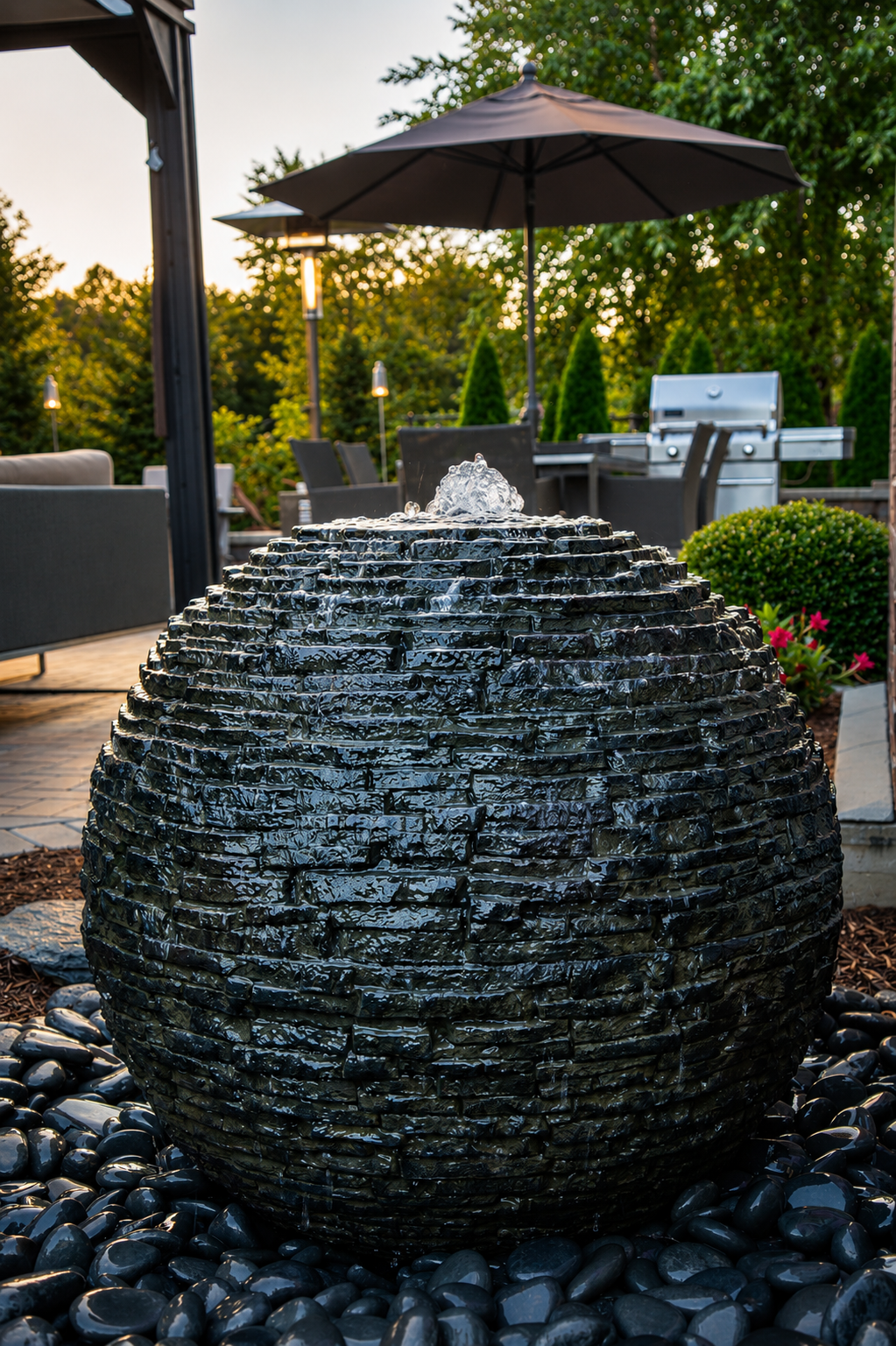
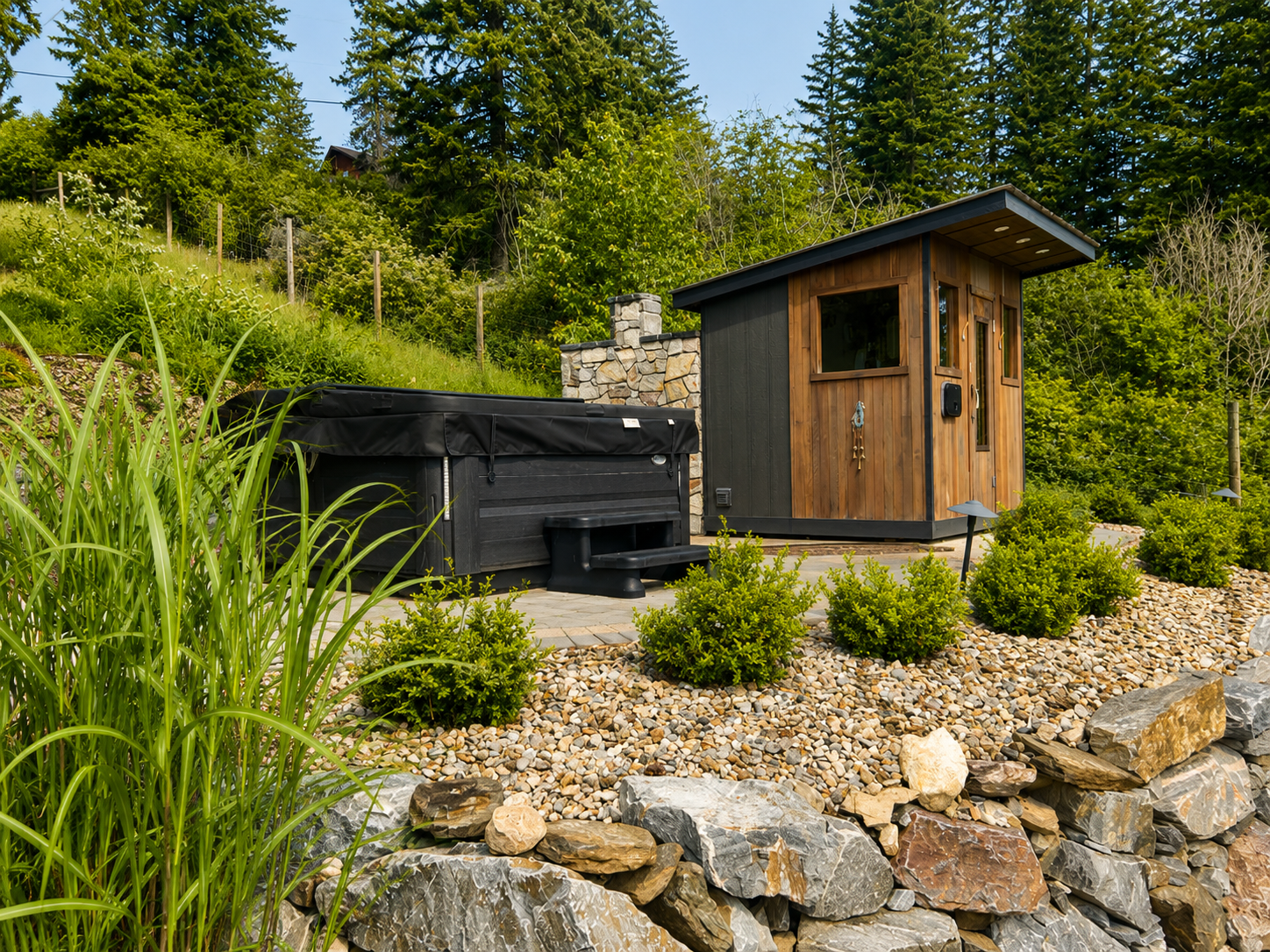
Explore the full range of options on our Water Features page, including Pondless Waterfalls and Recreational Ponds for larger-scale builds. If you’re weighing other big backyard decisions at the same time, see Fiberglass vs. Concrete vs. Plunge Pools and Pavers vs. Concrete for Okanagan Patios.
Ready to Get a More Accurate Estimate?
Tell us about your space and which type of water feature you’re leaning toward, and we’ll help you get a clearer picture of scope and cost.
Get a More Accurate Project Estimate → Book a Consultation