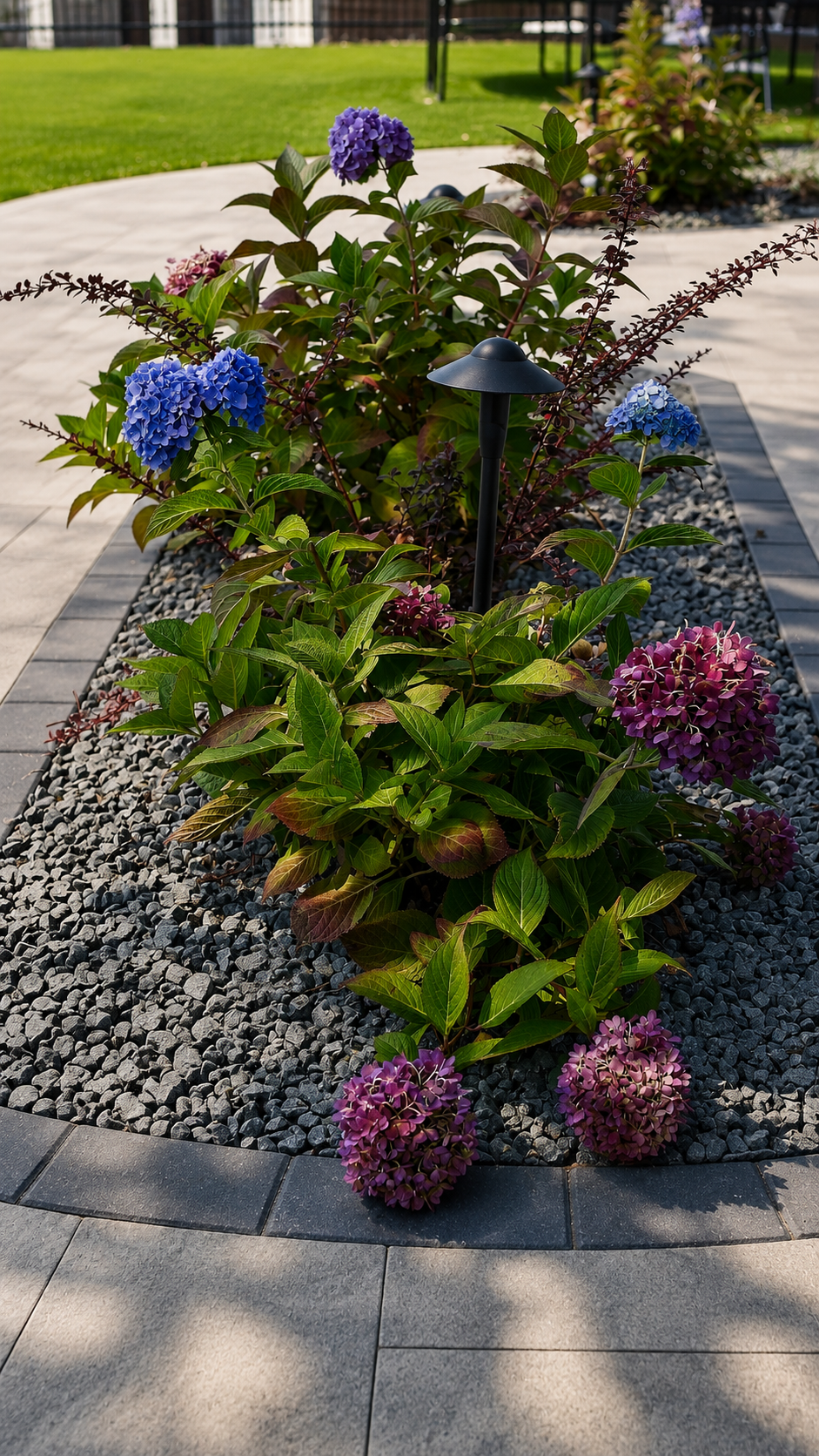
Spring Landscape Prep Checklist for the Okanagan
As soon as the ground thaws in the Okanagan, winter leaves its mark on hardscape, irrigation, and planting beds. This checklist walks you through what to inspect and in what order, so small issues from freeze-thaw cycles don’t turn into expensive repairs by summer.
1. Inspect Hardscape Before You Touch Anything Else
Freeze-thaw cycles are the single biggest stressor on paver patios, walkways, driveways, and retaining walls in this climate. Water gets into hairline gaps, freezes, expands, and pries joints apart over the winter. Before you turn on irrigation or start planting, walk your entire hardscape footprint and look for:
Paver surfaces that have shifted, sunk, or developed noticeable gaps between units — this usually points to base or edge restraint movement underneath, not just surface wear. Efflorescence (the white, chalky mineral bloom) on pavers or wall stone, which is cosmetic on its own but worth noting if it’s new or spreading. Cracks in poured concrete or mortar joints, especially at corners and steps where stress concentrates. And any bulging, leaning, or new gaps at the base of retaining walls — this is the one item on this list that is not a DIY fix. A wall that has moved over winter is a structural question, not a cosmetic one, and it’s worth having someone qualified take a look before you assume it will settle back into place.
2. Irrigation Startup: Do It Right the First Time
If your system was blown out properly last fall, spring startup should be straightforward, but rushing it is the most common way to blow a line. Bring the system back online gradually: open the main valve slowly rather than all at once, let the system pressurize before running a zone, and then run each zone individually while you watch for weak spray patterns, pooling water, or a zone that won’t come on at all. Any of those point to a line that cracked over winter, and it’s far easier to find and fix in April than to discover it in July when a section of lawn or a planting bed is suddenly dying for no obvious reason. Check backflow preventers and above-ground components for cracking too, since anything left exposed to freezing temperatures is the most vulnerable part of the system.
3. Planting Beds and Turf Cleanup
Once hardscape and irrigation are confirmed sound, move on to beds and turf. Clear winter debris and any matted leaf litter that trapped moisture against crowns and stems. Cut back perennials that were left standing for winter interest or wildlife value, but hold off on hard pruning of spring-flowering shrubs until after they bloom. Top-dress beds with compost or fresh mulch, keeping mulch pulled back a few centimetres from stems and trunks to avoid rot. Overwinter salt and sand from walkways tends to end up in adjacent beds and lawn edges — rake it out before it affects soil chemistry. For new plantings, timing matters: the safe planting window in the Okanagan generally opens once the risk of hard frost has passed, which is later at Predator Ridge and other higher-elevation properties than it is down in Kelowna or along the Vernon lakeshore.
4. Walk the Drainage
After a heavy snow year or a fast spring melt, take one more pass specifically looking at where water moves through your property. Standing water near a foundation or retaining wall base, erosion channels cutting through beds or turf, and downspouts that are dumping water somewhere they shouldn’t are all easier to solve in spring, before a summer thunderstorm turns a minor grading issue into a real one.
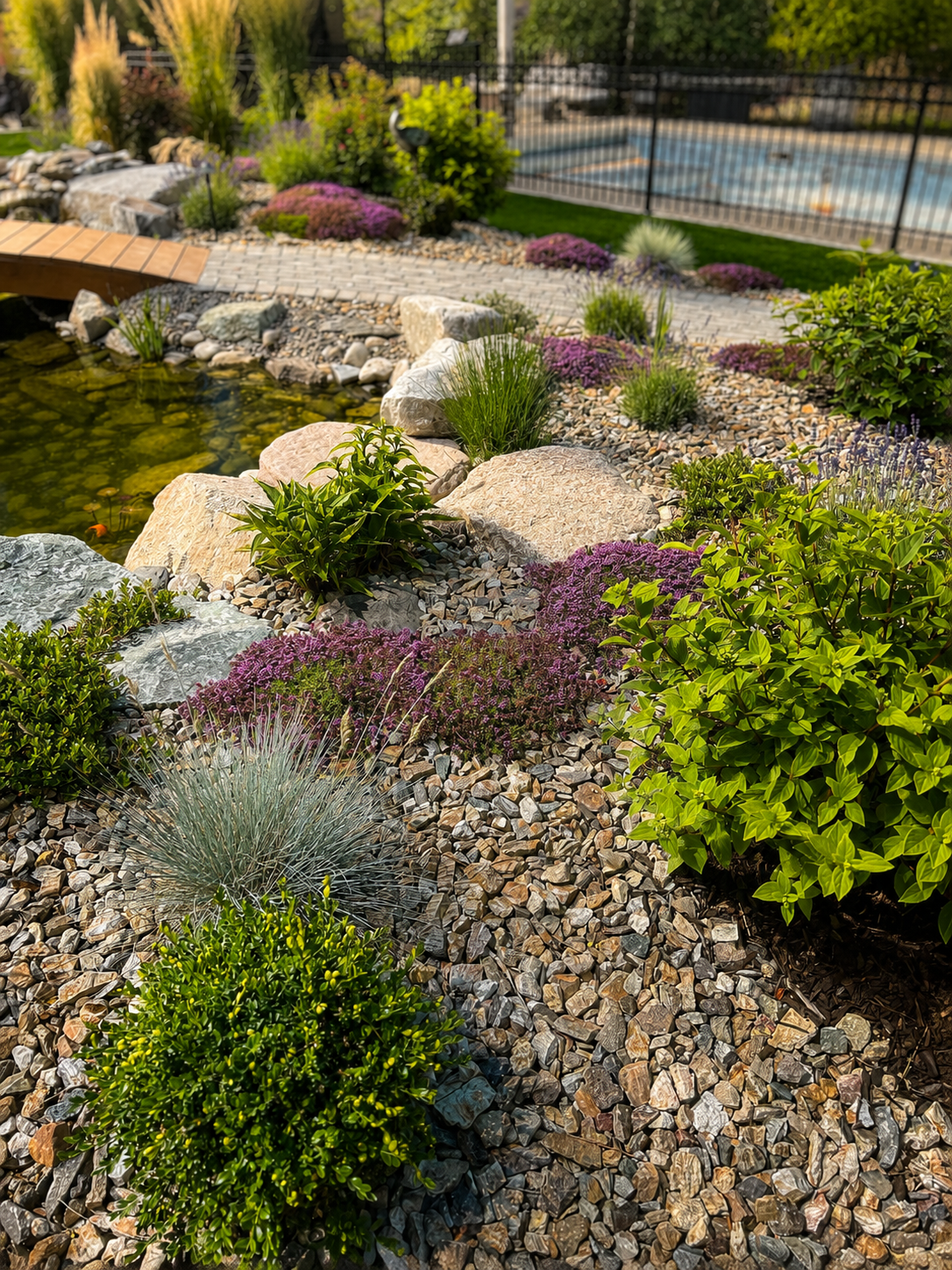
A finished planting bed by Kalagan Outdoor Design
Okanagan-Specific Factors for Planting & Xeriscape Design
The Okanagan’s spring timeline varies more by elevation and microclimate than many homeowners expect. Vernon and Coldstream properties, along with higher-elevation communities like Predator Ridge, typically see frost risk linger longer into spring than lakeshore properties in Kelowna or West Kelowna, so both irrigation startup and new planting should be timed to your specific site rather than a fixed calendar date. The valley’s freeze-thaw cycles — cold nights and sunny days that repeatedly freeze and thaw surface moisture — are also more aggressive on hardscape here than in milder coastal climates, which is exactly why the hardscape inspection step above deserves real attention rather than a quick glance. If your property backs onto forest interface, spring is also a practical time to review your defensible space, since dead fall growth and winter debris are exactly the kind of fuel that FireSmart guidelines ask you to clear.

If your spring inspection turns up wall movement or hardscape damage beyond a cosmetic fix, our Retaining Walls and Paver Patios & Driveways pages cover how we assess and rebuild those systems. For a deeper look at protecting hardscape before winter arrives again, see Fall Landscape Prep: Protecting Hardscape Through Winter. And if spring cleanup has you thinking about a larger project this year, When to Start Planning a Landscape Project in the Okanagan covers how to time that decision.
Found a Hardscape Problem That’s More Than Cosmetic?
If your spring walk-through turned up wall movement, sinking pavers, or drainage issues you’d rather have a professional assess, we’re happy to take a look.
Book a Consultation →