Fall Landscape Prep: Protecting Hardscape Through Winter
Okanagan winters put real stress on irrigation lines, paver surfaces, and retaining walls through repeated freeze-thaw cycles. A focused fall prep routine — done before the first hard frost — is the single best way to protect that investment and avoid avoidable spring damage.
Winterizing Irrigation Before the First Freeze
Water left sitting in irrigation lines is the number one cause of cracked pipes and blown fittings once temperatures drop below freezing. In the Vernon and greater Okanagan area, the safe window to have this done is typically before mid-October, since overnight lows can dip below freezing well before the calendar says “winter.” A proper blow-out uses compressed air to force residual water out of every zone, the backflow preventer, and the valves — a garden hose or gravity drain alone usually will not clear enough water to prevent damage. If you are not equipped to do this yourself, most irrigation contractors in the region offer a fall blow-out service; it is a quick, inexpensive visit compared to repairing a cracked mainline or a shattered backflow assembly in spring.
Freeze-Thaw Protection for Paver Patios, Driveways & Walkways
Freeze-thaw is a mechanical process: water works its way into small gaps or under paver joints, freezes, expands, and gradually pushes pavers out of level or opens up joint sand. A well-built paver system with proper base compaction and polymeric sand resists this far better than a poorly prepped one, but even a solid installation benefits from a few fall steps. Sweep leaves and organic debris off the surface so they do not trap moisture against the pavers or stain the surface as they decompose over winter. Check joint sand for gaps or erosion from summer rain and top it up before freeze-up — open joints let more water in, which means more freeze-thaw cycling underneath the surface. Confirm surface drainage is still directing water away from the patio rather than pooling on it; a spot that holds water in October will hold ice in January, and that ice is what does the damage.
Protecting Retaining Walls Through Winter
Retaining walls do real structural work holding back soil, and that soil holds water. As temperatures swing below and above freezing, saturated soil behind a wall expands and contracts, adding pressure exactly where you do not want it. Check that any drainage outlets, weep holes, or perforated drain pipe behind the wall are clear of debris so water can escape rather than build up. Look at the grading at the top of the wall — if soil has settled and now slopes toward the wall instead of away from it, water will pool right where it can do the most freeze-thaw damage. Small cracks, bulges, or a section that looks slightly out of plumb are worth a professional look before winter loads it further; catching a minor issue in October is a very different conversation than dealing with a failed wall section in April.
A Simple Fall Walk-Through Checklist
Walk your property once before the first hard frost and look at four things: irrigation (shut down and blown out), hardscape surfaces (clear of debris, joints intact, no standing water), retaining walls (drainage clear, grading correct, no new cracks), and general drainage (downspouts, swales, and low spots directing water away from structures). None of this requires special equipment, and most homeowners can do it in under an hour. It is the difference between hardscape that looks the same in five years and hardscape that needs early repair.
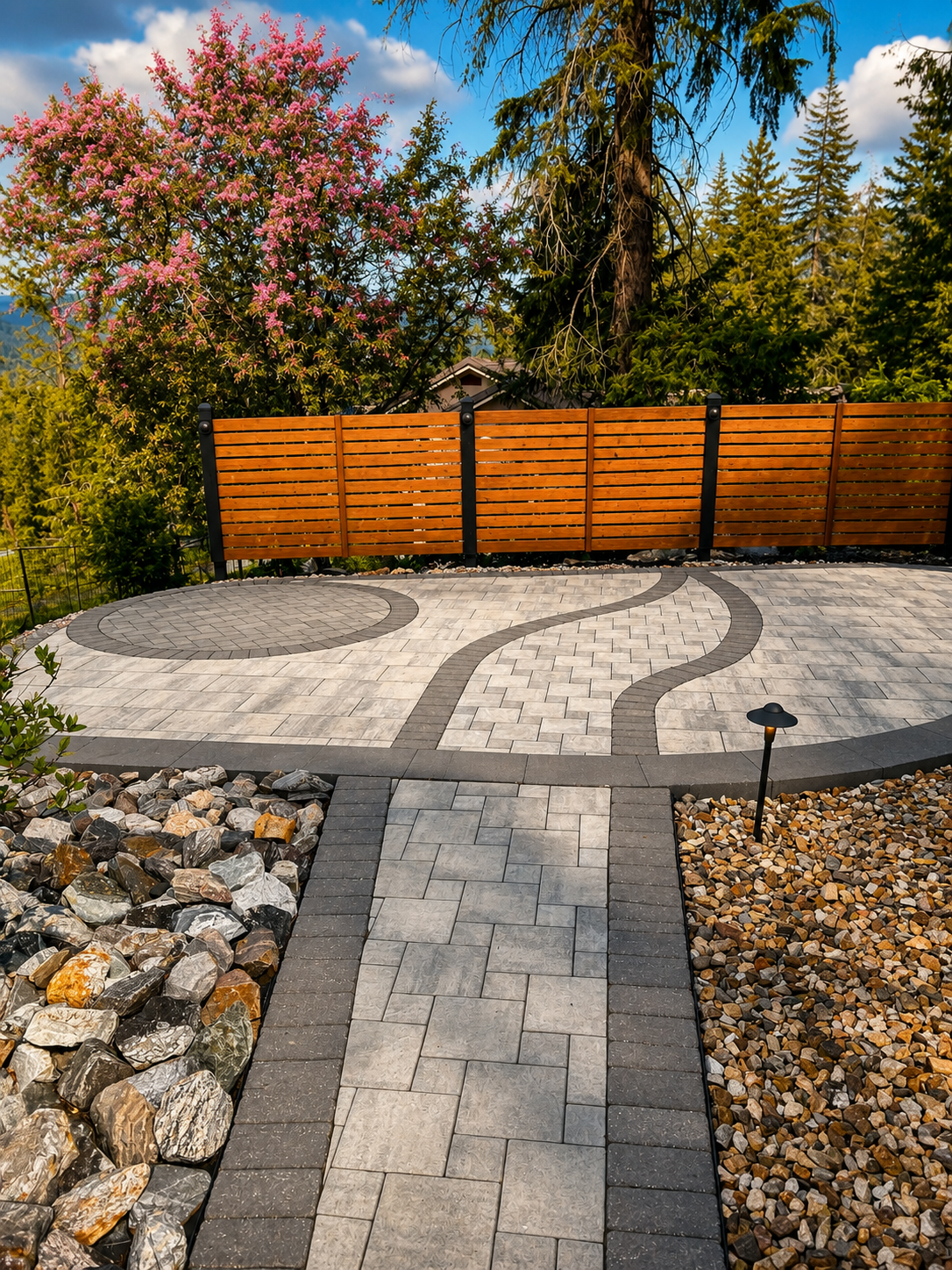
A completed paver hardscape build by Kalagan Outdoor Design
Okanagan-Specific Factors for Paver Patios & Driveways
The Okanagan’s freeze-thaw pattern is more punishing than a straightforward cold-and-stay-cold winter climate. Vernon, Kelowna, and the surrounding valley regularly see daytime temperatures climb above freezing even in January, only to drop back below zero overnight — sometimes repeatedly within a single week. Every one of those swings is another freeze-thaw cycle working on any water trapped in joints, cracks, or soil behind a wall. Add in the region’s clay-heavy soils in many areas, which hold and release water more dramatically than sandy soil, and the case for clearing water pathways before freeze-up gets even stronger. Properties at higher elevation or with more shade tend to hold frost and ice longer into spring, which extends the window during which trapped moisture can keep doing damage.
If freeze-thaw movement, drainage problems, or wall settling show up during your fall walk-through, it is worth having a professional assess whether the issue is cosmetic or structural — see our Retaining Walls page for what a properly engineered wall and drainage system looks like, and our Paver Patios & Driveways page for how base preparation and joint materials affect long-term freeze-thaw performance. Getting ready for the other end of the season? See our Spring Landscape Prep Checklist for the Okanagan, and if you are planning new hardscape or a wall rebuild, When to Start Planning a Landscape Project in the Okanagan covers timing it around the seasons.
Noticing Wall Movement or Paver Damage?
If your fall walk-through turns up cracking, settling, or drainage problems that look more than cosmetic, we are happy to take a look and tell you honestly what you are dealing with.
Book a Consultation →