What to Expect During a Landscape Build
A landscape build is a construction project that happens in your yard — and knowing what’s coming makes it far less stressful. Here’s how the process actually unfolds once contracts are signed, from the first excavator on site to the final walkthrough.
Before the Crew Arrives
Once your design is finalized and materials are ordered, we schedule a start date and walk you through logistics: where crews will park, which gates or fence panels may come down temporarily for equipment access, where soil and material will be staged, and which parts of your yard (and your neighbours’ sightlines) will be affected. If your project needs permits — a retaining wall over a certain height, work near a shoreline, or anything requiring municipal sign-off — that approval is confirmed before ground is broken. This is also when we flag utility locates, so digging doesn’t hit anything it shouldn’t.
Site Disruption: What’s Normal
A build site is not a showroom. For the duration of the project, expect fencing or barrier tape around the work zone, visible equipment (mini excavators, skid steers, plate compactors), stockpiled soil or gravel, and dust or mud depending on the weather. Grass adjacent to the work area may get compacted or worn from foot traffic and equipment turns — this is typically repaired or reseeded as part of final cleanup. Noise is heaviest during demolition and excavation days and drops off considerably once we move into laying base material, pavers, or planting. We do our best to keep access to your home’s entry points clear throughout.
Typical Build Sequence
Most hardscape and design-build projects follow a similar rhythm, even though the specific tasks change with scope. First comes protection and demolition — removing old concrete, dead turf, or overgrown beds, and protecting anything staying in place. Next is excavation and grading, where the site is cut to the right depths and slopes for drainage. Then base work: compacted gravel, geotextile fabric, and any drainage pipe or conduit for lighting and irrigation sleeves go in before anything decorative is installed — this stage takes longer than it looks but it’s what prevents heaving and settling later. After that comes the visible work: paver or wall installation, water feature or pool shells, planting beds. Finishing details — polymeric sand, lighting fixtures, sod, mulch — come last, followed by a full site cleanup and a walkthrough where we point out care basics.
Timeline Expectations
A simple paver patio or pathway might take a few days once crews are on site. A full backyard build combining retaining walls, a patio, lighting, and planting can run several weeks. The timeline we give you at contract signing accounts for expected scope, but real build duration always has some flex built in — underground surprises (old debris, unexpected soil conditions, existing drainage issues) are common enough that we plan for them rather than treat them as unusual.
Your Project Manager
You’re not left guessing what’s happening day to day. A dedicated project manager is your single point of contact for the build — they coordinate the crew schedule, order materials, and are the person you call with questions or if something needs adjusting. Communication cadence is typically a check-in at the start of each work week plus updates any time there’s a material change: a delay, a design clarification needed on site, or a completed milestone. You should never have to chase down “what’s happening with my yard” — that update should come to you.
Weather Delays
The Okanagan’s build season runs through freeze-thaw swings in spring and fall and can bring sudden rain or smoke-affected air quality days in summer. Excavation and base work are the stages most sensitive to weather — wet or frozen ground can’t be properly compacted, and rain can wash out an open excavation. When weather forces a pause, your project manager will tell you as soon as the call is made and give you a revised timeline, rather than letting you wonder why the crew didn’t show up. Building in weather flexibility from the outset is part of how realistic timelines are set in the first place.
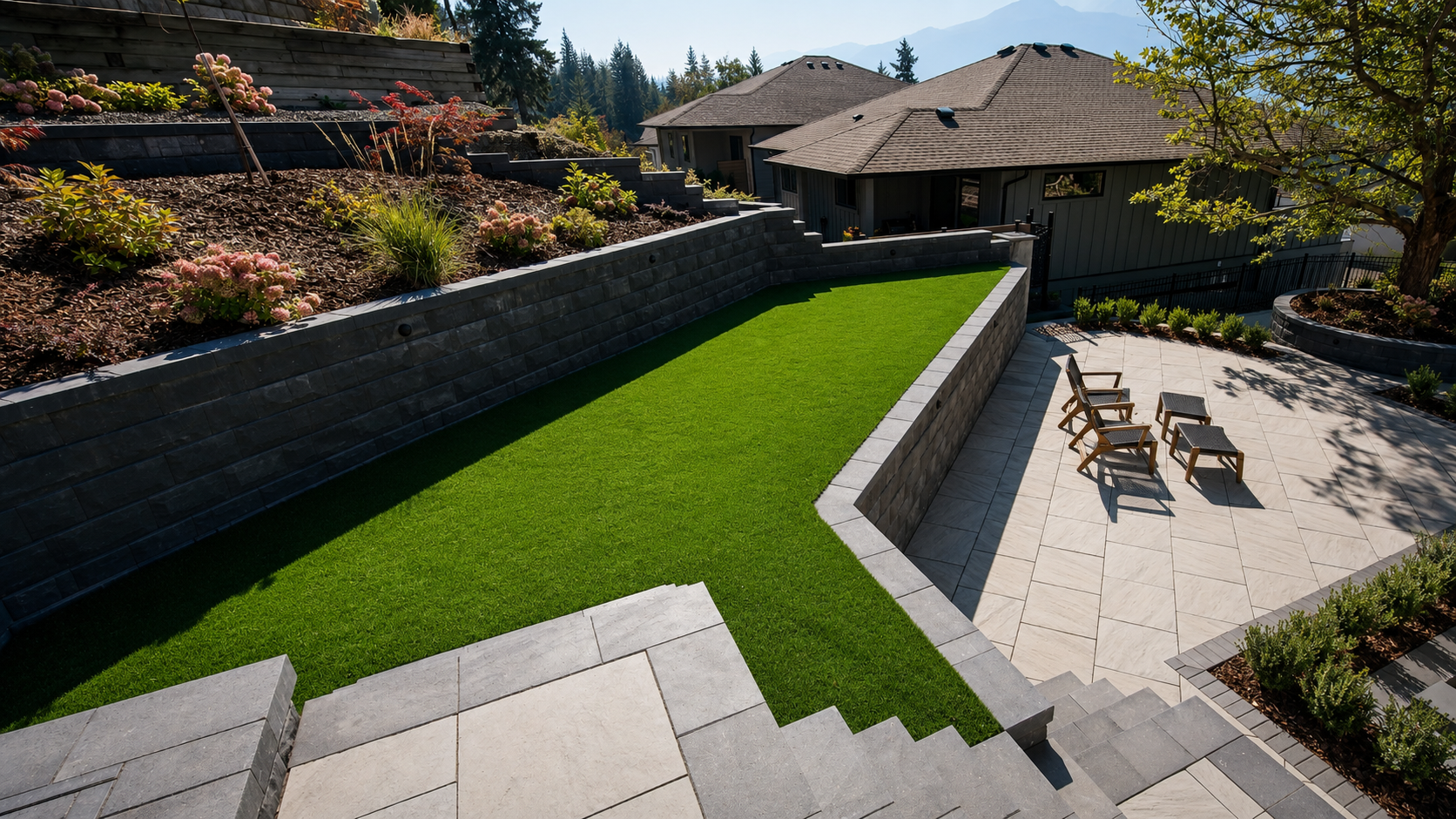
A completed retaining wall build by Kalagan Outdoor Design
Okanagan-Specific Factors for Retaining Walls
Vernon, Kelowna, and the surrounding Okanagan communities see a wide range of soil types — from rocky, glacial-till hillside lots to clay-heavy valley bottom properties — which affects how excavation and drainage are handled and can occasionally shift a timeline once crews see what’s actually under the topsoil. Sloped and lakeview properties, common throughout areas like Predator Ridge, Lake Country, and West Kelowna, often mean more retaining wall and grading work up front, which extends the base-work stage relative to a flat lot. Peak summer build season overlaps with the region’s wildfire smoke season in some years, which can occasionally affect air quality-sensitive scheduling decisions. Winter builds are less common here but not impossible for hardscape base work; ground conditions get evaluated case by case.
Curious what happens before a build even gets to this stage? See When to Start Planning a Landscape Project in the Okanagan. Once your build wraps up, a bit of seasonal care goes a long way — our Spring Landscape Prep Checklist and Fall Landscape Prep: Protecting Hardscape Through Winter guides cover what to do next. For the design work that happens before any of this, see our 3D Landscape Design service.
Ready to see what a build looks like on your property?
Book a consultation and we’ll walk you through the process, timeline, and what your specific site will need.
Book a Consultation →