How Long Does a Paver Patio Installation Take?
A straightforward paver patio can typically be installed in a few days, while a larger patio with seating walls, a fire feature, or lighting can take two to three weeks or more. The real answer depends on size, base conditions, and how many extra features are layered in.
What Actually Determines Your Timeline
Paver patio installation isn’t a single fixed process — it’s a sequence of steps, and how long each one takes depends heavily on the specific site. Size is the most obvious factor: a small 200 sq ft patio off a back door involves far less excavation and material handling than a 1,000+ sq ft entertaining space. But size alone doesn’t tell the whole story. What’s underneath the surface, and what surrounds it, usually matters more.
Base conditions are the biggest hidden variable. A site with good natural drainage and stable, rock-free soil excavates quickly. A site with heavy clay, a high water table, or existing poor drainage needs additional excavation depth and base material to build a stable, long-lasting patio — and that adds days. Sites that slope or that need retaining or seating walls to level out the usable space add a full construction phase of their own, since walls need to be built, backfilled, and compacted before the patio base goes in on top.
Site access changes the labor math too. A patio that equipment can reach directly moves faster than one that requires materials to be wheelbarrowed through a gate, around a house, or down a slope. Removal of an existing surface — old concrete, a failing paver patio, or a deck — is its own demolition and haul-away step that has to happen before new construction begins. And any project that layers in extras — a fire feature, built-in seating, integrated lighting, or an outdoor kitchen — adds coordinated trades and cure times that a simple open patio doesn’t need.
Weather and scheduling matter as well. Excavation and base compaction go slower in wet or frozen ground, and paver installation is a fair-weather trade through most of the Okanagan season. None of this means a timeline is unpredictable — it means the timeline is set after a site visit, not before one.
Typical Timeframes by Project Size
Small patio (roughly 100–300 sq ft, simple rectangular layout, good base conditions): generally 3–5 working days from excavation to final compaction and joint sand. This covers most standard back-door or side-yard patios with no walls or added features.
Mid-size patio (300–600 sq ft, or a simple patio with one added feature like a seat wall or fire pit): typically 1–2 weeks. The extra time comes from more excavation volume, more precise base work for a larger flat area, and the additional construction step for any built-in feature.
Large or multi-feature patio (600+ sq ft, sloped site, multiple retaining or seating walls, integrated lighting, or an outdoor kitchen): commonly 2–3 weeks, and sometimes longer on complex sites. These projects are closer to a small construction project than a single install — excavation, wall building, electrical for lighting, and paver installation each happen in sequence.
These figures cover on-site construction time once work begins. They don’t include the design, quoting, and any permit steps that happen beforehand, which we cover in more detail in our guide on when to start planning a landscape project — worth a read if you’re still in the early planning stage.
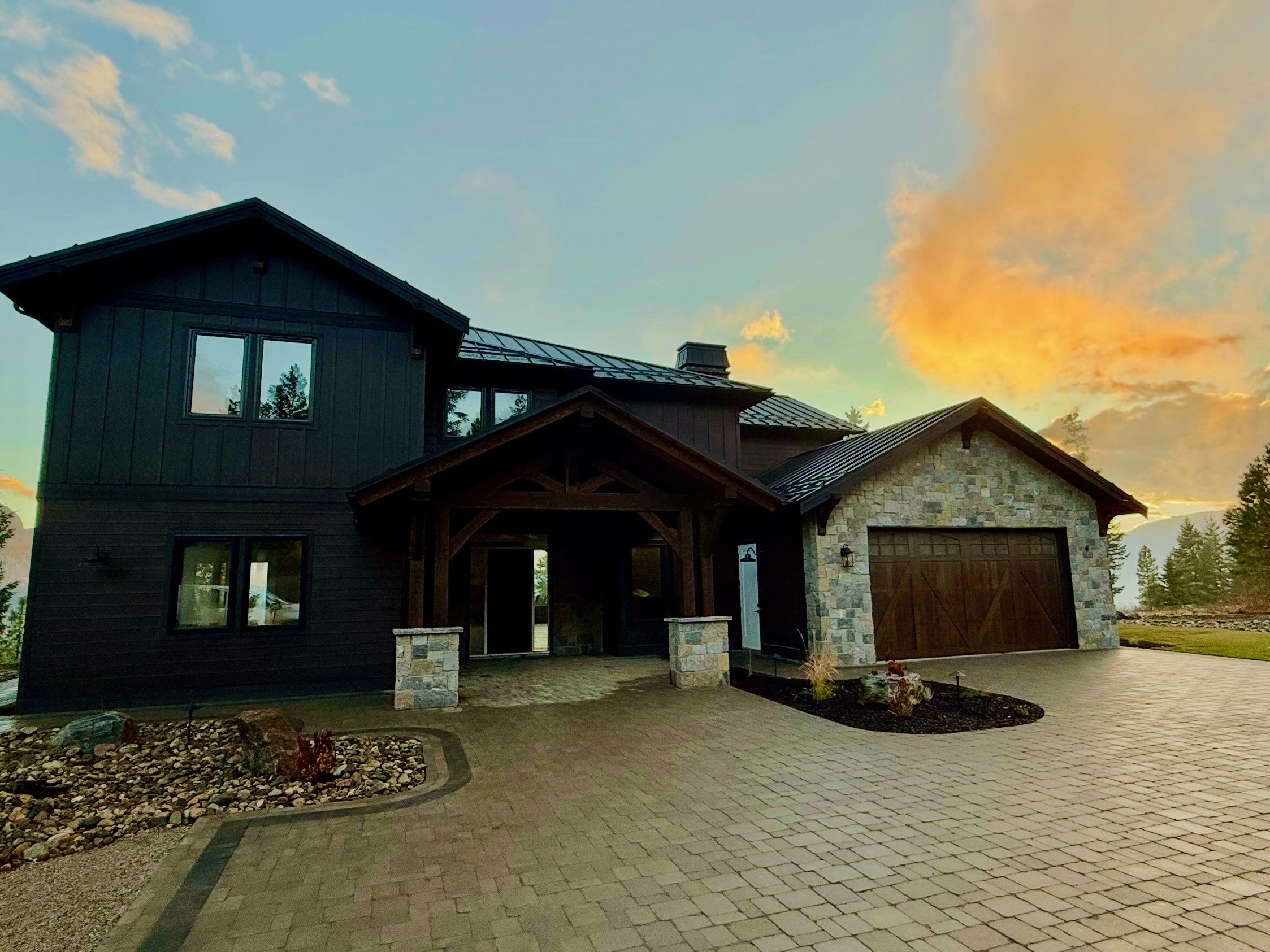
A completed paver hardscape build by Kalagan Outdoor Design
Okanagan-Specific Factors for Paver Patios & Driveways
Two things shape paver patio timelines in the Vernon and greater Okanagan region specifically. First is soil variability: properties here range from well-draining sandy and rocky ground in benchland areas to heavier clay in lower lots, and the two excavate and compact very differently. A site visit is what determines which situation you’re in, not a general rule of thumb. Second is seasonality — the region has a genuine build season, and demand for outdoor construction peaks in spring and early summer. Booking early in the year, before the peak rush, generally means a shorter wait for a start date even if the on-site build time itself doesn’t change. Sloped and view-oriented lots, common throughout the Okanagan’s hillside communities, are also more likely to need retaining or seating walls worked into the patio design, which is the single biggest driver of a longer timeline.
For the full picture on materials, layout options, and design considerations, see our Paver Patios & Driveways service page. If you’re mapping out your project timeline before booking a build, our guides on when to start planning a landscape project in the Okanagan and spring landscape prep are good next reads.
Get a Timeline for Your Own Patio
Every site is different — book a consultation and we’ll walk your property and give you a real, project-specific schedule.
Book a Consultation →