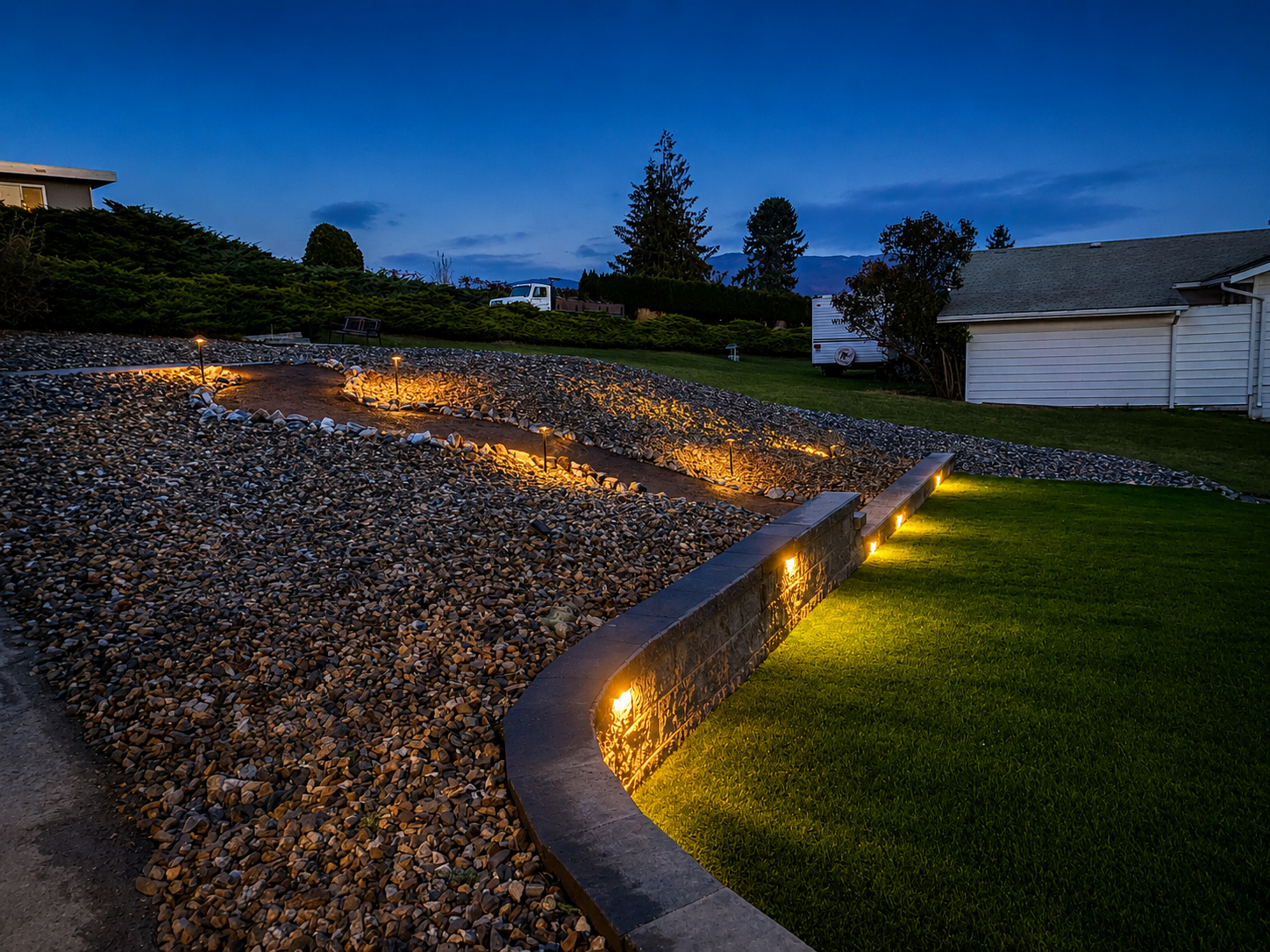
Walking Your Landscape with Oculus Quest: The Technology Explained
Before a single paver is laid, you can put on a headset and walk through your future backyard at full scale — standing where the fire feature will be, looking up at the pergola height, and following the path from the patio to the gate. Here is how that technology actually works and what it’s useful for.
How the Oculus Quest Walkthrough Actually Works
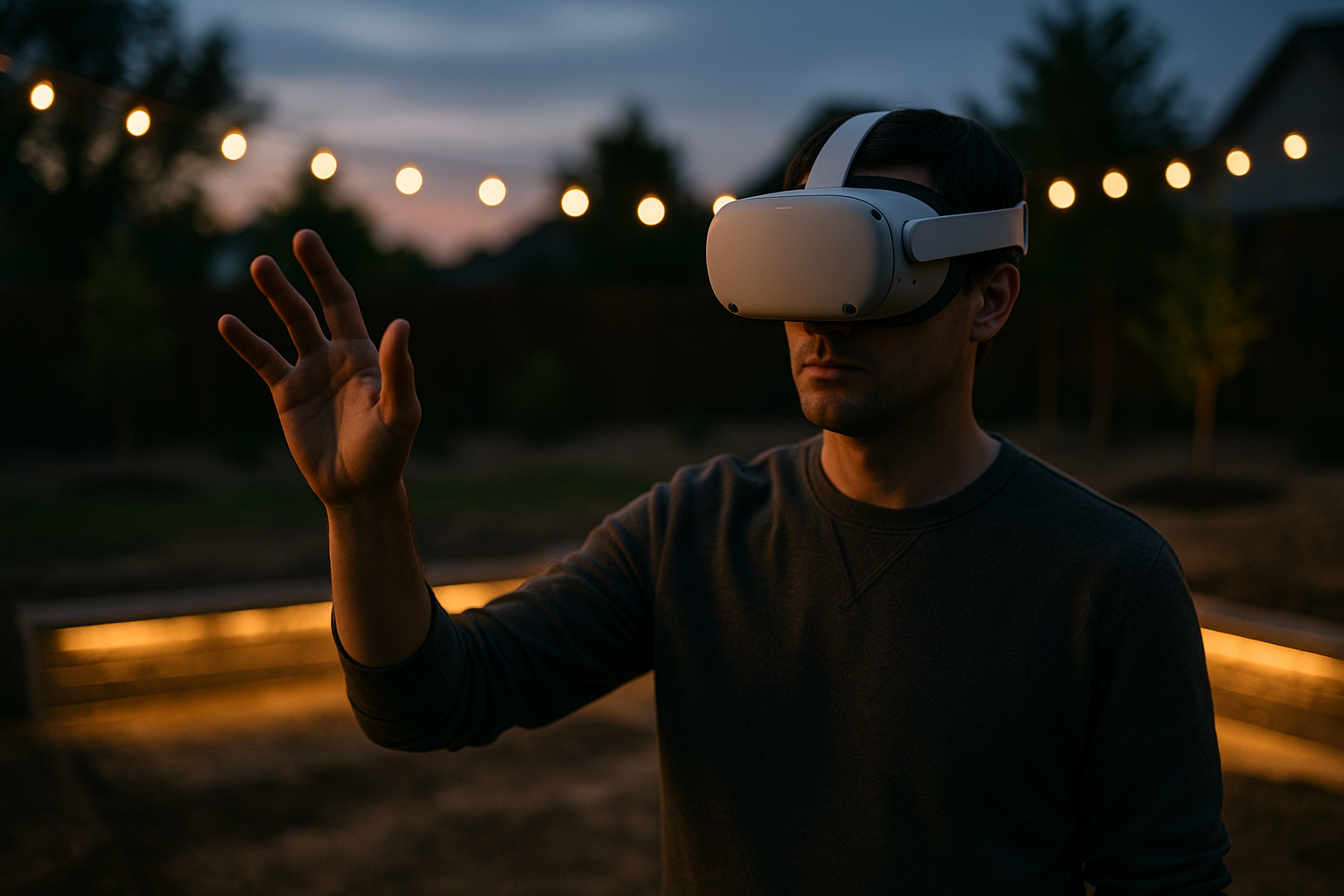
The Oculus Quest is a standalone virtual reality headset — no cables running to a computer, no external sensors to set up. Once your 3D landscape design is built, it can be converted into a VR-compatible environment and loaded directly onto the headset. Put it on, and instead of looking at your yard on a monitor from an outside angle, you are standing inside it, at your own eye height, in the actual location where you’ll one day be standing.
The Quest tracks your physical movement using its built-in cameras, so when you take a real step forward, you move a real step forward in the model. Turn your head, and you look around the space exactly as you would in your finished yard. This is the core difference between a 3D rendering and a VR walkthrough: a rendering is something you view, a walkthrough is something you’re inside of.
In practice, that means you can walk the length of a proposed paver pathway to feel whether it’s wide enough for two people side by side, stand at the base of a retaining wall to judge whether the height feels imposing or just right, or stand at the kitchen island and check whether you’d actually be able to see the pool from where you’d be cooking. Those are spatial judgments that are genuinely difficult to make from a flat plan or even a rotating 3D render on a screen, and they’re exactly what VR is built for.
What It’s Good For — and What It Isn’t
Oculus Quest walkthroughs are a scale and layout tool first. They’re excellent for confirming things like: does this patio feel too small once the furniture layout is in it, does the new fence line block the view you were trying to protect, is the step-down between the two patio levels comfortable or awkward, does the outdoor kitchen leave enough clearance to walk around it comfortably. Anything spatial — distance, height, sightline, sense of enclosure — is where the headset earns its keep.
It is not a substitute for handling actual materials. Paver color, stone texture, and how a specific product looks under direct Okanagan sun still need to be judged from physical samples, not a digital rendering, no matter how good the headset display is. We treat the VR walkthrough and the in-person material selection as two separate, complementary steps in the design process — one confirms the layout will work, the other confirms the finish will look right.
A 3D-designed landscape project by Kalagan Outdoor Design
Okanagan-Specific Factors for 3D Landscape Design
VR walkthroughs matter more here than they would on a flat suburban lot. Vernon, Kelowna, and Lake Country properties are frequently sloped, terraced, or built on waterfront lots with grade changes that are genuinely hard to visualize from a plan view. When a design includes a series of stepped retaining walls, a walkthrough lets you feel the actual drop between tiers rather than reading a number on a drawing. On view properties in areas like Predator Ridge or the Upper Mission, it also lets you check, from the exact spot your new patio will sit, whether a planting bed or structure is going to interrupt the lake or mountain view you’re building the space around in the first place.
See Real Design-Build Projects
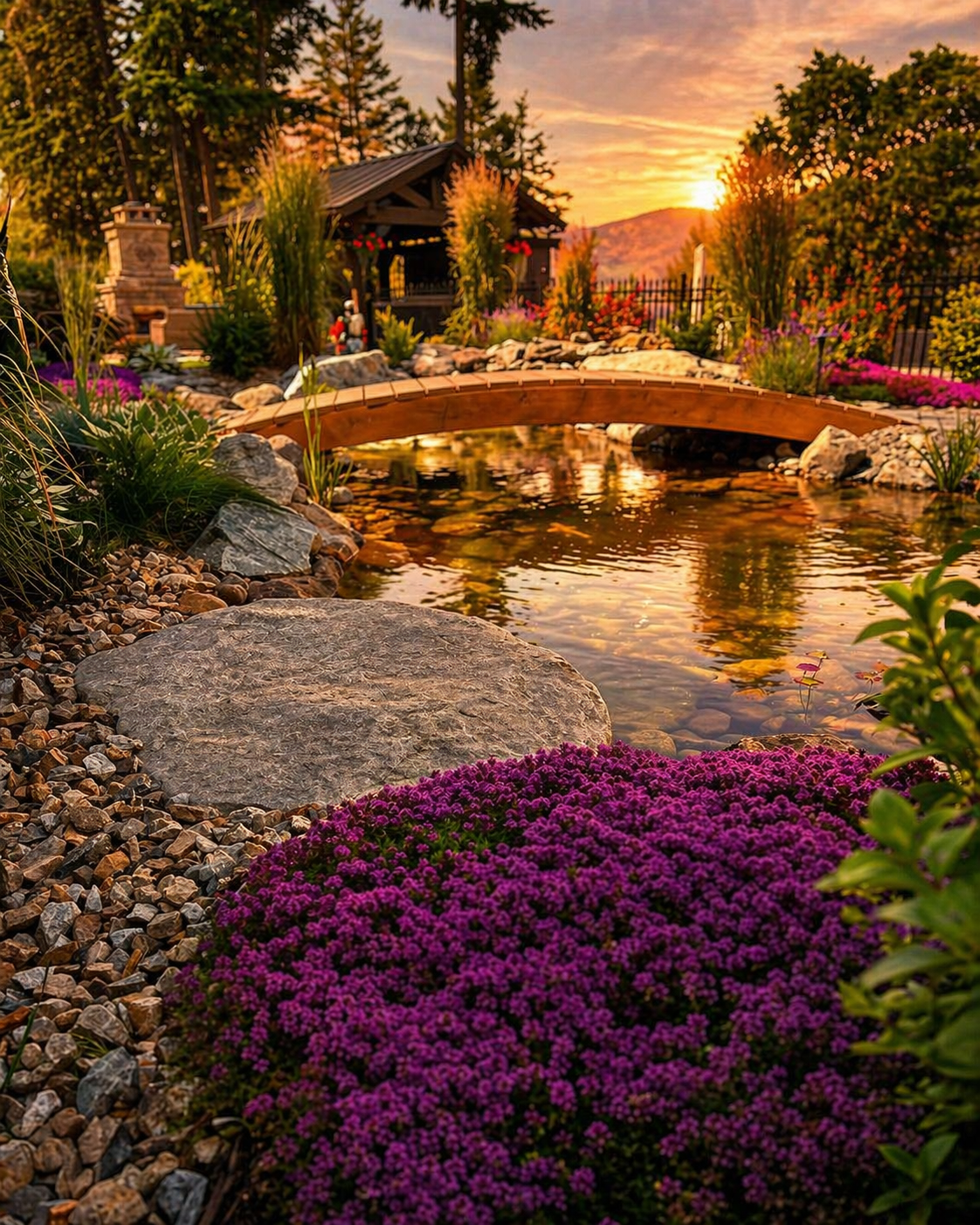
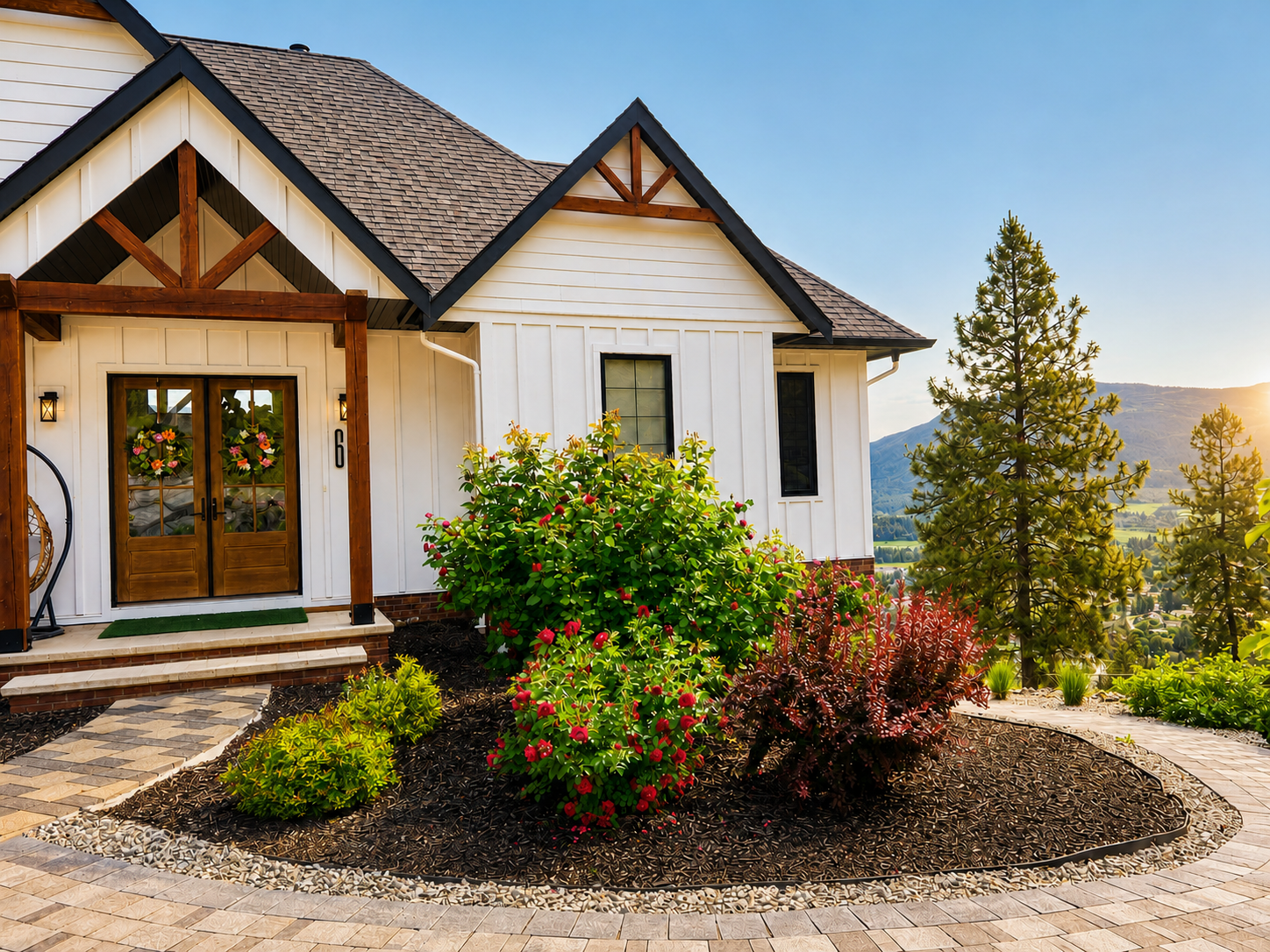
The Oculus Quest walkthrough is one part of our broader 3D and VR design service, built on the same detailed model used throughout the design process. If you’re wondering where the walkthrough fits relative to the rest of the design work, our guide on how 3D landscape design works, step by step, covers the full process from initial measurements to final plan.
See Your Own Yard Before It’s Built
Book a consultation to find out whether a VR walkthrough makes sense for your project.
Book a Consultation →