Landscape Lighting and Wildfire Risk: What Property Owners Should Know
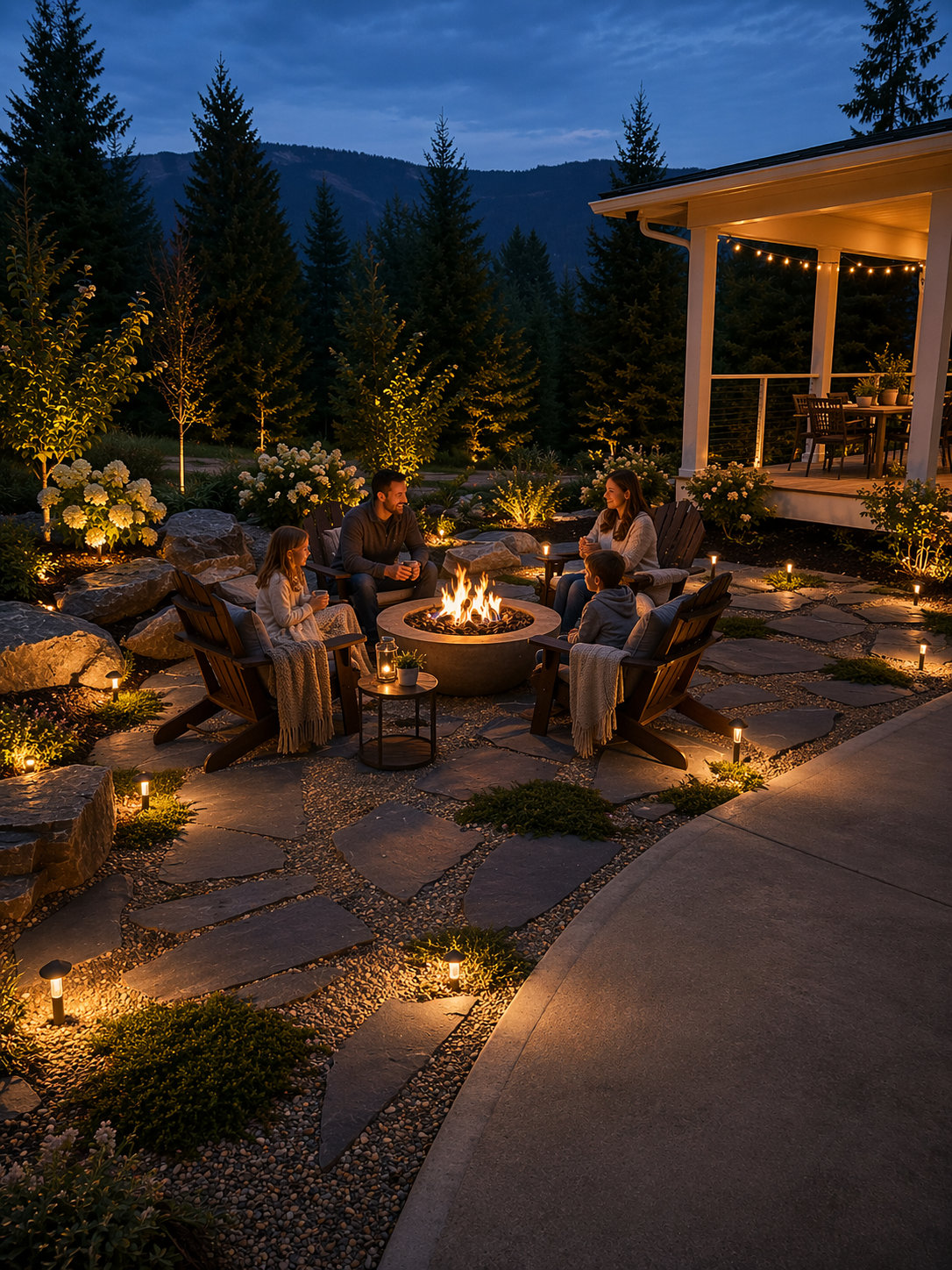
On forest-edge and rural Okanagan properties, landscape lighting is not just a design layer — it shapes how quickly you, your family, and emergency crews can see and move around your property if wildfire threatens the area. Placed thoughtfully, it supports defensible-space planning instead of working against it.
Why Lighting Design Matters Beyond Aesthetics on Forest-Edge Properties
Most homeowners think of outdoor lighting purely in terms of curb appeal — uplighting a specimen tree, washing a stone wall, or lining a path for evening entertaining. On a property backing onto crown land, a treed slope, or open grassland, lighting takes on a second job: helping people find their way, find you, and find critical infrastructure quickly and safely after dark, under stress, and possibly through smoke haze.
Wildfire evacuations and structure-protection efforts in the Okanagan rarely happen in daylight, calm conditions. Fire crews, neighbours, and family members often need to locate a property boundary, a driveway entrance, a gate latch, a hose bib, or a house number in low light, sometimes with reduced visibility from smoke. A driveway that’s easy to find at 2pm can be nearly invisible at 2am if it isn’t lit, and an unlit house number set back from the road can cost precious minutes for anyone trying to locate a specific address in an evacuation zone.
This is where lighting design and defensible-space planning intersect. A well-lit property edge, entrance, and address marker isn’t a substitute for FireSmart landscaping — it’s a complementary layer that makes the defensible space you’ve already built easier to use when it matters.
Where to Prioritize Fixtures for Visibility and Access
On rural and forest-edge lots, we generally recommend concentrating fixtures at a handful of functional points rather than spreading light evenly across the whole property:
Driveway entrances and address markers. A clearly lit driveway mouth and an illuminated house number are two of the simplest, highest-value additions on any acreage or forest-edge property. They help visitors, delivery drivers, and emergency responders alike, wildfire scenario or not.
Gates, hose bibs, and shut-off points. If a property has a gate that needs to be opened for access, or a hose bib and standpipe that a homeowner or neighbour might need to find in an emergency, a small fixture nearby removes the guesswork.
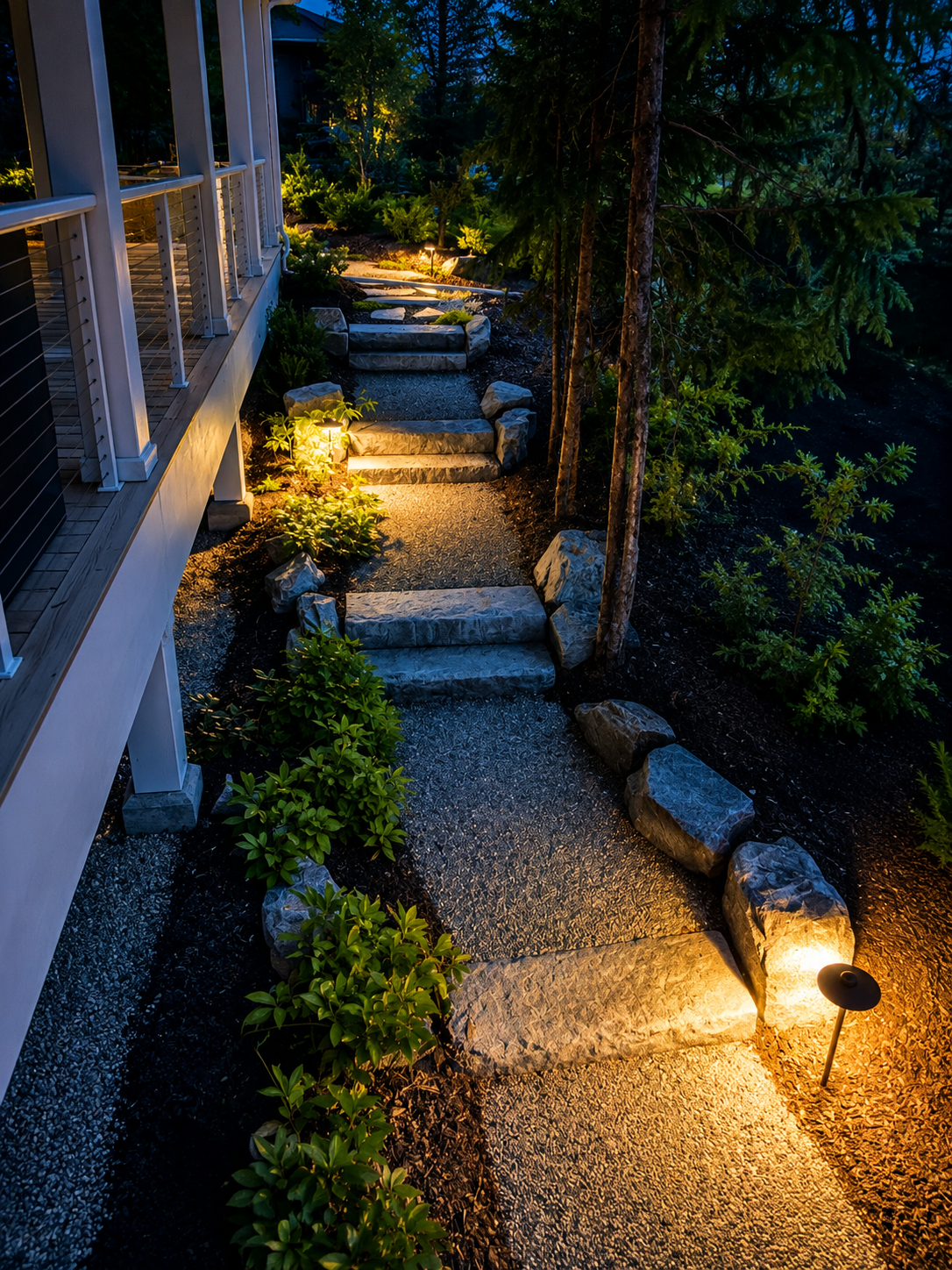
Pathways between the house and any secondary structures. A lit, clear route between the house, a detached garage, or a workshop reduces the chance of a misstep or delay when moving quickly in low light.
Turnaround and staging areas. On larger properties, a lit turnaround area helps drivers — whether that’s you loading a vehicle in a hurry or a fire truck needing to reposition — do so without guesswork.
None of this requires floodlighting an entire lot. A handful of well-aimed, well-shielded fixtures at the points that matter is both more effective and more in keeping with good lighting design than blanket illumination.
Designing Fixtures and Wiring So They Don’t Undermine Defensible Space
The flip side of this guide is just as important: lighting elements themselves shouldn’t add risk to your defensible-space zones. A few practical considerations we build into every design near the wildland-urban interface:
Keep fixtures and low-voltage wiring out of dense fuel. Path lights and up-lights tucked into thick shrub beds or bark mulch can become one more combustible detail close to the house. Where lighting needs to sit within the first few metres of a structure, we favour hardscape-integrated fixtures (step lights, wall-mounted lights, lights set into pavers or stone) over ones nested in plant material.
Route wiring away from vegetation that will be pruned or removed. Defensible-space maintenance sometimes means thinning or removing plants over time. Wiring runs are planned so that routine vegetation management doesn’t mean re-trenching your lighting system.
Choose fixtures and mounting that suit non-combustible zones. In the zone immediately around a structure, metal, stone, or masonry-mounted fixtures generally fit the intent of that zone better than fixtures staked into bark mulch or nestled against wood elements.
This is a design conversation, not a strict rulebook — the right answer depends on your specific lot, slope, and existing vegetation. It’s exactly the kind of detail worth flagging to your designer if defensible space is a priority for your property.
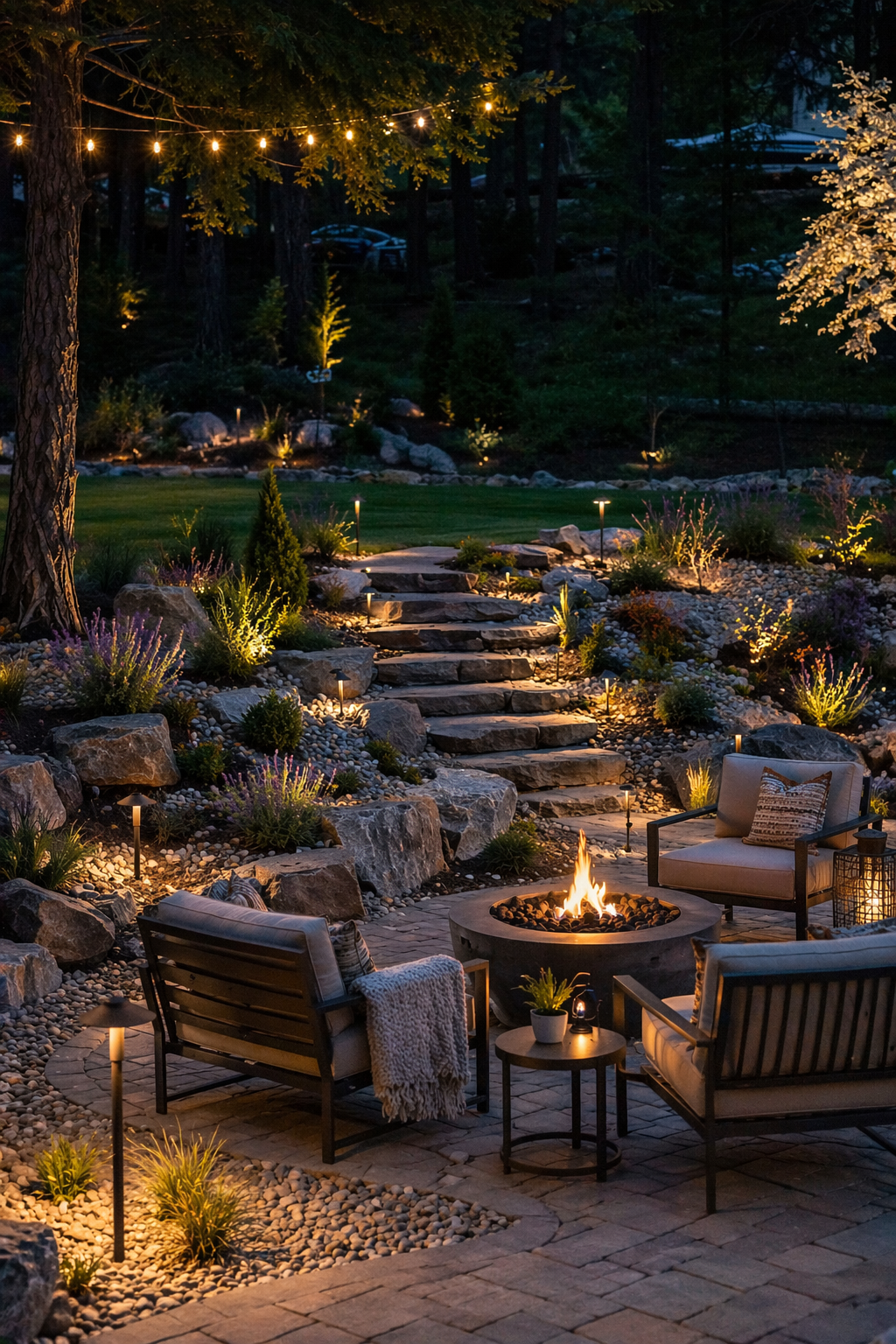
Architectural landscape lighting by Kalagan Outdoor Design
Okanagan-Specific Factors for Landscape Lighting
Much of the Okanagan’s most desirable real estate — hillside acreages above Kelowna and Vernon, lakeview lots near Lake Country and Predator Ridge, and rural properties around Lumby and Coldstream — sits directly against dry grassland, open range, or forested crown land. These are also areas where properties are often set back from the main road, down long driveways, or accessed through gated entrances, all of which make after-dark visibility more consequential than it would be on a tightly-spaced urban street. Seasonal wildfire smoke, which regularly reduces visibility across the valley in late summer, adds another reason to treat entrance and address lighting as more than decorative. Properties on steeper terrain also tend to have longer, less direct driveways and secondary access routes, which benefit from lighting at turns and junctions so drivers aren’t guessing which fork leads where in a hurry.
See Real Lighting Projects
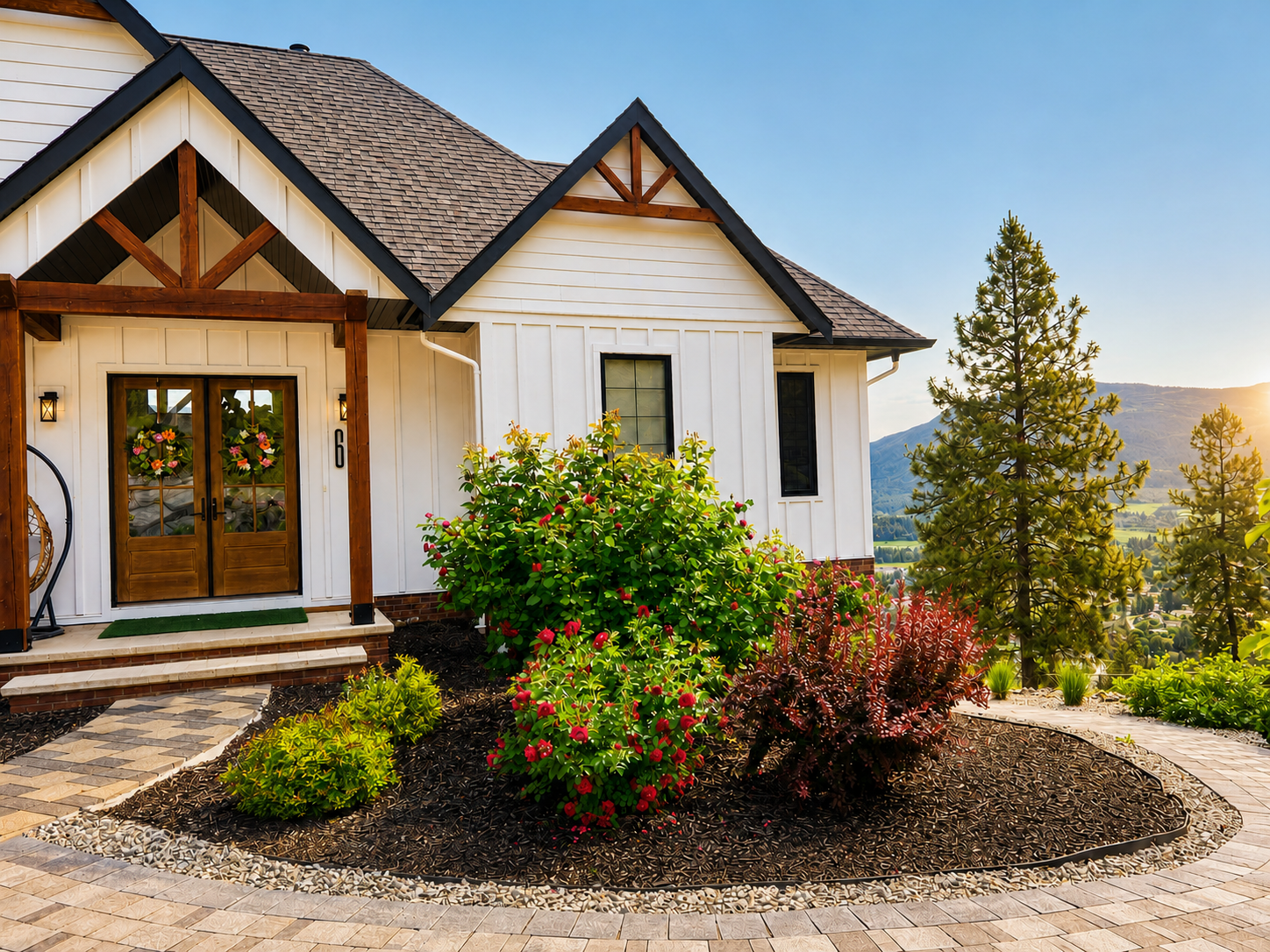
For the full picture on defensible space, non-combustible zones, and fire-resistant plant choices, see our guide to Understanding FireSmart Defensive Landscaping, along with our dedicated FireSmart Defensive Landscaping service page. To explore fixture types, placement strategy, and design options for your property, visit our Outdoor Lighting page.
Planning Lighting for a Forest-Edge or Rural Property?
Talk to our design team about a lighting plan that works for everyday living and holds up when visibility matters most.
Book a Consultation →