Understanding FireSmart Defensive Landscaping: A Homeowner’s Guide
FireSmart landscaping is the practice of shaping the ground, plants, and hardscape around your home so that wildfire embers and radiant heat have less fuel to catch hold of. It works as a system of layered defences immediately around your house, not a single product or plant — and understanding how the pieces fit together is the first step to prioritizing your own property.
Why Landscaping Is Part of Wildfire Defence
Most homes lost in wildfire interface events aren’t consumed by a wall of flame — they’re ignited by wind-blown embers that land in mulch, dry grass, needles in gutters, or against combustible siding, then smoulder and catch. That means the landscaping immediately touching your house often matters as much as the building materials themselves. FireSmart principles (developed through Canadian wildfire research and applied across BC communities) treat the yard as a series of concentric priority zones, with the most aggressive fuel reduction closest to the structure and a gradual relaxation further out.
For Okanagan homeowners, this isn’t an abstract concern. Vernon, Kelowna, Lake Country, Lumby, and the surrounding communities sit inside a wildland-urban interface where dry summers, grassland, and forested slopes meet residential development. Local and regional FireSmart programs actively encourage homeowners to assess and reduce fuel loads on their own properties, and insurance providers are increasingly asking about defensible space when underwriting homes in higher-risk areas.
The Three Layers, at a Glance
1. The non-combustible zone (roughly the first 1.5 metres from your home). This is the highest-priority strip of ground in the entire FireSmart system, because it’s the area where an ember landing has the shortest possible path to your siding, deck, or foundation vents. The goal here is to remove combustible mulch, bark, dry vegetation, and anything stacked against the wall, replacing it with non-combustible surfacing. We break down exactly what belongs in this zone, and what doesn’t, in our dedicated guide to the non-combustible Zone 1.5m.
2. Ember-resistant hardscape. Moving outward, paver patios, gravel beds, stone paths, and other hardscape surfaces act as fuel breaks — they give embers nowhere to smoulder and slow the spread of surface fire toward the house. This is also where FireSmart thinking overlaps most naturally with everyday design decisions, since a patio, walkway, or fire pit surround you’d want anyway can be specified and detailed to also perform as a fuel break. Our ember-resistant hardscape guide covers material choices and layout in more detail.
3. The fire-resistant plant palette. Beyond the hardscape ring, plant choice and spacing become the main lever. Some plants and shrubs carry far more resin, dead material, or fine dry fuel than others, and spacing between plants (both horizontally and vertically) affects whether fire can move from one to the next or climb from ground fuel into a tree canopy. This doesn’t mean an all-gravel yard — it means choosing species and layouts deliberately. See our fire-resistant plant palette guide for the plant-level detail.
Each of these three pages goes deep on its own layer. This guide is meant to be the map that shows how they connect — where to start, and why the priority order matters more than trying to do everything at once.
Where Most Homeowners Should Start
If you can only tackle one layer this season, start closest to the house. The 1.5m non-combustible zone delivers the most risk reduction per square metre of effort, because it directly addresses the most common ignition path (an ember landing against the structure). Hardscape and planting decisions further out still matter, but they matter less urgently than what’s touching your walls right now.

A permit-coordinated project by Kalagan Outdoor Design
Okanagan-Specific Factors for Landscape Permits
The Okanagan’s combination of hot, dry summers, grassland and open forest terrain, and homes built directly against or near that terrain is exactly the profile FireSmart programs are designed for. Properties on sloped lots tend to see faster fire spread uphill toward a home, which raises the stakes for whatever is planted or piled on that slope. Homes backing onto Crown land, forested reserves, or undeveloped grassland carry more exposure than infill lots in established neighbourhoods, and irrigation limits during drought-restriction summers can leave ornamental plantings drier (and more flammable) than homeowners expect. We work with clients across Vernon, Coldstream, Lumby, Lake Country, Kelowna, and West Kelowna, and the right FireSmart approach for a lakeside lot in Predator Ridge is not the same as one for a forested acreage outside Lumby — local terrain, prevailing wind, and vegetation type all factor into the plan.
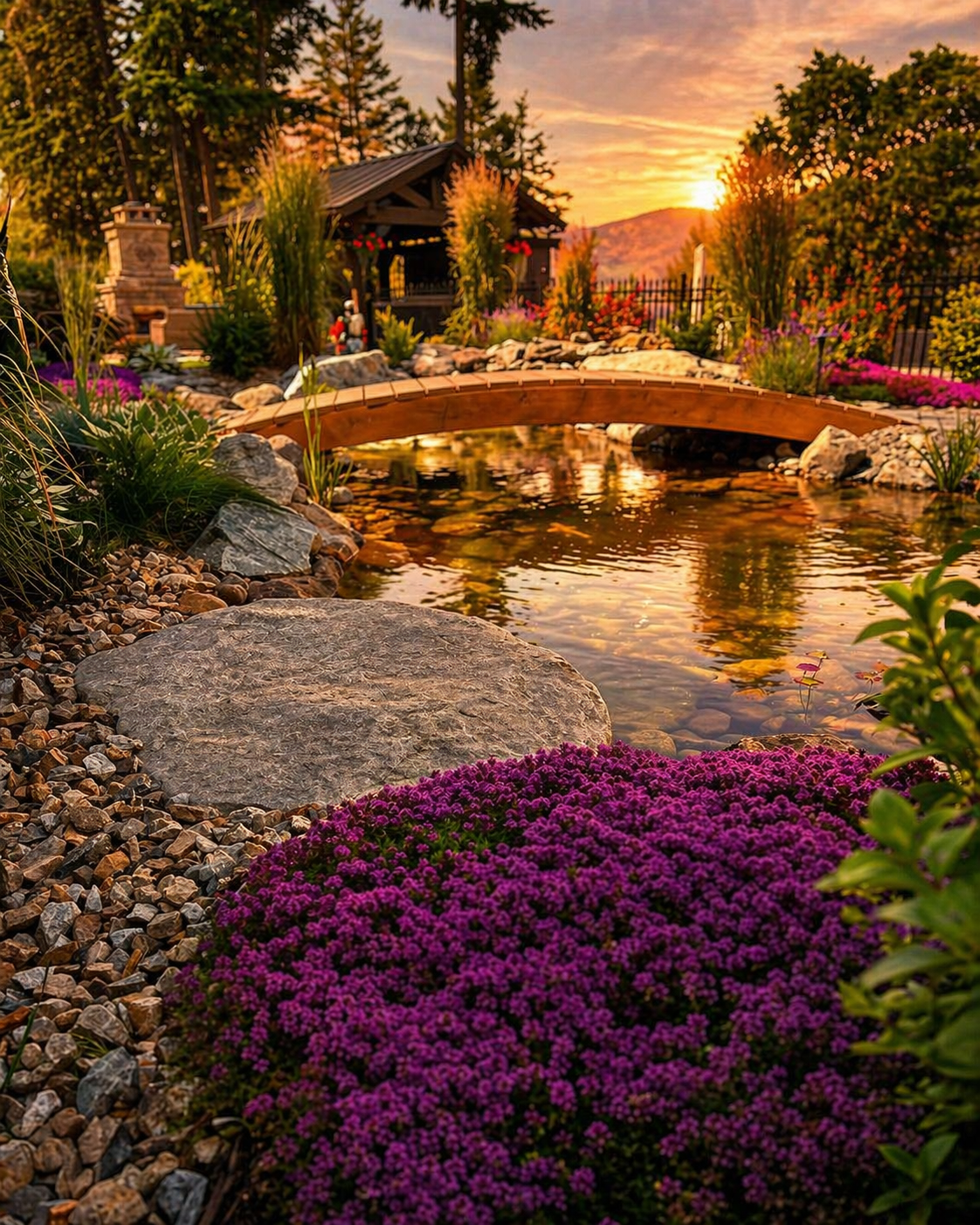
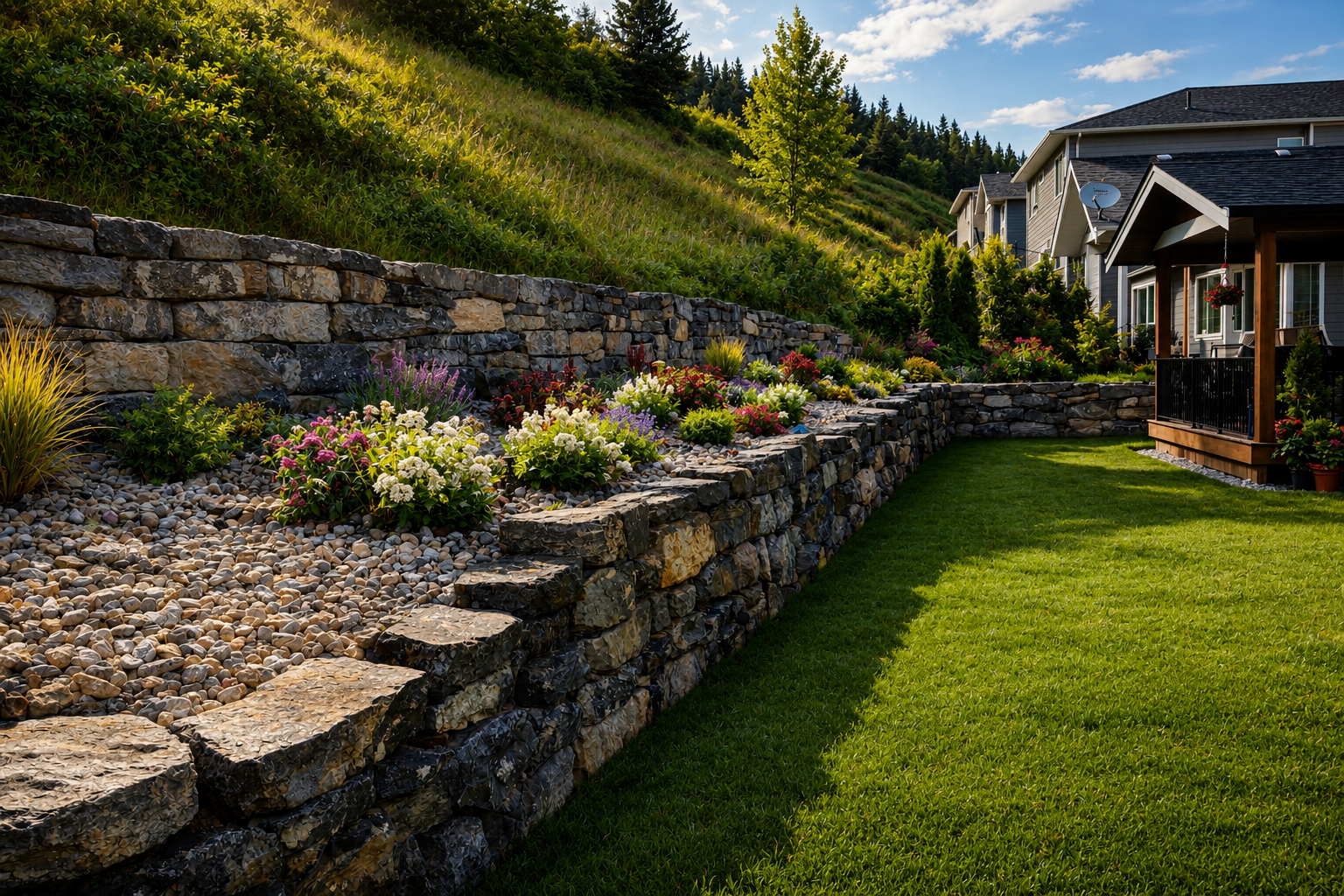
For a real-world example of these layers working together, see our Lumby FireSmart Redesign case study. If outdoor lighting is part of your plan, our guide on landscape lighting and wildfire risk covers a factor many homeowners overlook. And for the full picture of what we build, visit our FireSmart Defensive Landscaping service page.
Ready to Assess Your Property?
Book a consultation and we’ll walk your property with you to identify the highest-priority FireSmart improvements for your specific lot.
Book a Consultation →