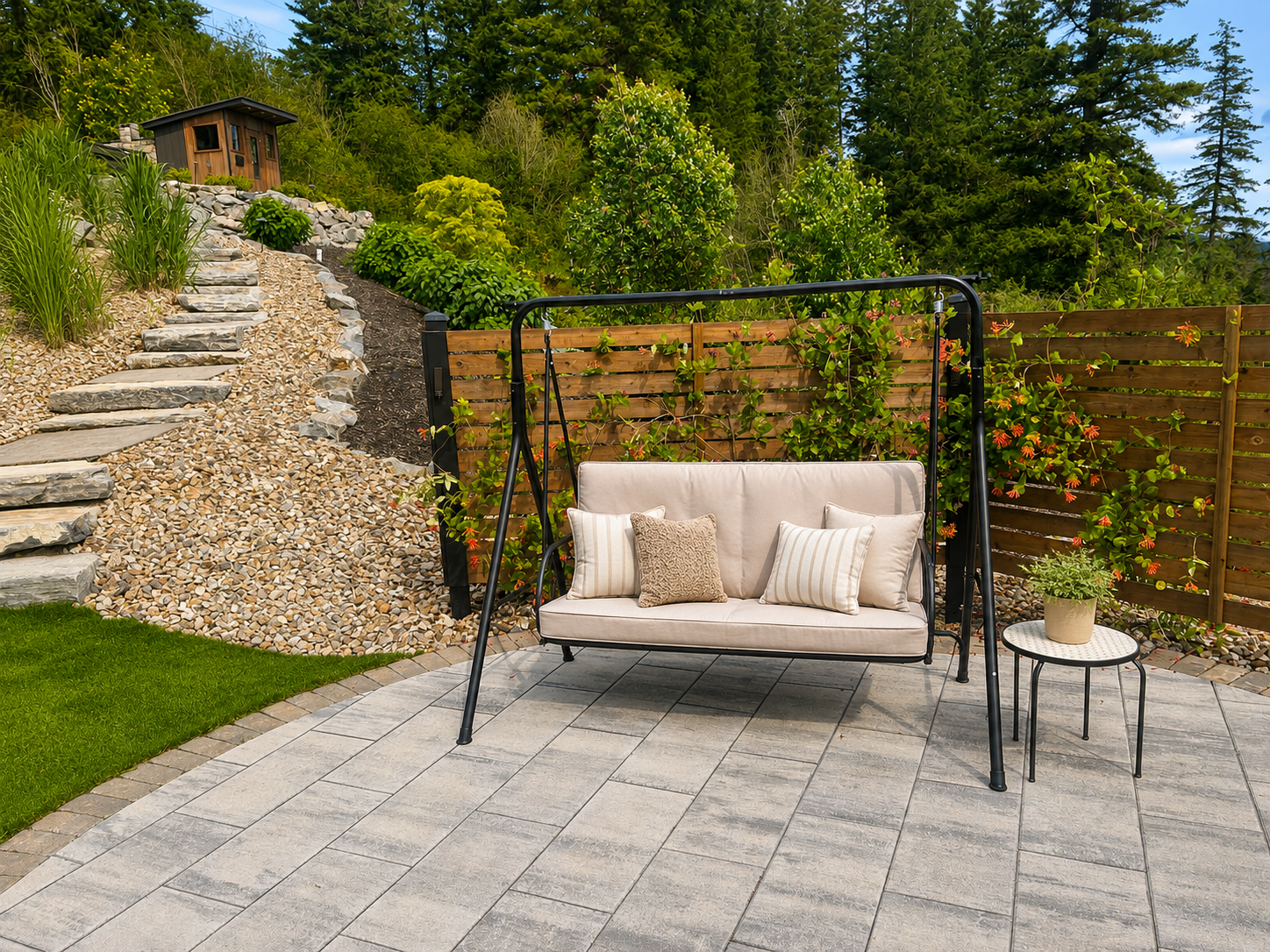
Ember-Resistant Hardscape in the Okanagan
The right paving stone, gravel bed, or dry-laid stone edge can stop a wind-blown ember from ever reaching your siding. We choose and place hardscape materials specifically to close that gap.
Request a Consultation →Ember-Resistant Hardscape Cost Calculator
FireSmart defensive landscaping projects generally range from $5,000 to $100,000+, depending on the property size, vegetation removal, excavation and amount of landscape reconstruction required.
Options to discuss at consultation: remove combustible mulch, remove shrubs or trees, prune and thin vegetation, install decorative rock, replace planting beds, improve emergency access, create separation between structures and vegetation.
This calculator provides an early budget range only and is not a formal quote. Final pricing depends on site access, existing conditions, excavation, grading, drainage, material selections, engineering, permits, electrical and plumbing requirements, and the final approved design. Pricing is shown in Canadian dollars and excludes GST unless otherwise stated. A site consultation is required to provide an accurate proposal.
It’s Not Just What You Plant — It’s What You Pave
Most FireSmart conversations start and end with plant selection. But BC FireSmart guidance is just as specific about the ground itself, especially in the first 1.5 metres out from your foundation, deck, and any wood fencing — often called the non-combustible zone. Mulch, bark, and dense shrub beds pressed right up against a wall give embers something to land on and smoulder in. Hardscape doesn’t. A paver walkway, a gravel border, or a dry-laid stone edge in that zone gives embers nowhere to catch, which is exactly why we treat material selection and placement in that strip as a distinct piece of work — separate from the broader planting plan and separate from a standard patio build done purely for looks.
It’s also a different design problem than a typical patio. A patio is built for how it looks and how it’s used — the seating layout, the sightlines, the flow from the back door. An ember-resistant strip is built around the building envelope itself: where the roofline sheds embers in a wind event, where a deck’s understructure is exposed, and where a fence or gate hands fire straight to the wall it’s attached to. On a lot with a slope, we also think about where embers and rolling debris are likely to gather on the uphill side, since that’s often where the non-combustible strip earns its keep the most. None of this shows up if you only ever think about hardscape as a place to put furniture.
Homeowners in Vernon, Kelowna, and the surrounding Okanagan are increasingly asking for this specifically, not as an afterthought to a patio quote, because insurers and local FireSmart assessments are paying closer attention to what’s touching the house. A hardscape strip designed with that in mind still reads as an intentional part of the landscape — a defined path, a gravel mulch bed, a stone-edged border — rather than a bare strip of dirt tacked on for compliance.
Ember-Resistant Hardscape: Materials & Process
We start by walking the perimeter of the home, deck, and any attached wood structures to map where the non-combustible strip needs to run and where it can tie into hardscape you’d want anyway — a front walkway, a side-yard path, a patio edge. Within that strip, we work almost exclusively with concrete and natural stone pavers, compacted washed gravel, and larger decorative rock, all set over a properly graded and compacted base so the surface stays stable and doesn’t invite weeds or organic debris to build up in the joints over time.
Material choice depends on the exposure and the look you’re after. Tight-jointed concrete or stone pavers give the cleanest, most walkable non-combustible surface and work well right along a foundation or under a deck’s drip line. Compacted gravel is a faster, lower-cost way to cover a wider band, and it reads naturally against xeriscape or dry-garden planting further out. Larger cobble or decorative rock is useful for breaking up an otherwise long, flat run of gravel, or for tying the firesmart strip visually into a retaining wall or paver walkway elsewhere on the property. We avoid loose organic mulch, bark, and wood chips inside the critical zone entirely — even where a client wants that softer look, we’ll suggest a rock mulch alternative instead.
Where the strip meets a planting bed, we detail a clean stone or steel edge restraint so mulch and dry leaf litter can’t migrate back across the line over a season or two. We also look at what’s above and beside the hardscape — overhanging shrubs, wood-edged garden boxes, or stacked firewood right at the wall — and flag anything that undercuts the work, because a well-built ember-resistant surface only does its job if the zone around it stays clear. On sloped Okanagan lots we’ll sometimes pair the hardscape strip with a low retaining wall to keep gravel from migrating downhill, which also gives us a chance to break up a long grade into something more finished-looking than a straight gravel run.
Every property is assessed on its own before we recommend a material mix or a layout — slope, prevailing wind direction, proximity to trees and neighbouring structures, and what’s already built against the house all factor in. We treat this as advisory work grounded in general BC FireSmart principles, not a substitute for a formal wildfire risk assessment; where a project calls for one, we’ll point you toward the right local resource.
Ember-Resistant Hardscape Projects in the Okanagan
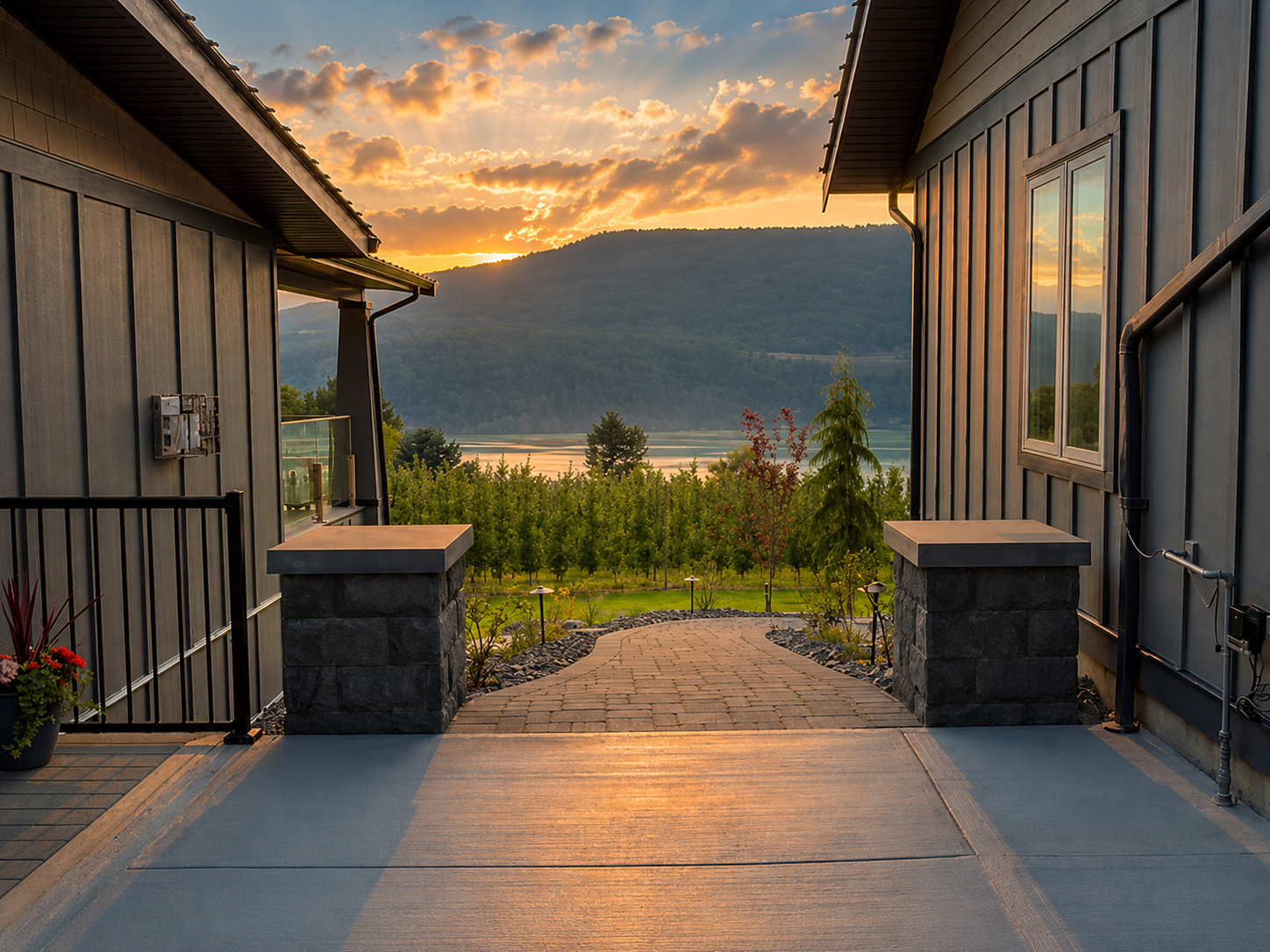
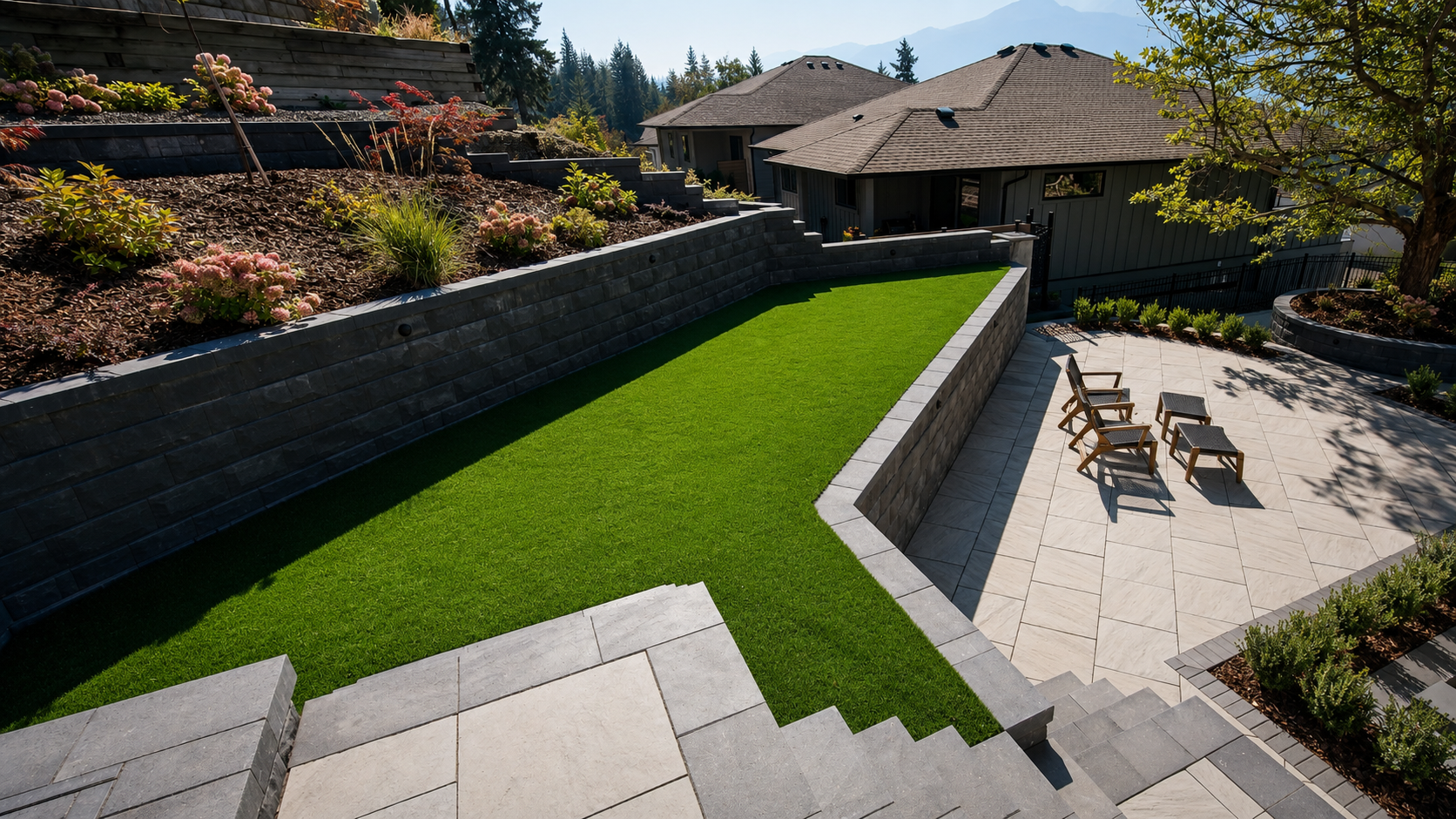
Every property’s ember exposure is different depending on slope, prevailing wind, and what’s built up against the home over the years. Browse more completed projects across the Okanagan to see how we’ve worked hardscape into properties near Predator Ridge, Lakestone, and Vernon, or visit our full portfolio.
View Our Work →Built on Trust, Honesty, and Referrals
We are proud that so much of our business comes from referrals. To us, that says everything. Our reputation has been built on trust, honesty, reliability, and the relationships we create with our clients long after the project is complete.
A True Okanagan Company. Locally owned. Locally built. Serving the Okanagan Valley since 2018.
Fully licensed, bonded & BBB A+ rated since 2018.
One project manager from first sketch to final walkthrough.
Guaranteed accuracy. Scope and value clear before we start.
Full-stack outdoor scope under one roof.
Trusted By Okanagan Homeowners
“Kalagan did an outstanding job on our major landscaping project that included two sets of stone steps, a large water feature, paving stone patio, several plant beds, irrigation system and lighting effects. Taylor brought a wealth of knowledge and ideas to the design process and was easy to work with. Communication was strong throughout the project and we heartily recommend Kalagan for your landscaping project.”
“Kalagan Outdoor Design completely gutted our backyard, then installed irrigation, new lawn, trees, shrubs, rock bordered planting areas and a new stone patio. We are absolutely delighted with the result. It far exceeded our expectations which were quite ambitious from the start. The entire team was a pleasure to work with — professional, courteous, creative and hard working.”
Common Questions About Ember-Resistant Hardscape
Why does hardscape matter for FireSmart, not just plant choice?
Most FireSmart conversations start and end with plant selection, but BC FireSmart guidance is just as specific about the ground itself — mulch, bark, and dense shrub beds pressed right up against a wall give embers something to land on and smoulder in, while hardscape doesn’t.
What hardscape materials work best in the ember-resistant zone?
A paver walkway, a gravel border, or a dry-laid stone edge in the zone closest to your foundation gives wind-blown embers nowhere to land and take hold.
Can I keep my existing mulch beds further from the house?
Generally yes — the strictest ember-resistant hardscape requirement applies to the immediate zone around the foundation, deck, and fencing; beds further out have more flexibility.
Does ember-resistant hardscape use the same materials as your paver patio projects?
Yes — most of this work uses the same materials and crews as our retaining wall and paver patio projects, just planned around defensible-space zones instead of purely aesthetic ones.
Let’s design something extraordinary with Ember-Resistant Hardscape.
Schedule a consultation and take the first step toward your dream outdoor space.
Book a Consultation →