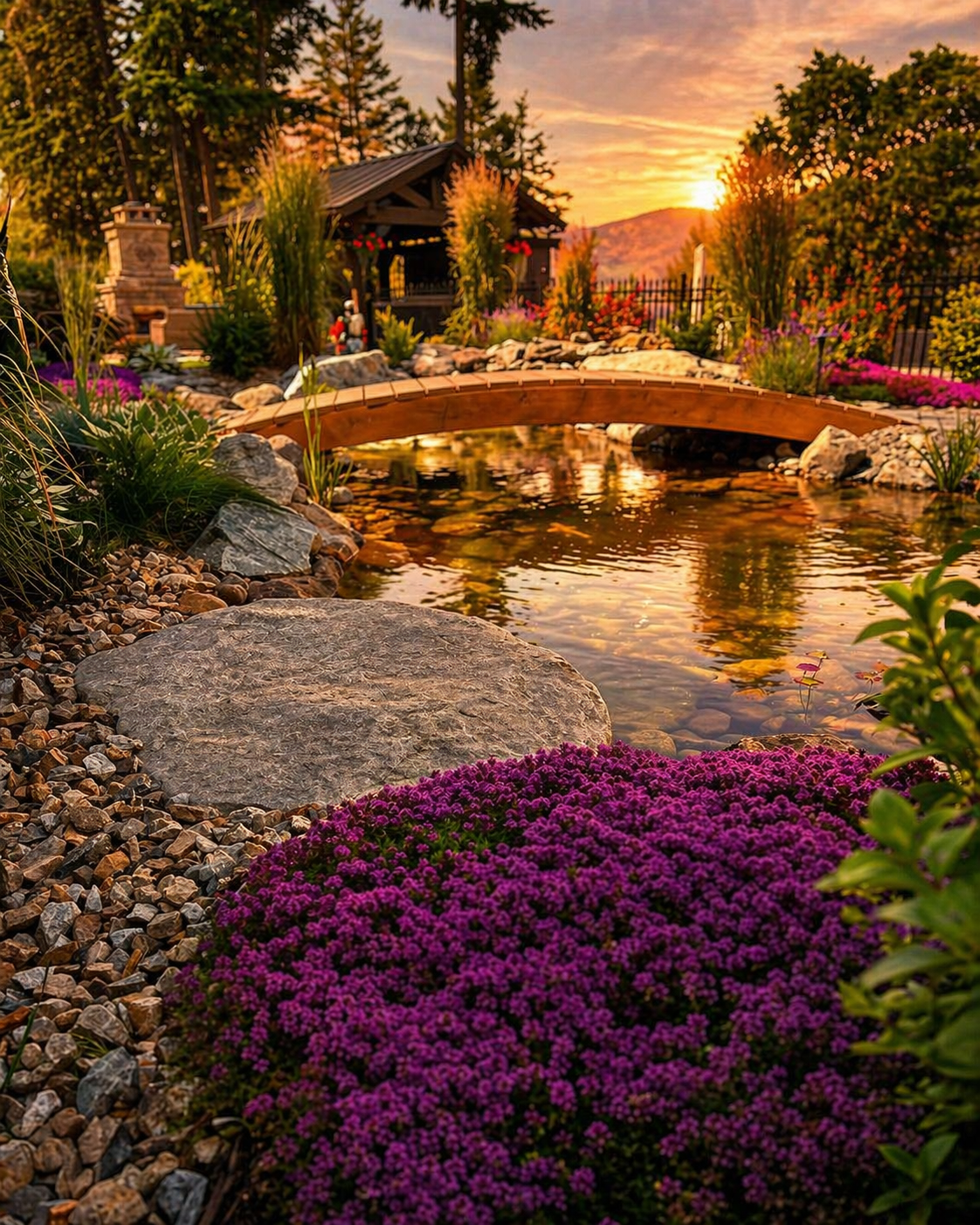
Okanagan Lake Shoreline Permits: The Foreshore Protocol Explained
If your property touches Okanagan Lake, Kalamalka Lake, or one of the other large Okanagan lakes, almost any work near the water’s edge is reviewed under a shared foreshore protocol before a local building permit is even considered. Here is what that generally means in plain language, and how it shapes the way waterfront retaining walls, patios, and landscaping get planned.
What the Foreshore Protocol Is (In General Terms)
Okanagan Lake, Kalamalka Lake, Wood Lake, and Skaha Lake sit on Crown foreshore — the strip of land between the natural boundary of the lake and the water itself — which is provincial land even where it fronts a privately owned lot. Because a single stretch of shoreline can touch provincial land tenure rules, federal fisheries protections, local zoning, and sometimes Indigenous rights and title interests all at once, the agencies involved in the Okanagan have adopted a shared review approach rather than each reviewing shoreline applications in isolation. That coordinated approach is generally referred to as a foreshore protocol.
For a homeowner, the practical effect is that a project touching the natural boundary of the lake is rarely a single-permit process. Depending on what is proposed and where, it can draw in your local government’s building and planning departments, provincial land and water authorities, and potentially a fisheries referral if there is any in-water or near-water disturbance. This is generally true whether the work is a new retaining wall, shoreline stabilization, a patio extension toward the water, or grading and planting changes right at the water’s edge.
Why This Matters Before You Design Anything
The protocol exists because Okanagan lakeshores are ecologically sensitive — they support fish spawning habitat, riparian vegetation, and water quality functions that inland yards do not have to account for. That means the review isn’t just a paperwork step; it can genuinely shape what gets built. A retaining wall design that would be straightforward on a hillside lot away from the water may need a different setback, a different toe treatment, or additional engineering documentation once it is within the foreshore review area. This is exactly why we treat waterfront projects as a distinct planning track from the very first conversation, not a standard build with an extra form attached.
What Homeowners Should Generally Expect
Timelines for shoreline work tend to run longer than comparable inland projects, and it is common for a referral to more than one agency to add weeks or months depending on the scope and the time of year. Projects that avoid disturbing the natural boundary, use materials and methods recognized as lower-impact, and are designed with clear engineering documentation from the outset tend to move through review more predictably than ones that try to work around the process. We generally recommend treating the permit conversation as step one of design, not a formality to handle after the concept is finalized.

A permit-coordinated project by Kalagan Outdoor Design
Okanagan-Specific Factors for Landscape Permits
The Okanagan Valley’s large lakes — Okanagan, Kalamalka, Wood, and Skaha — are a defining feature of properties in Vernon, Kelowna, Coldstream, Lake Country, and West Kelowna, which is exactly why this coordinated review approach developed here specifically. Waterfront lots in this region also tend to combine steep bank grades with sandy or silty soils, which is a common reason retaining walls near the water require engineering review in addition to foreshore review. Seasonal water level changes on Okanagan Lake, managed in part for flood control, are another factor local reviewers weigh when looking at proposed shoreline work, since a design has to hold up across the lake’s normal seasonal range, not just at the water level on the day of construction.
See Real Permit-Coordinated Projects
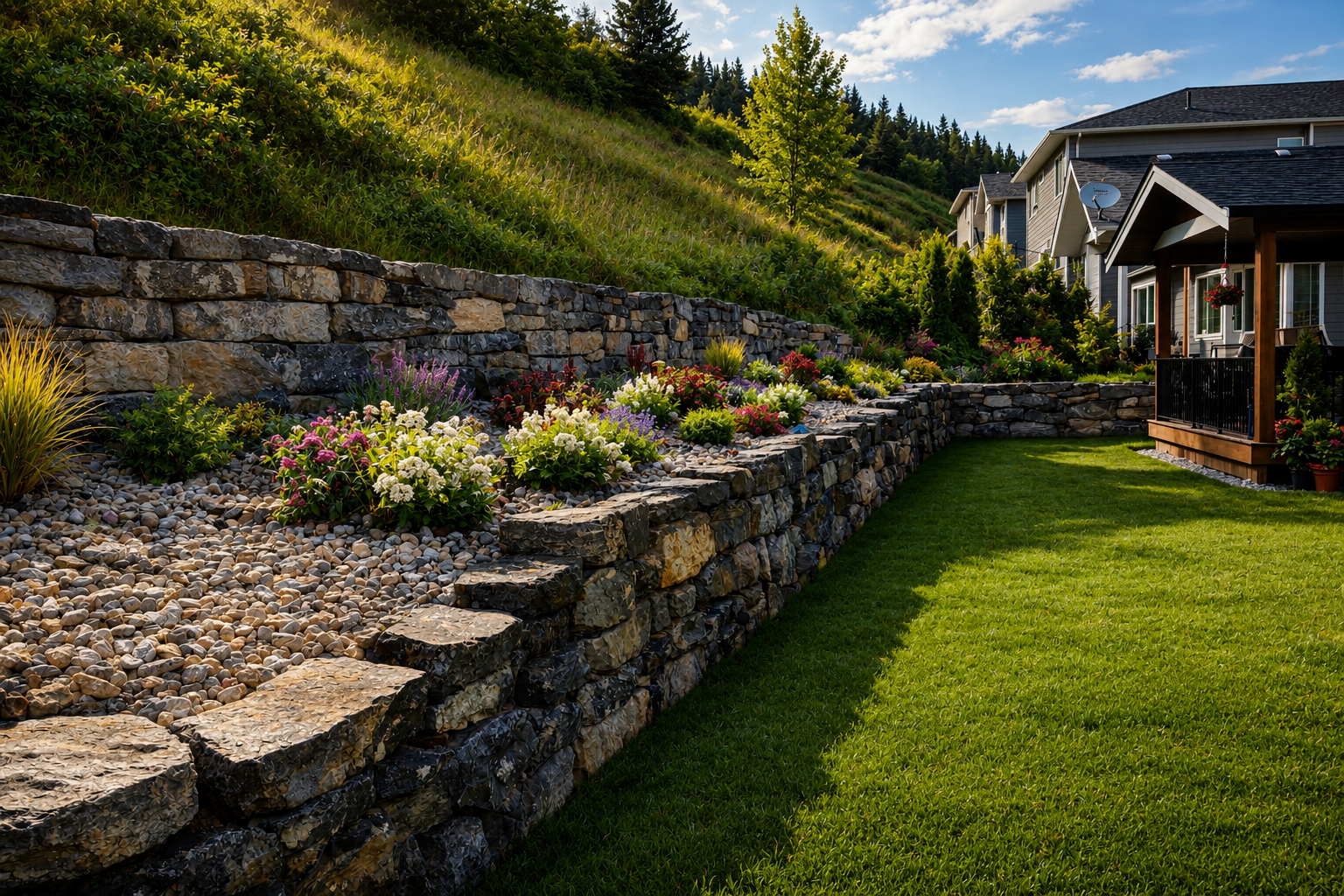

Our foreshore and shoreline permit handling service walks through how we coordinate these referrals on your behalf, and our waterfront retaining walls page covers the design considerations specific to lakeside slopes. If your wall will sit near or above four feet regardless of shoreline location, our guide on when engineering is required is a useful companion read, and homeowners in Coldstream should also see our Coldstream landscape bylaws guide for how local rules layer on top of the provincial foreshore review.
Planning a Waterfront Project?
Talk to our team early so permit realities are built into your design from day one, not discovered halfway through it.
Book a Consultation →