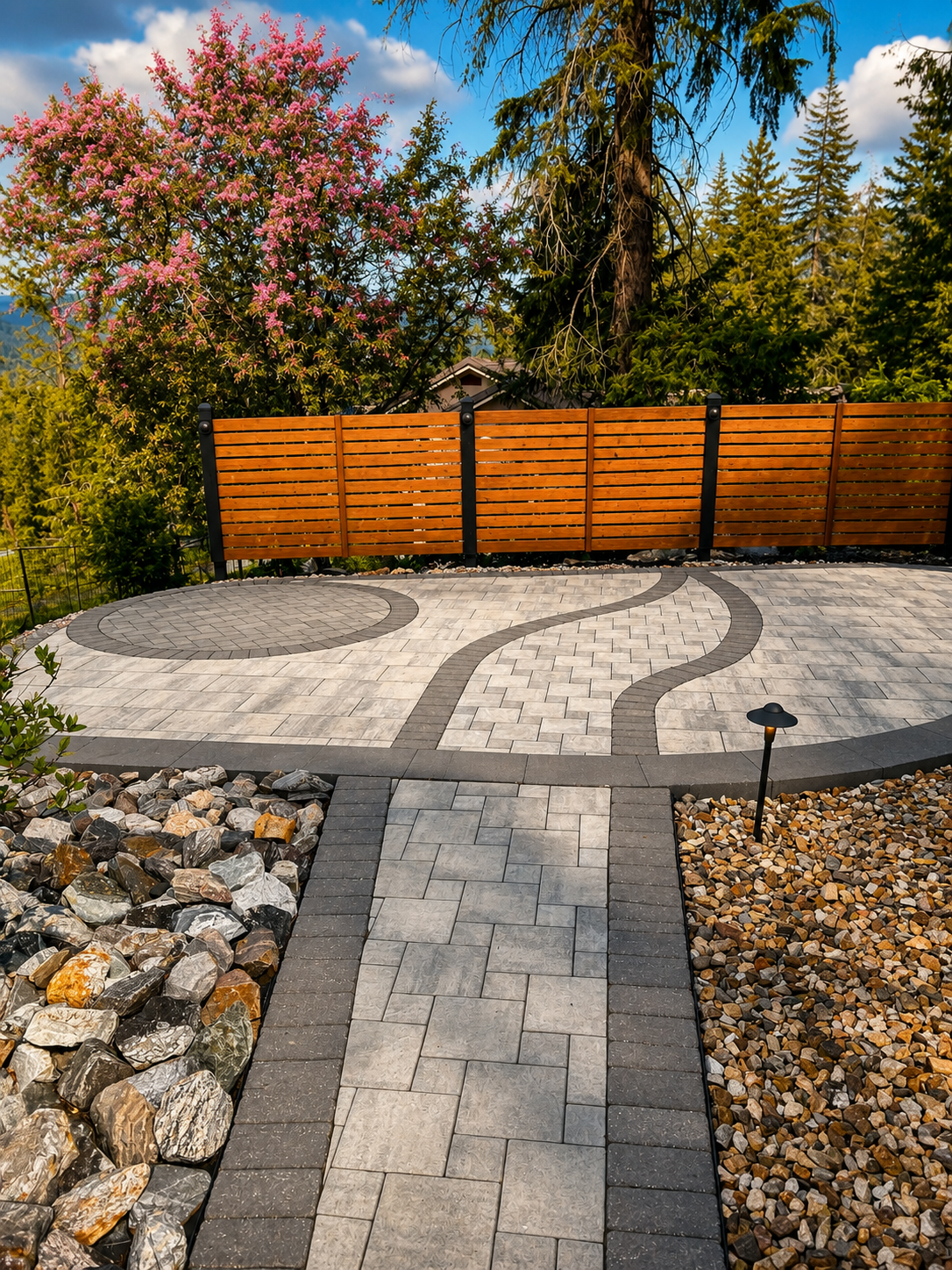
Paver Patio vs. Natural Stone Patio: Which Is Right for You
Pavers cost less, install faster, and offer more colour and pattern control; natural stone costs more but delivers a one-of-a-kind, organic look that pavers can’t fully replicate. Most Okanagan homeowners choose pavers for value and design flexibility, and reserve natural stone for feature areas or properties where an irregular, quarried look is the goal.
Cost, Aesthetic, and Installation Compared
Cost. Paver patios are priced by tier: standard concrete pavers run $30–40/sq ft, premium pavers (larger format, textured, or blended colours) run $40–50/sq ft, and large-format or specialty pavers run $50–60+/sq ft. Most paver patio projects in our region land between $12,000 and $75,000+ depending on size, pattern complexity, and site prep. Natural stone — flagstone, quarried slab, or dimensional cut stone — is priced project by project because material cost varies widely by stone type, thickness, and how much cutting and fitting the layout demands; irregular “puzzle-cut” flagstone generally costs more in labour than a squared, gauged stone laid in a running pattern. As a rule of thumb, expect natural stone to sit at or above the top of the paver range for a comparable-sized patio, with premium quarried stone pushing well beyond it. These are early budget ranges, not formal quotes — final pricing depends on site access, existing conditions, excavation, grading, drainage, material selections, engineering, and the final approved design.
Aesthetic. Pavers are manufactured to consistent dimensions and colour, which means clean lines, tight joints, and predictable patterns (herringbone, running bond, basketweave) that suit contemporary and transitional home styles. Manufacturers also offer multi-tone blends that mimic natural stone’s variation without the cost. Natural stone is quarried, not manufactured, so every piece is genuinely unique — irregular edges, natural colour banding, and surface texture that pavers can approximate but never exactly duplicate. Stone tends to read as more organic and is often the better fit for rustic, character, or acreage-style properties, and for blending a patio into a naturalized planting bed or rock garden.
Installation. Both systems typically go over a compacted gravel base and levelling bed, but the labour differs. Pavers are uniform units, so crews can lay large areas quickly and predictably, and a damaged paver can be lifted and replaced without disturbing the surrounding surface. Natural stone installation is slower and more skilled work: each piece is often hand-selected and dry-fit before setting, especially with irregular flagstone, to get consistent joint widths and a level walking surface across pieces of varying thickness. That additional labour time is the main reason stone costs more even when the raw material price is similar to a premium paver.
Durability and maintenance. Both are excellent long-term surfaces when installed on a proper base. Pavers have a practical edge for repairs — individual units lift and reset cleanly if a section settles or gets stained. Natural stone, particularly thicker quarried slab, can outlast pavers in raw material life, but an individual damaged piece is harder to source and replace as an exact match. Neither surface requires ongoing maintenance contracts to perform well; both benefit from occasional joint sand or polymeric sand top-ups and periodic rinsing.
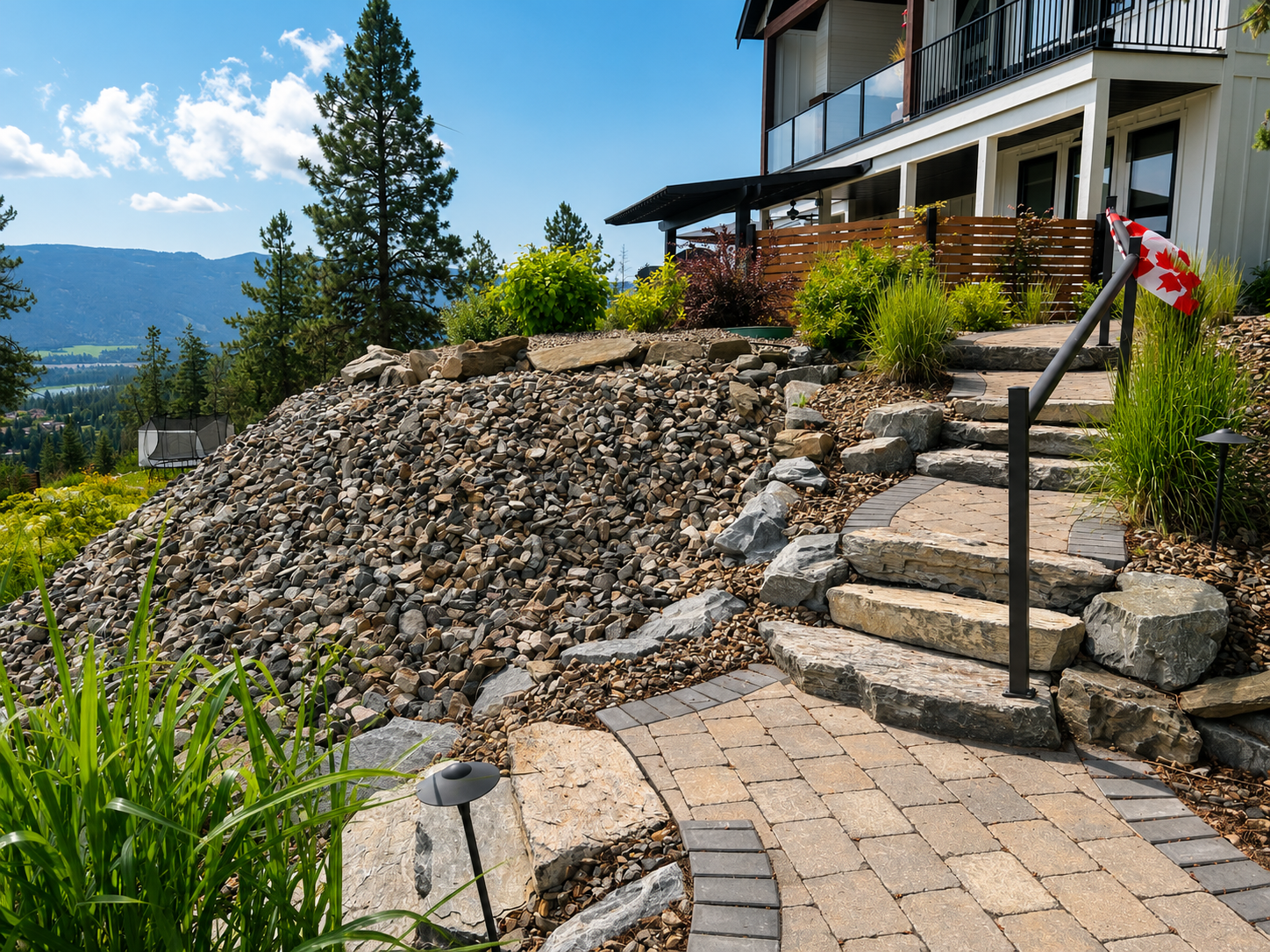
A completed paver hardscape build by Kalagan Outdoor Design
Okanagan-Specific Factors for Paver Patios & Driveways
Freeze-thaw cycling is the single biggest performance factor for any patio surface in Vernon and the wider Okanagan. Both pavers and natural stone need a properly compacted, well-draining gravel base and correct edge restraint to resist frost heave through our cold winters and rapid spring thaws — a base built to spec matters more than the surface material itself. On sloped or hillside lots, which are common throughout the Okanagan, pavers’ uniform thickness makes it easier to hold consistent grade and drainage across a run, while irregular natural stone requires more careful shimming and setting to avoid low spots where meltwater pools and refreezes. If your property sits in a wildfire interface zone, note that patio material choice (paver or stone) is generally non-combustible either way, but the surrounding planting and mulch design matters more for FireSmart compliance than the hardscape surface itself. Water use is not a major differentiator here, since neither surface requires irrigation, though both pair well with drought-tolerant xeriscape planting along the edges to reduce overall yard water demand.
See our full Paver Patios & Driveways service page for process and material options. If you’re also weighing poured concrete against pavers, read Pavers vs. Concrete for Okanagan Patios. Choosing hardscape materials elsewhere on the property? Block vs. Natural Stone Retaining Walls covers the same paver-versus-stone trade-off for wall construction, and Artificial Turf vs. Sod for BC Lawns can help you plan the rest of the yard around your new patio.
Ready to Get a More Accurate Estimate?
Tell us your patio size and material preference and we’ll help you compare paver and natural stone options for your site.
Get a More Accurate Project Estimate → Book a Consultation