Pollinator Plants for Kalamalka Lake Gardens
The right plant palette around Kalamalka Lake balances two things at once: attracting bees, butterflies, and hummingbirds, and surviving hot, dry Okanagan summers on minimal water. Genera like lavender, echinacea, bee balm, and native asters do both well when grouped and placed correctly.
Why This Matters Around Kalamalka Lake
Kalamalka Lake’s shoreline neighborhoods sit in one of the driest, sunniest corners of the Okanagan, and many homeowners here are also drawn to the lake’s marl-blue water and grasslands aesthetic. That combination makes pollinator gardening a genuinely good fit for the area: the same drought-tolerant, sun-loving perennials that thrive in our climate also happen to be excellent nectar and pollen sources. Rather than fighting the local conditions with thirsty, high-maintenance ornamentals, a pollinator-focused bed works with them.
A well-designed pollinator garden isn’t just a few scattered plants. It’s a sequence of blooms from spring through fall, a mix of flower shapes that suit different pollinators (tubular blooms for hummingbirds, flat clusters for bees and butterflies), and enough plant mass grouped together that foraging insects can find what they need efficiently.
Plants That Perform Well Here
Lavender is close to a signature plant for this climate: it loves heat, tolerates poor soil, and blooms through the peak of summer when bees are most active. Echinacea (coneflower) brings structure and a long bloom window, and its seed heads feed birds into the fall if left standing. Bee balm (monarda) is a hummingbird and bumblebee favourite, with a scent that also tends to deter deer. Yarrow is nearly bulletproof in Okanagan soil and provides flat-topped clusters that are easy landing pads for smaller pollinators. Native asters extend the season into September and October, when few other flowers are still blooming, giving late-season pollinators a critical food source before winter.
Other genera worth considering in a mixed bed include Russian sage, catmint (nepeta), sedum, and rudbeckia (black-eyed Susan) — all share the same drought tolerance and pollinator appeal, and layer in additional bloom times and textures.
Design and Placement Basics
Full sun (six-plus hours) and sharp drainage are the two non-negotiables for most of the plants above. Grouping in drifts of three to seven plants per species, rather than single specimens scattered through a bed, gives pollinators an efficient, visible target and reads better as a designed landscape rather than a random collection. Staggering bloom times across a bed means there’s something flowering continuously from May through October, which keeps pollinator traffic steady rather than concentrated in one or two short windows.
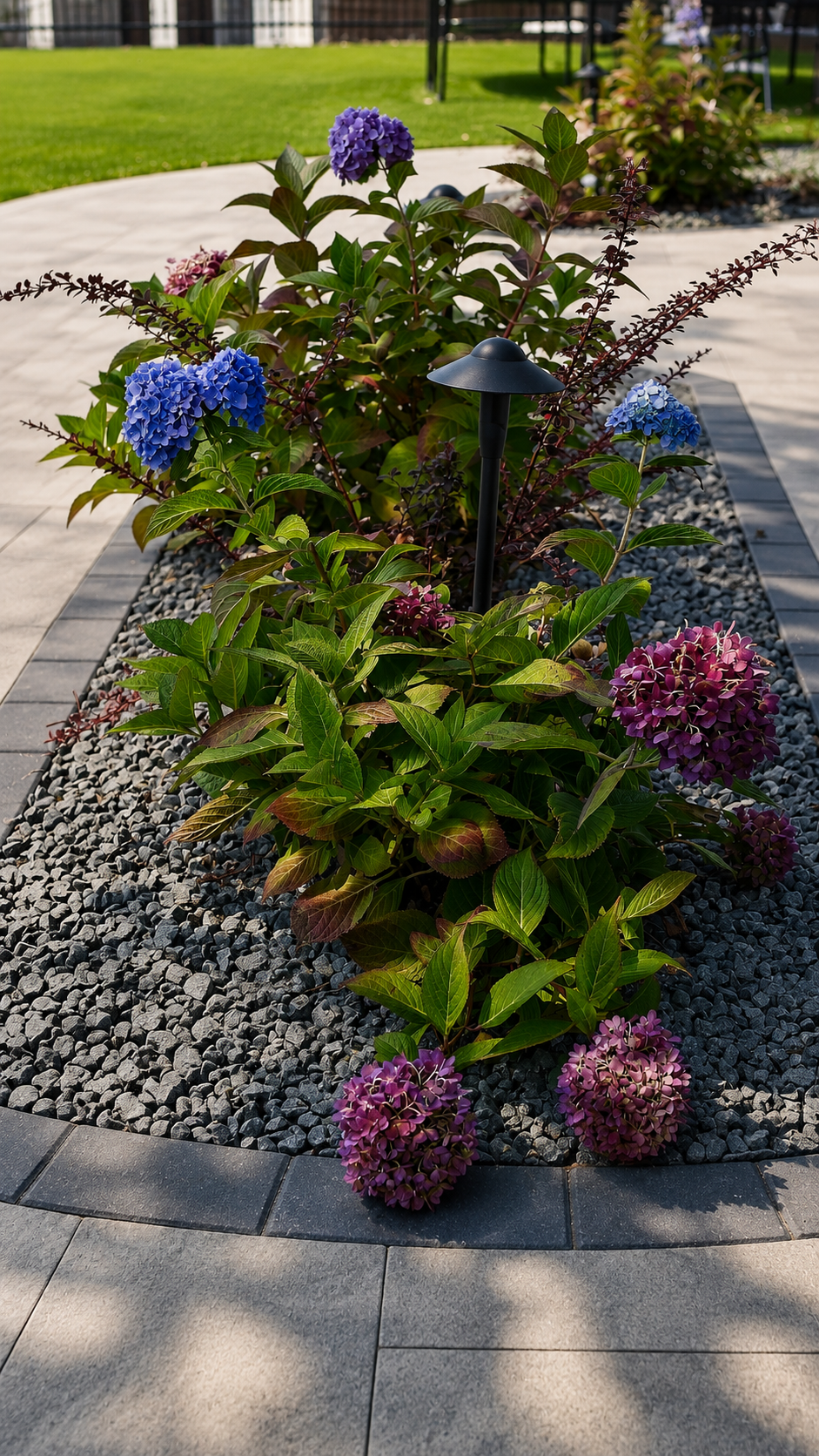
A finished planting bed by Kalagan Outdoor Design
Okanagan-Specific Factors for Planting & Xeriscape Design
The Kalamalka Lake area sits in a rain-shadow microclimate with hot, dry summers and relatively low precipitation, which is exactly the environment lavender, echinacea, yarrow, and native asters evolved to handle. This overlap means a pollinator garden here can also be a genuinely low-water landscape once established, cutting down on irrigation demand compared to a traditional lawn-and-annuals approach. Soil around the lake also tends to be well-drained and mineral-rich, which most of these perennials prefer over heavy, wet clay. Deer pressure is worth planning around too: lavender, bee balm, Russian sage, and yarrow are all generally deer-resistant choices, which matters on the semi-rural properties common around Coldstream and the lake’s east side.
If you’re planning a full planting design rather than a single bed, our Xeriscaping & Planting Design service builds pollinator-friendly, low-water landscapes suited to this exact climate. Homeowners along the lake in Coldstream often pair pollinator beds with drought-tolerant hardscaping to keep the whole property water-smart.
Want a Planting Plan Built Around Your Yard?
Book a consultation and we’ll help design a pollinator-friendly planting palette suited to your specific site and sun conditions.
Book a Consultation →