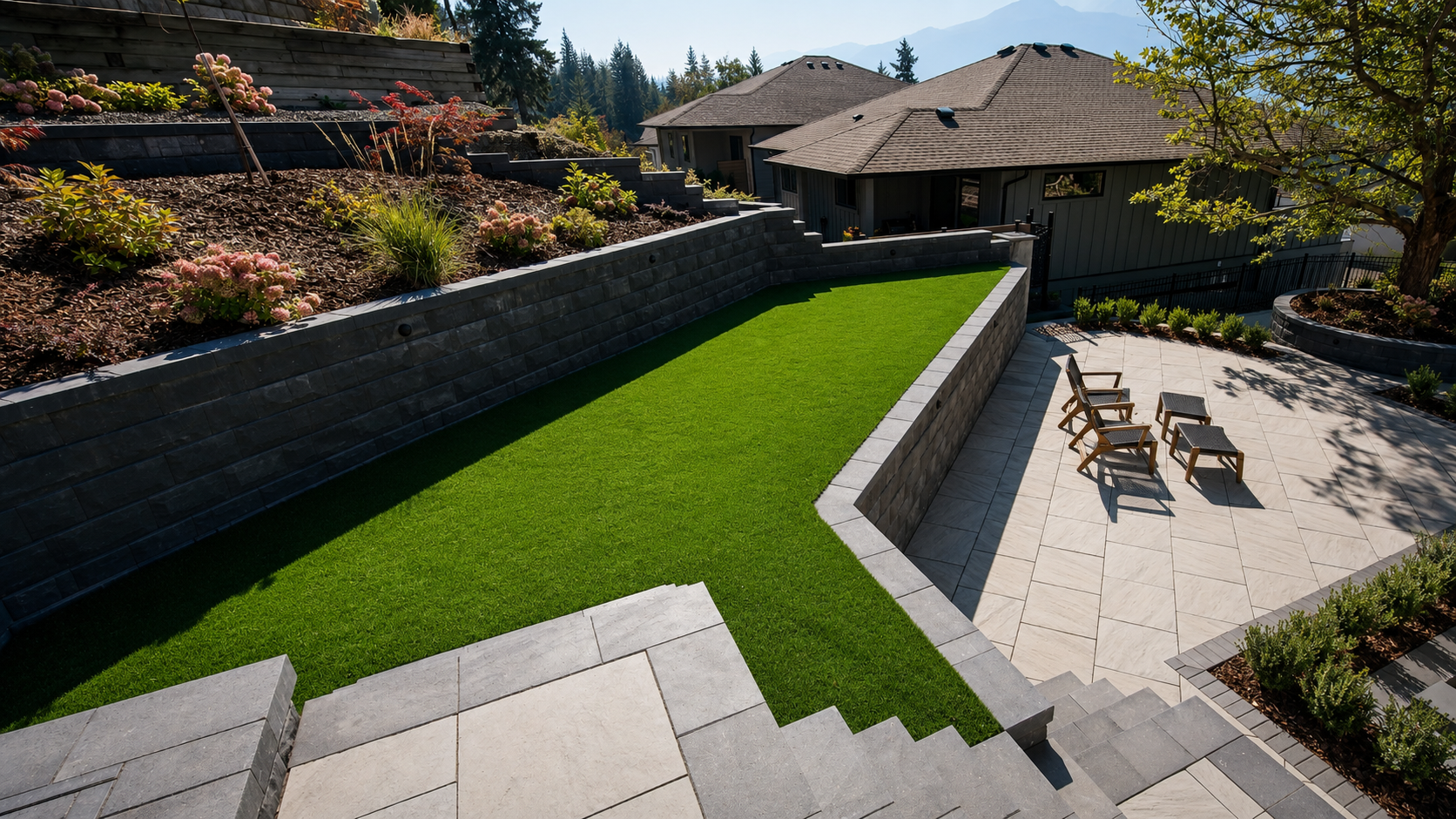
Best Groundcovers for Slopes
For most Okanagan hillsides, spreading evergreens like creeping juniper and native kinnikinnick, plus tough succulent groundcovers like sedum, hold soil best because their root mats knit into the slope while needing almost no irrigation once established. The right choice depends on how steep the slope is, how much sun it gets, and whether you need year-round cover or can accept a plant that dies back in winter.
Why Groundcover Choice Matters on a Slope
A slope loses topsoil to rain and snowmelt every year that it’s left bare or thinly planted. Turf grass is a poor fit — its roots are shallow, it’s difficult and often unsafe to mow on an incline, and it needs more water than most Okanagan properties can justify. A well-chosen groundcover solves both problems: its root system physically holds the soil together, and its foliage slows water down before it can carry sediment downhill. The best slope groundcovers share three traits — a spreading or mat-forming habit, a root system that goes wide rather than just deep, and enough drought tolerance to survive on a slope where water runs off before it can soak in.
Full-Sun Slopes (Most Okanagan Hillsides)
The majority of exposed slopes in the Vernon and greater Okanagan area face south or west and get long hours of direct summer sun. These plants are proven performers in that exposure:
Creeping juniper (Juniperus horizontalis) — Cultivars like ‘Blue Chip’ and ‘Wiltonii’ stay under 12 inches tall but spread 6-8 feet, forming a dense, woody root mat that’s excellent for erosion control. Evergreen year-round, extremely drought-tolerant once established, and unbothered by our winters.
Kinnikinnick / bearberry (Arctostaphylos uva-ursi) — A BC native found naturally on dry, rocky slopes throughout the interior, so it’s about as well-adapted to local conditions as a groundcover gets. Glossy evergreen foliage, small pink flowers, red berries, and a fibrous root system built for holding thin, rocky soil in place.
Bearberry cotoneaster (Cotoneaster dammeri and C. adpressus) — Fast-spreading, low, and tough, with arching stems that root as they touch soil — useful on a slope because it self-anchors as it spreads. Tolerates poor soil and drought well.
Stonecrop (Sedum spurium, Sedum album) — A succulent groundcover that stores water in its leaves, so it thrives on slopes where water sheds quickly. Shallower-rooted than juniper or cotoneaster, so it works best on gentler grades or in combination with a deeper-rooted anchor plant nearby. Comes in a range of foliage colours from green to burgundy.
Creeping thyme (Thymus serpyllum) — Very low, fragrant, and drought-tolerant, with a dense fibrous root system. Better suited to gentle slopes and rock-garden pockets than steep grades, since its mat is thinner than juniper or cotoneaster.
Shrubby cinquefoil (Potentilla fruticosa) — Low native shrub forms, under 2 feet, with a woody root system and long summer bloom. A good transition plant between groundcover and low shrub on a slope’s upper edge.
Shaded or North-Facing Slopes
Slopes shaded by a house, fence line, or mature trees need different plants — most sun-loving groundcovers thin out and stop holding soil effectively without direct light.
Wintercreeper (Euonymus fortunei) — Evergreen, shade-tolerant, and vigorous, with a spreading habit that roots along its stems similarly to cotoneaster. One of the more reliable choices for a shaded bank.
Periwinkle (Vinca minor) — Fast, dense, evergreen groundcover for part shade to full shade. Shallower-rooted than the sun-loving options above, so it’s best on moderate rather than steep grades, or layered over a deeper-rooted shrub.
Snowberry (Symphoricarpos albus) — A BC native shrub that suckers and spreads by rhizome, tolerating shade, poor soil, and slopes well. Not a low mat like the others, but its spreading root network is genuinely effective at holding a wooded bank together.
Steep vs. Gentle Grades
On grades gentler than roughly 3:1 (one foot of drop for every three feet of run), most of the plants above can be installed directly into prepared soil. On steeper grades, erosion-control fabric or jute matting is typically installed first to hold soil and mulch in place while the groundcover’s root system establishes over its first one to two growing seasons — expect that establishment window before the planting is doing the erosion-control work on its own. Very steep or unstable slopes usually call for structural intervention rather than planting alone; see the note on terracing below.
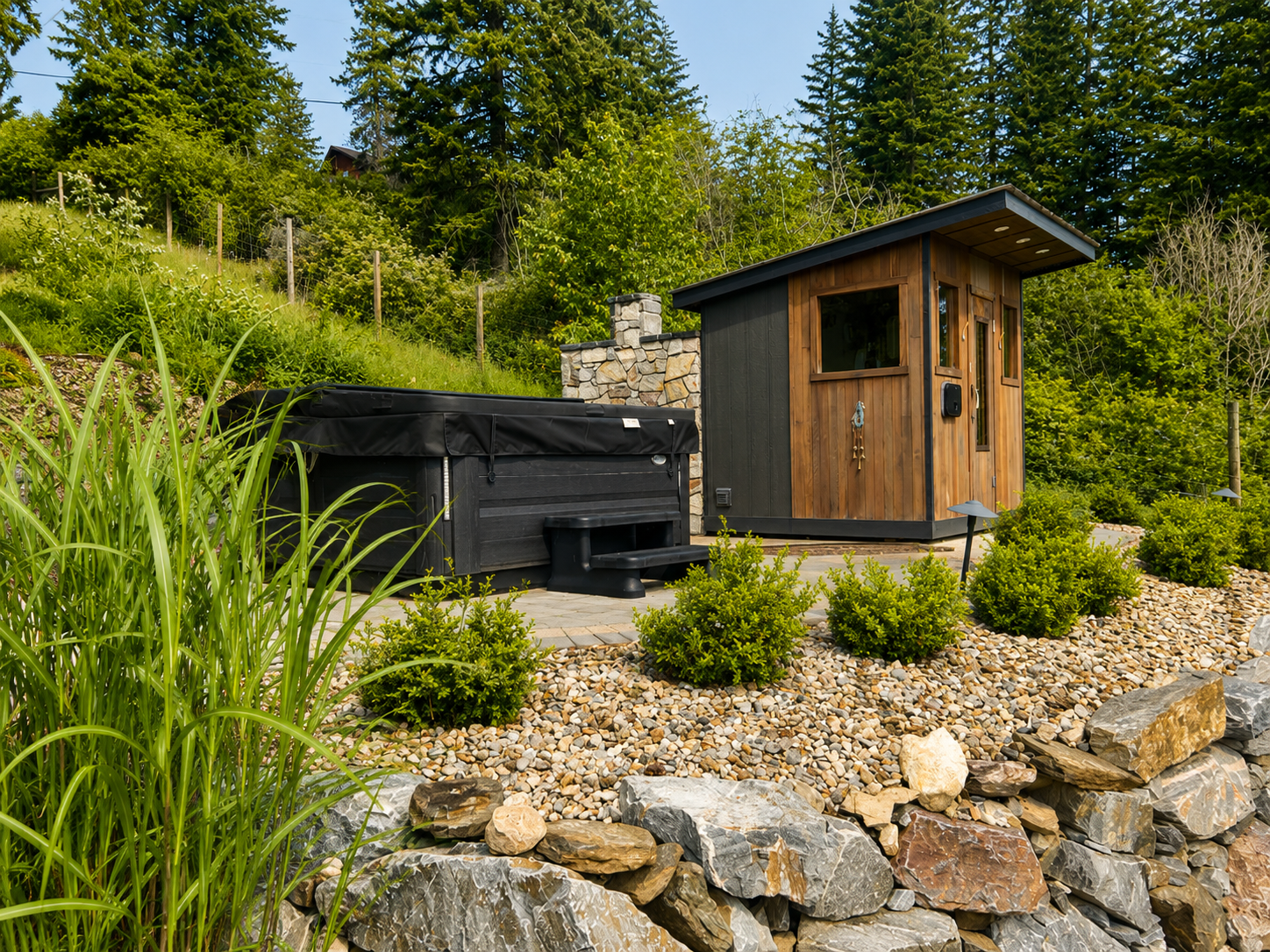
A completed retaining wall build by Kalagan Outdoor Design
Okanagan-Specific Factors for Retaining Walls
Okanagan slopes present a particular combination of challenges: a semi-arid climate with real water restrictions in peak summer, hot south- and west-facing exposures that bake thin hillside soil, and winter freeze-thaw cycles that can heave shallow-rooted plants out of the ground before their roots are established. This is exactly why drought-tolerant, deep-rooted natives and xeric groundcovers — juniper, kinnikinnick, cotoneaster, sedum — consistently outperform imported turf-type groundcovers on local slopes; they were built for this climate or are close enough to it. On steeper hillside lots, especially those regraded during a build or subdivision, erosion risk is often more about slope geometry than plant choice — a slope beyond a safe angle for the soil type will keep slumping regardless of what’s planted on it, which is when terracing or a retaining structure becomes the right first move rather than a planting plan alone. Wildfire-zone properties should also weigh FireSmart spacing and fuel-reduction principles into any slope planting plan, since a few of these groundcovers (juniper especially) carry more resin than others.
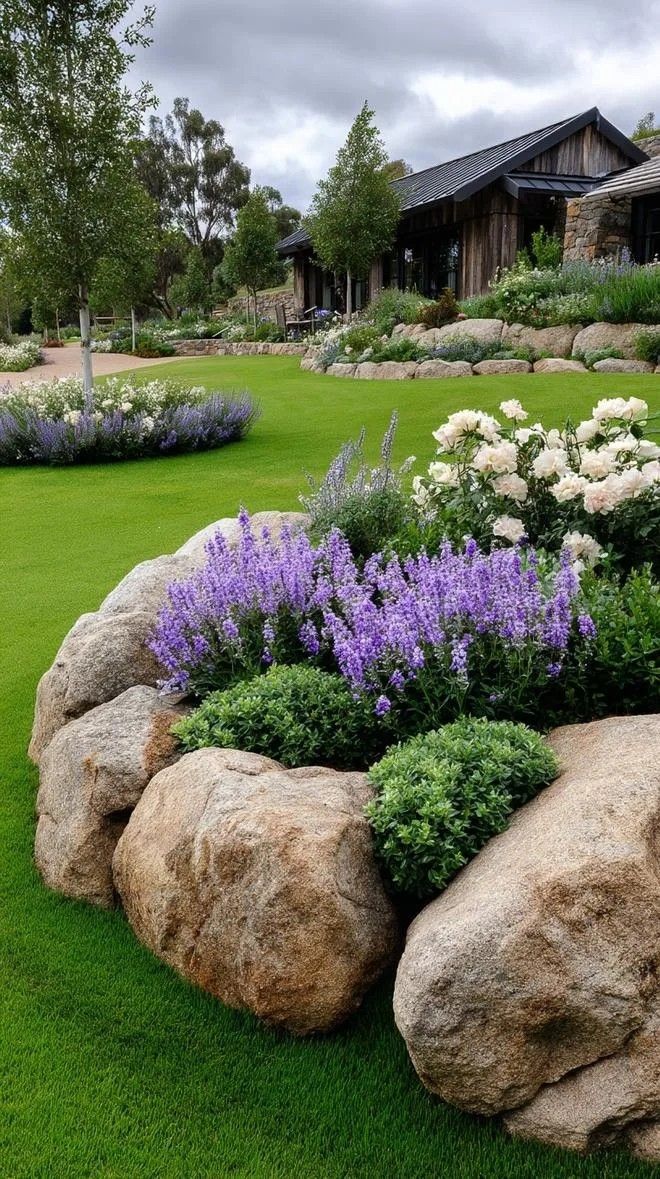
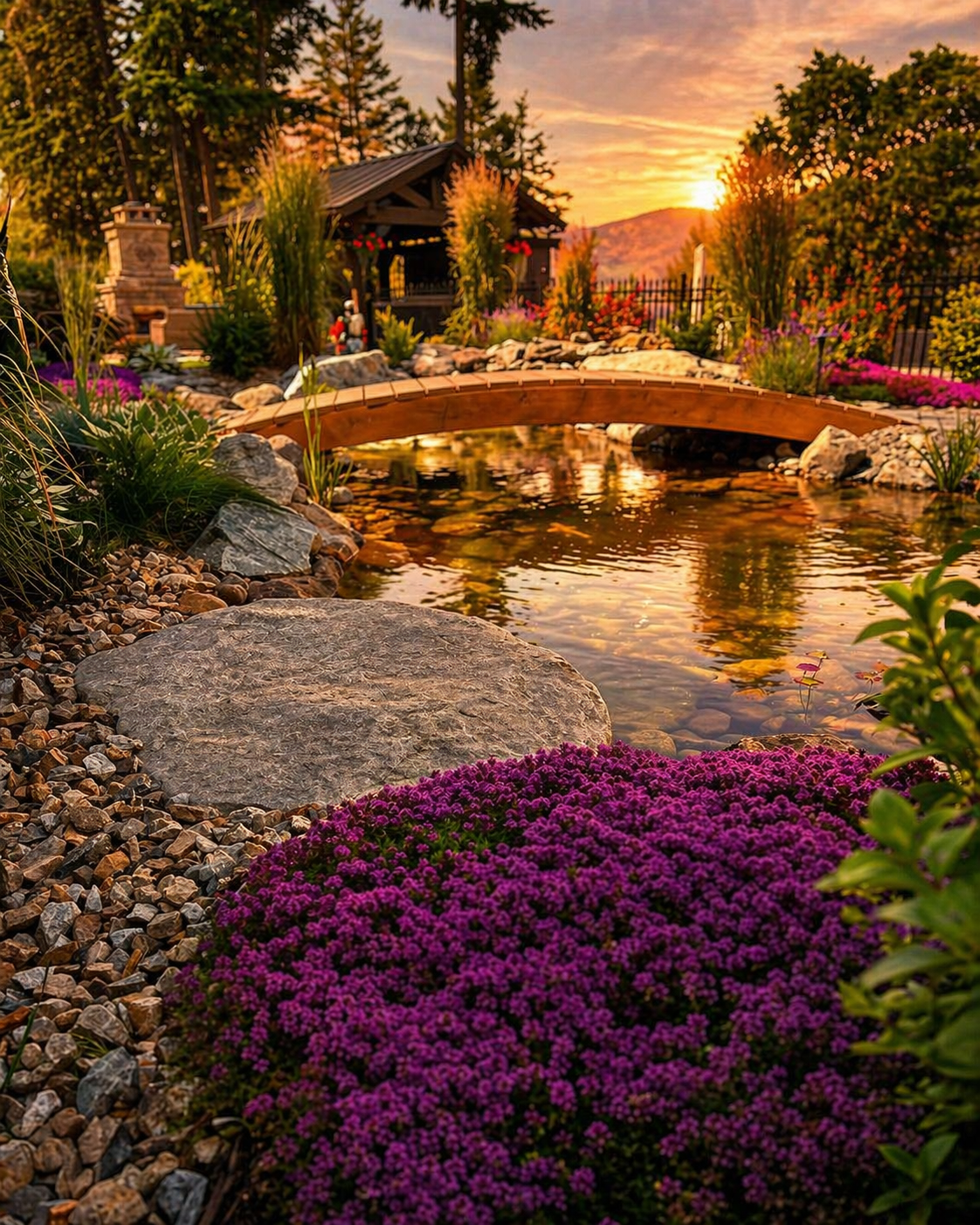
If a slope is too steep for planting alone to control erosion, our hillside terracing service breaks the grade into stable, plantable levels. For the full xeriscaping and planting design process behind slope plantings like these, see our Xeriscaping & Planting Design page. For more Okanagan-adapted plant picks, see 50 Drought-Tolerant Plants for the Okanagan, Zone 5 Native Shrubs for the Okanagan, and Deer-Resistant Perennials for Vernon.
Ready to Plan Your Slope Planting?
Whether your slope just needs the right groundcover or needs terracing first, our design team can walk your site and put together a plan that actually holds.
Explore This Service → Book a Consultation