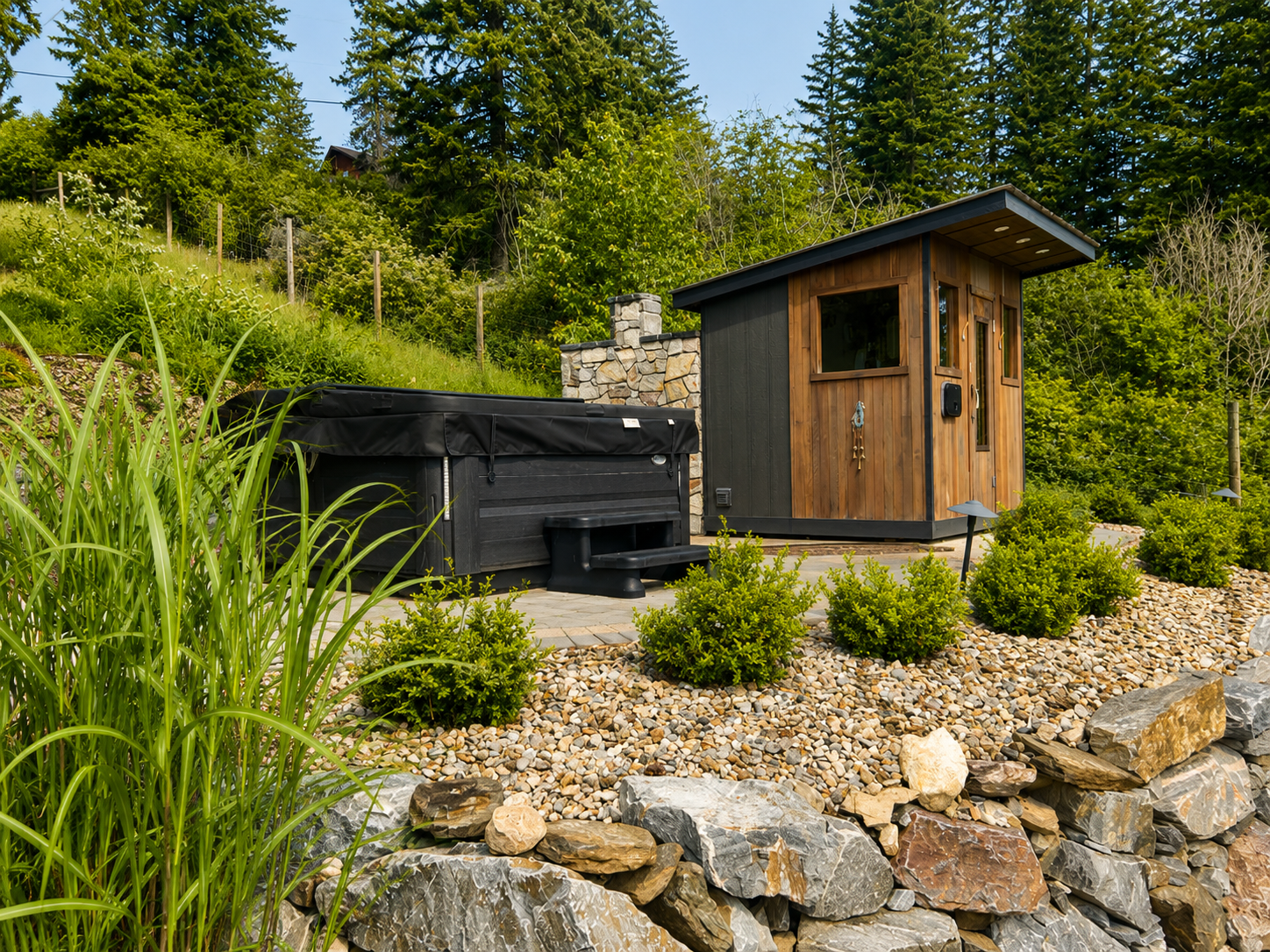
Trees for Okanagan Hillside Properties
The best trees for Okanagan slopes combine a deep or wide-spreading root system with genuine drought tolerance, since most hillside sites in Vernon and the surrounding valley drain fast and bake through the summer. Native conifers like Ponderosa pine, Douglas-fir, and Rocky Mountain juniper, along with tough deciduous species like trembling aspen and Saskatoon, consistently outperform ornamental nursery stock on steep, exposed ground.
Why Root Structure Matters More Than Looks on a Slope
On flat ground, tree selection is mostly about form, shade, and seasonal interest. On a slope, root architecture is the deciding factor. A tree with a shallow, spreading root plate can look established for years and still fail in a wet spring when saturated soil loses its grip on a grade. Trees that send roots deep into the subsoil, or that knit together into a dense fibrous mat close to the surface, are what actually hold a hillside together. The best hillside plantings usually combine both types — a few deep-rooted anchor trees paired with fibrous-rooted trees and shrubs filling in between them.
Conifers for Deep Anchoring and Year-Round Structure
Ponderosa pine (Pinus ponderosa) is the signature tree of Okanagan hillsides for good reason. It sends a long taproot deep into rocky, well-drained soil, tolerates extreme heat and drought once established, and needs essentially no irrigation on a south-facing slope after its first couple of seasons. It is the closest thing to a default choice for a sunny, exposed grade.
Douglas-fir (Pseudotsuga menziesii) handles a wider range of slope conditions than Ponderosa pine, including partially shaded north- and east-facing hillsides, and develops a strong, wide-spreading root system as it matures. It is a better fit where the site has slightly more moisture retention or afternoon shade.
Rocky Mountain juniper (Juniperus scopulorum) is one of the most drought-tolerant trees available for this climate and thrives on thin, rocky soils where little else will establish. Its extensive, fibrous root network makes it particularly effective on the steepest, most erosion-prone sections of a slope, and it stays relatively low and compact compared to pine or fir.
Colorado blue spruce (Picea pungens) is a good option lower on a slope where soil is deeper and moisture is more consistent. It is less drought-tolerant than pine or juniper and should not be relied on for the driest, most exposed upper sections.
Deciduous Trees for Fibrous Root Mats
Trembling aspen (Populus tremuloides) spreads by root suckers, forming a dense, interconnected root network that is excellent at stabilizing loose or disturbed soil after grading or construction. It is fast-growing and works well as a colonizing species on a newly cut slope, though its suckering habit means it needs a defined planting zone rather than placement right beside patios or foundations.
Saskatoon (Amelanchier alnifolia), grown as a large shrub or small multi-stem tree, is native throughout the BC interior and is exceptionally well adapted to rocky, dry slopes. Its fibrous root system, drought tolerance, and spring blossom make it one of the most useful small trees for hillside planting design.
Bur oak (Quercus macrocarpa) develops one of the deepest taproots of any tree suited to this climate and, once mature, is extremely resilient on a slope. It is slower to establish than the species above, so it is best planted as a long-term structural anchor rather than for immediate erosion control.
Chokecherry (Prunus virginiana) is another native, fibrous-rooted small tree that tolerates dry, exposed hillsides and works well massed along a slope’s mid-section to knit soil together between larger anchor trees.
Species Better Suited to Lower, Moister Ground
Paper birch (Betula papyrifera) and Western redcedar (Thuja plicata) are both excellent trees for the Okanagan, but neither is a strong hillside choice on its own — both want more consistent soil moisture than a dry, south-facing slope typically provides. They perform better at the base of a slope, in a drainage swale, or anywhere irrigation or natural runoff keeps the root zone from drying out completely.
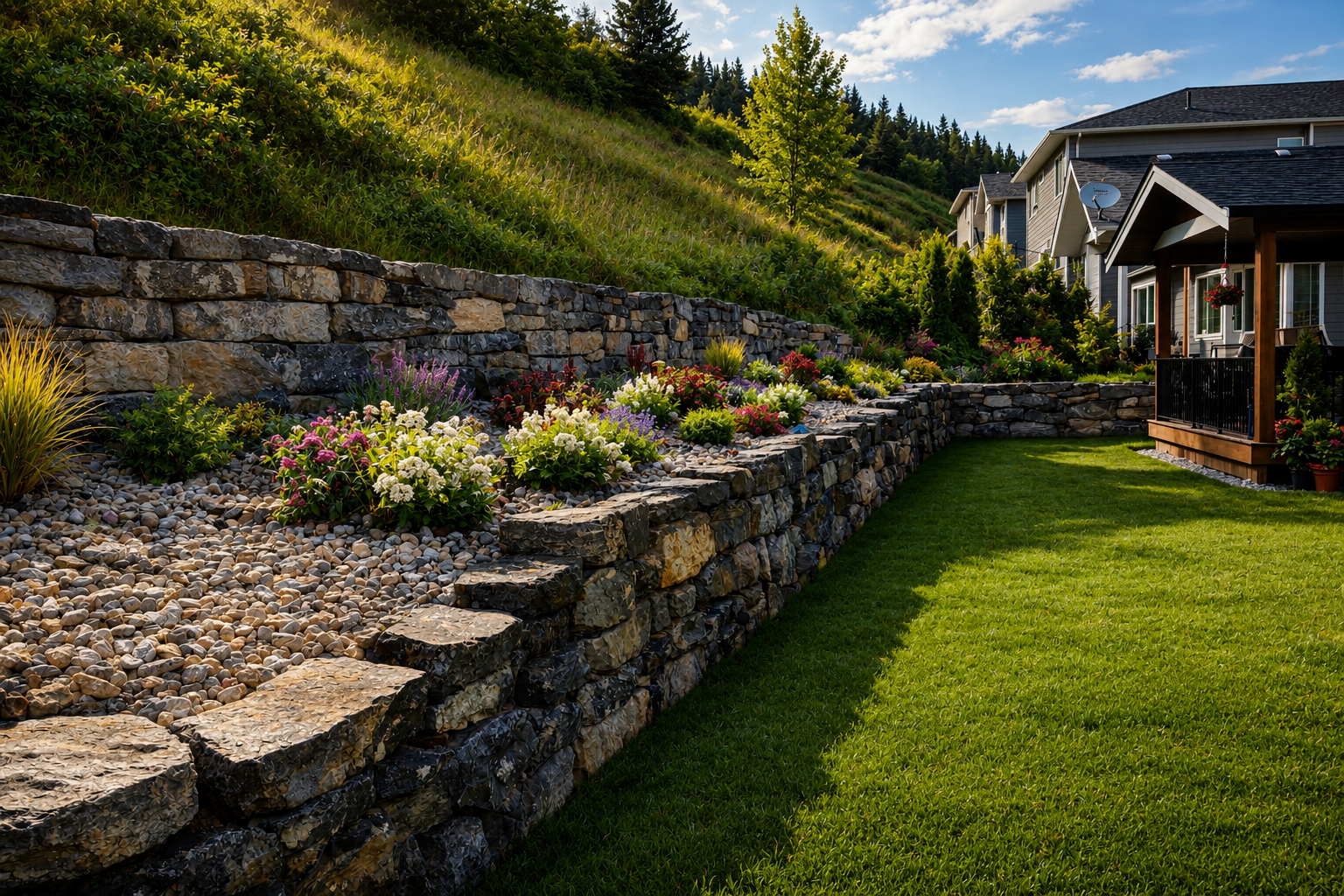
A completed retaining wall build by Kalagan Outdoor Design
Okanagan-Specific Factors for Retaining Walls
Vernon and the surrounding Okanagan Valley sit in a semi-arid climate zone, typically USDA hardiness zone 5a to 5b depending on elevation and aspect, with hot, dry summers and cold winters. That combination shapes every hillside planting decision. South- and west-facing slopes bake in direct sun for most of the day and lose moisture fast, which is why drought tolerance matters as much as root structure — a tree that needs regular irrigation to survive is fighting the site rather than working with it. Freeze-thaw cycles in spring and fall also move soil on a slope, which is another reason a deep or dense root system matters: it holds soil in place through repeated freezing and thawing, not just through a single heavy rain event. On properties in or near a wildfire interface zone, species selection and spacing should also account for FireSmart principles — keeping canopy gaps between mature conifers and avoiding dense continuous stands close to structures. Because grading, drainage, and soil stability all interact on a slope, hillside tree planting is rarely a standalone project; it is usually planned alongside retaining wall or terracing work and broader xeriscape planting design so the whole slope functions as one system rather than a patchwork of unrelated plantings.
For the shrub and perennial layers that fill in around hillside trees, see Zone 5 Native Shrubs for the Okanagan and 50 Drought-Tolerant Plants for the Okanagan. If deer pressure is a concern on your slope, our guide to Deer-Resistant Perennials for Vernon covers companion planting that won’t get browsed back. Where a hillside needs structural support in addition to planting, see our hillside terracing work, and for full slope planting design, visit our Xeriscaping & Planting Design service page.
Ready to Plan Your Hillside Planting?
Every slope is different — talk with our design team about the aspect, grade, and soil on your property so we can recommend the right mix of trees for stability and long-term drought tolerance.
Explore This Service → Book a Consultation