Water Restrictions in the Okanagan: Designing Around Them
The Okanagan is a semi-arid valley with seasonal watering restrictions in every municipality, so a landscape that looks great in May but struggles under a Stage 2 or 3 restriction in August isn’t actually finished. The fix isn’t less landscaping — it’s designing so the yard barely notices when the sprinkler schedule tightens up.
Why Restrictions Exist — and Why They Bite Harder Here
Vernon, Kelowna, Lake Country, Coldstream, and most other Okanagan municipalities run tiered outdoor watering schedules that get stricter as summer demand peaks, typically moving through stages that limit which days and hours you can irrigate and sometimes cap total volume. These aren’t emergency, one-time rules — they’re the normal operating condition of a valley that draws heavily from Okanagan Lake and connected watersheds during the exact months when lawns and gardens need water most. If your landscape was designed assuming unrestricted watering, a Stage 2 or 3 tightening isn’t an inconvenience, it’s the moment the yard starts to fail.
The practical issue is that most residential landscapes in this valley were planted with coastal or prairie assumptions baked in — a lawn-dominant layout, cool-season turf that wants frequent deep watering, and ornamental beds chosen for looks rather than climate fit. That combination works fine under an unrestricted tap. Under a restricted schedule, it’s the layout that’s fighting the climate, not the weather that’s fighting the yard.
Designing So Restrictions Don’t Matter as Much
The most effective response isn’t a bigger irrigation system — it’s a smaller water budget by design. That comes down to a handful of decisions made at the design stage, before a single plant goes in the ground:
Shrink the water-hungry footprint. Traditional cool-season lawn is the single highest water draw in most yards. Reducing lawn area to the spaces that actually get used — a play area, a pet run, a defined entertaining lawn — and replacing the rest with drought-tolerant planting or hardscape immediately lowers how much of the yard is even exposed to restriction risk. For areas where a lawn look matters year-round regardless of watering stage, artificial turf removes the water question from that zone entirely.
Hydrozone the planting beds. Grouping plants by water need — rather than scattering thirsty and drought-tolerant species through the same bed — means each zone can be irrigated on its own schedule and none of it gets over- or under-watered to compromise. This is a design-stage decision as much as a planting one; it shapes where beds sit relative to the irrigation zones from day one.
Switch delivery method, not just plant choice. Overhead spray irrigation loses a significant share of its water to evaporation and wind drift, especially in the Okanagan’s dry summer air. Drip and micro-spray systems deliver water at the root zone, which uses meaningfully less volume to achieve the same plant health — and because they’re often exempt or less restricted under municipal watering stages compared to sprinklers, they buy flexibility when a stage change hits.
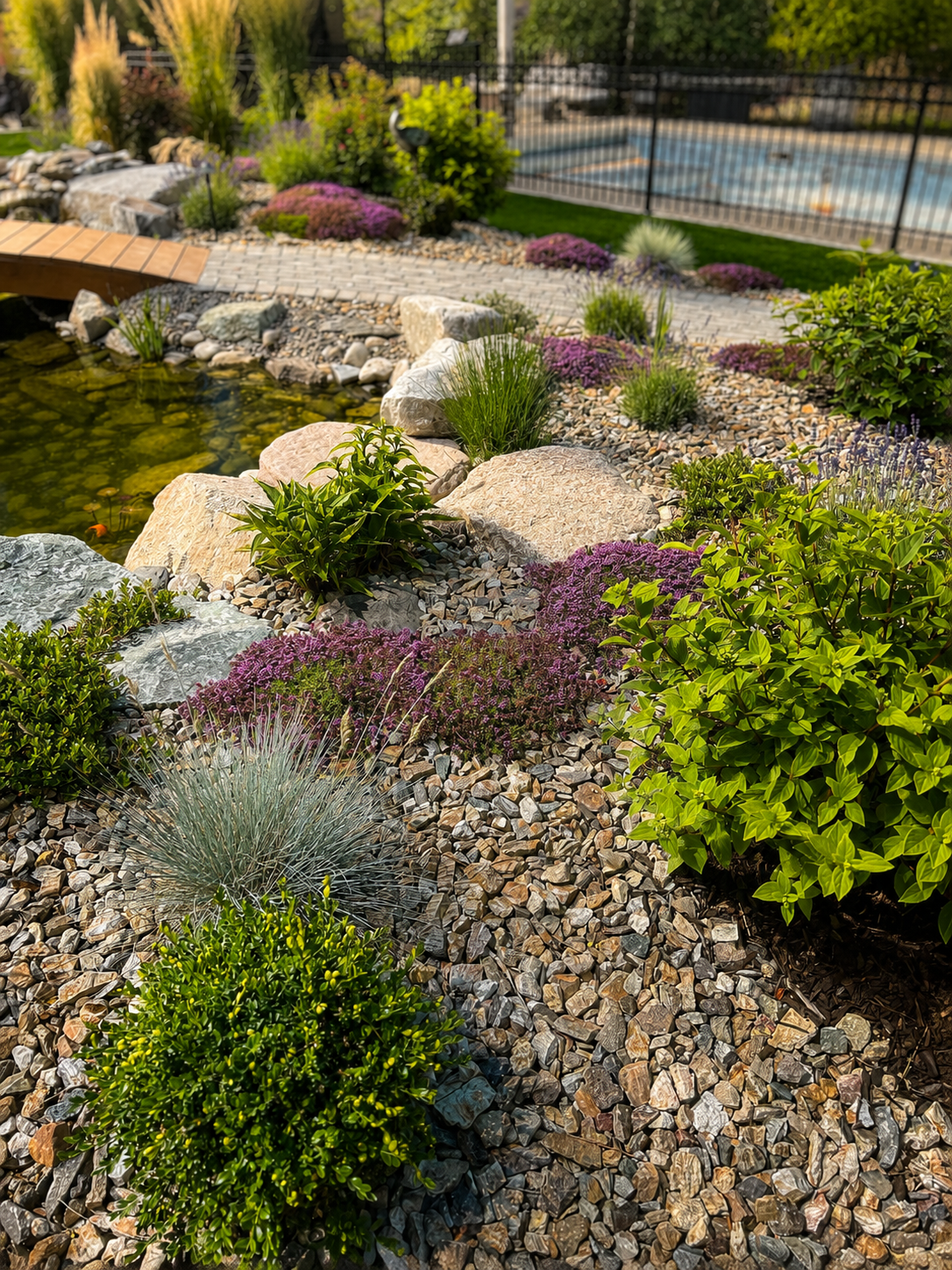
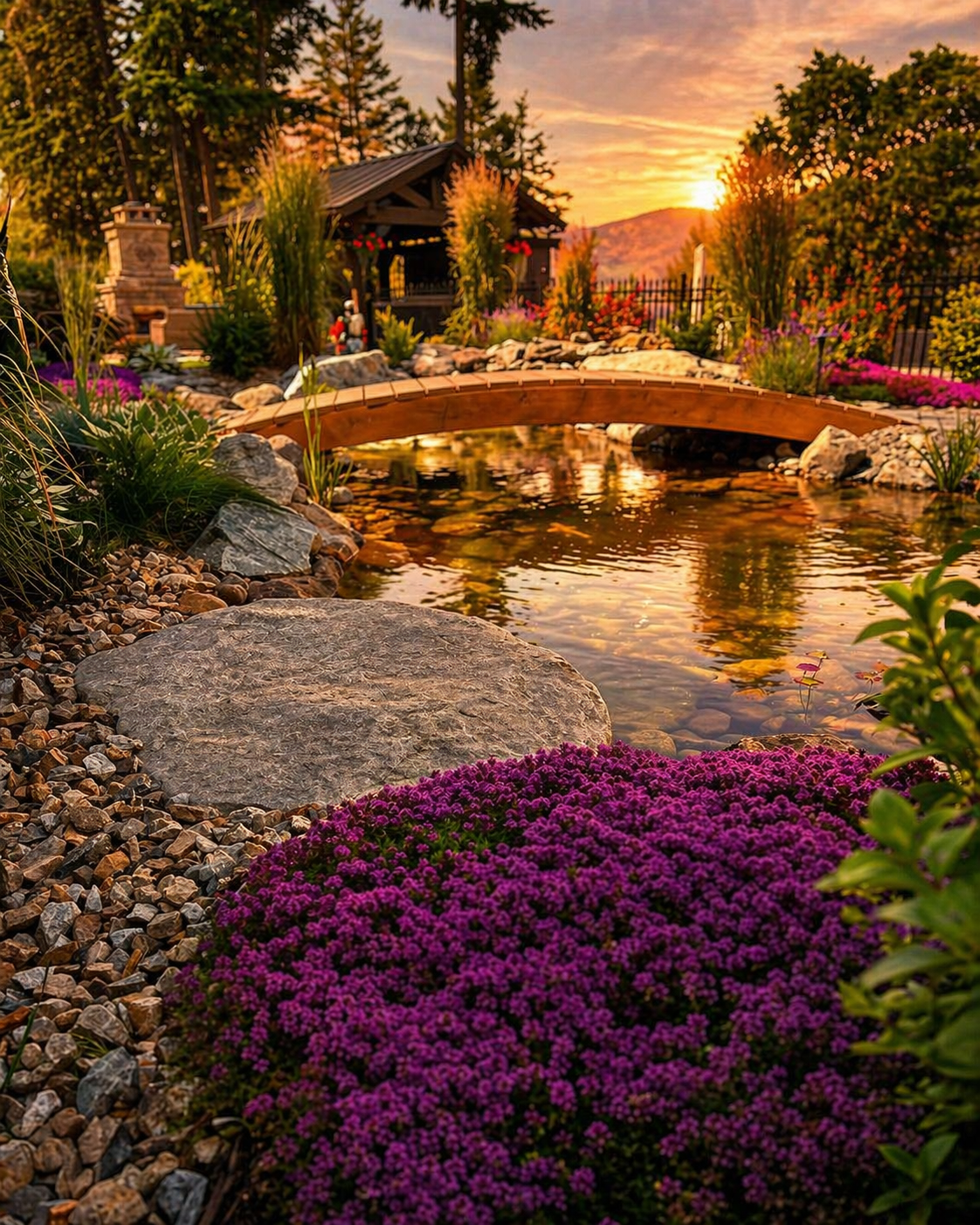
Choose a plant palette built for this climate. Xeriscaping doesn’t mean rock and cactus — it means selecting species that are genuinely comfortable with the Okanagan’s dry, hot summers and cold winters, so they thrive on infrequent deep watering instead of merely surviving it. A well-chosen palette can look as lush as a traditional garden while needing a fraction of the water input once established.
For a full breakdown of how a xeriscape plan comes together — plant selection, soil prep, mulch strategy, and phased planting — see our Xeriscaping & Planting Design service page.

A permit-coordinated project by Kalagan Outdoor Design
Okanagan-Specific Factors for Landscape Permits
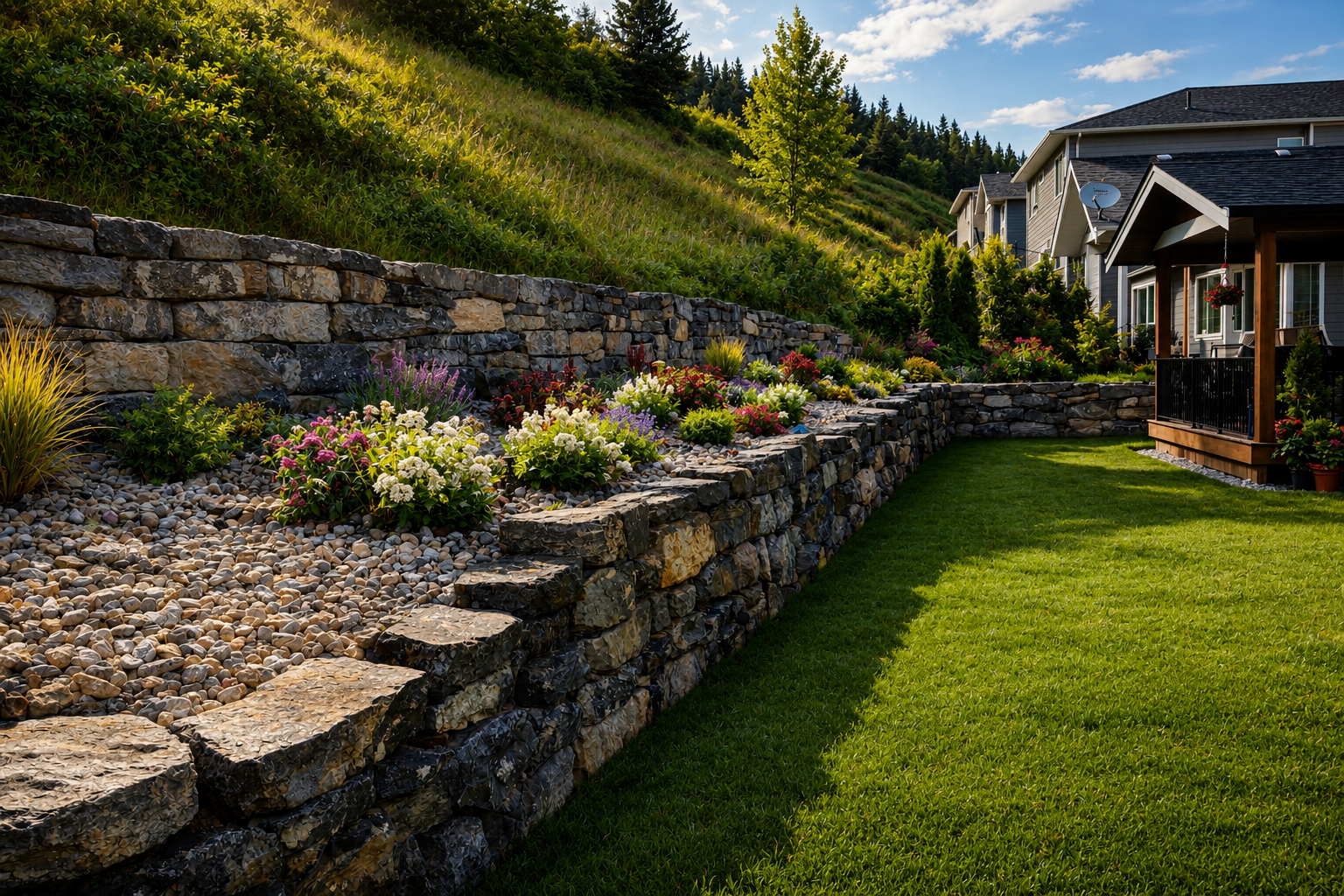
A handful of things make this a valley-specific design problem rather than a generic drought-landscaping one. Summers here run hot and dry with very little rainfall between June and September, so any planting plan has to assume close to zero natural top-up during peak growing season. Elevation and exposure vary sharply within a short drive — a south-facing slope in Coldstream or a benchland lot above Kelowna bakes far harder than a shaded valley-bottom yard, which changes both plant choice and how aggressively you can cut back lawn. Soils across much of the valley also tend toward sandy or rocky with fast drainage, which is good for avoiding waterlogging but means soil amendment and mulch matter more here to hold what moisture there is. And because watering-stage rules and any exemptions for drip irrigation are set municipally, the exact schedule differs slightly between Vernon, Kelowna, Lake Country, and the surrounding districts — worth confirming with your local water utility for the current season’s specifics rather than assuming last year’s rules still apply.
If your property backs onto the lake, water-use decisions often overlap with shoreline rules — see our guide on Okanagan Lake Shoreline Permits: The Foreshore Protocol Explained. Reducing thirsty planting near structures also pairs naturally with wildfire-conscious design — our Fire-Resistant Plant Palette page covers species that do double duty as both drought-tolerant and defensible-space choices.
Want a Yard That Handles Whatever Stage the Summer Brings?
Talk to our design team about a planting and irrigation plan built for the Okanagan’s real water restrictions, not around them.
Book a Consultation →