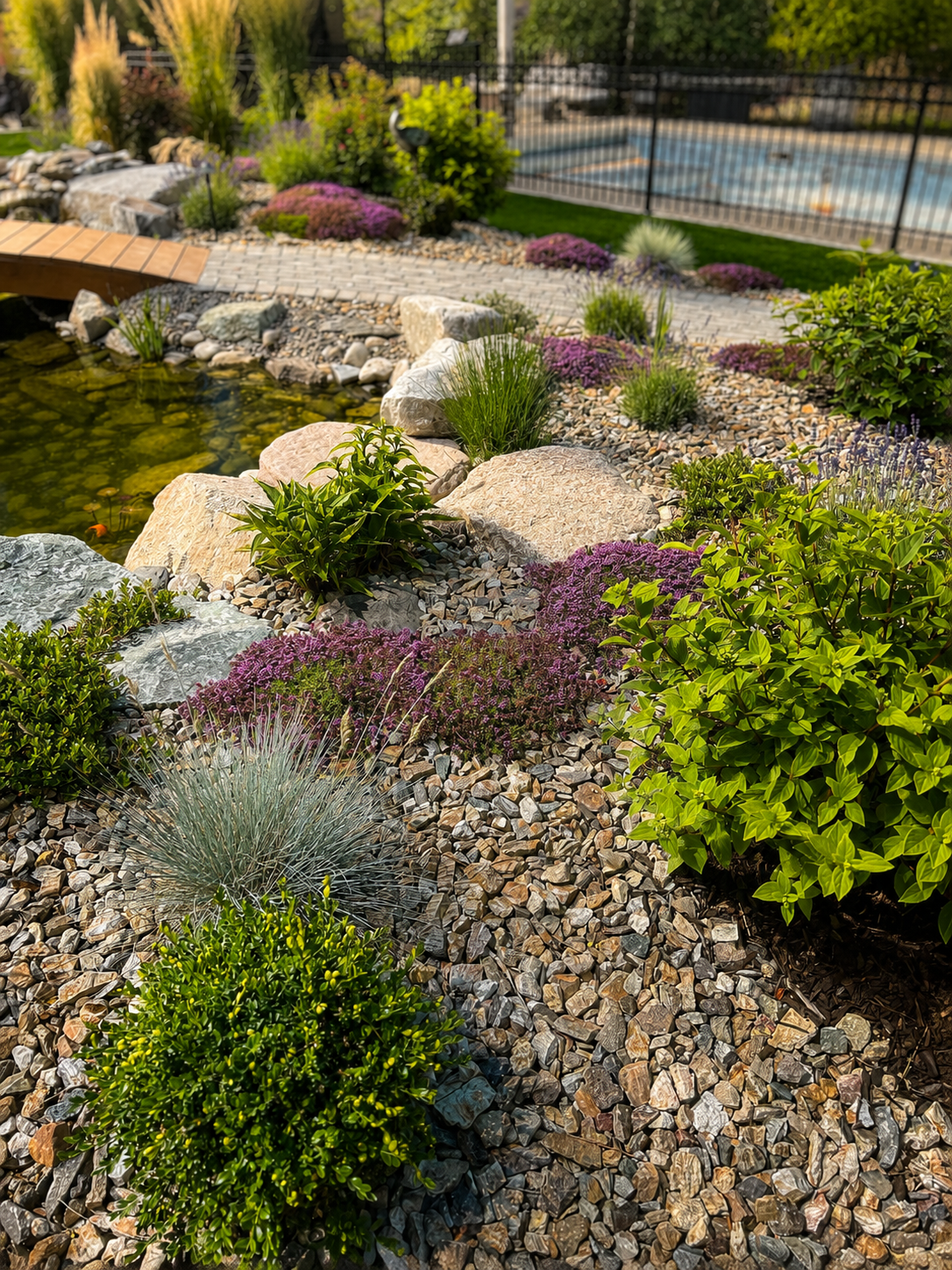
Winter Interest Plants for the Okanagan
A well-planted Okanagan yard doesn’t have to go flat and brown from November to March. Red-stemmed dogwoods, standing ornamental grasses, structural evergreens, and berry-loaded shrubs all hold their own through snow, freeze-thaw, and grey skies — the key is choosing species proven hardy in Vernon’s zone 4b–5b conditions and arranging them so their winter form actually shows.
Plants That Earn Their Keep in Winter
Winter interest isn’t one plant type — it’s a layered combination of stem colour, evergreen structure, standing seed heads, and persistent berries. Here’s what actually performs through an Okanagan winter, organized by the job each plant does in the landscape.
Stem Colour: Red and Yellow-Twig Dogwood
Red-osier dogwood (Cornus sericea) is native to the Okanagan and the single best plant for winter colour in this climate. Its bare stems turn deep coral-red once the leaves drop, and a mass planting against snow is one of the most striking things you can do in a Vernon front yard for almost no ongoing effort. Yellow-twig dogwood (Cornus sericea ‘Flaviramea’) gives the same effect in chartreuse-gold and pairs well planted alongside the red form for contrast. Both tolerate wet spots, clay soil, and hard winters without complaint. For the brightest stem colour, cut a third of the oldest stems back to the ground each spring — new growth colours up best.
Evergreen Structure
Evergreens are what keep a winter landscape from reading as “dead.” Mugo pine (Pinus mugo) is a low, dense conifer that holds its shape under snow load and works well as a foundation planting. Rocky Mountain juniper (Juniperus scopulorum) is genuinely native to the BC interior and brings a blue-green, upright form that reads well against a winter sky. Colorado blue spruce (Picea pungens) and western red cedar / arborvitae (Thuja occidentalis) cultivars are the standard choices for taller evergreen structure and backdrop planting, though cedar hedging needs enough width to avoid winter browning on the exposed side. Compact boxwood cultivars bred for prairie/interior hardiness can also hold small-scale evergreen form near entries and patios.
Ornamental Grasses Left Standing
Rather than cutting grasses back in fall, leave them up — the seed heads and blades catch frost, backlight beautifully in low winter sun, and move in the wind when almost nothing else in the garden does. Feather reed grass (Calamagrostis x acutiflora ‘Karl Foerster’) is the workhorse here: strictly upright, doesn’t flop under snow, and stays attractive well into February. Switchgrass (Panicum virgatum) and little bluestem (Schizachyrium scoparium) add russet and copper tones. Cut all ornamental grasses back to a few inches in early spring before new growth starts.
Berries and Fruit
Winterberry holly (Ilex verticillata) is a deciduous holly that drops its leaves and leaves branches loaded with bright red berries all winter — it needs a male pollinator planted nearby to fruit, so plan for at least one non-berrying companion plant. American cranberrybush viburnum (Viburnum trilobum) holds clusters of red fruit into winter and is fully hardy here. Snowberry (Symphoricarpos albus) is native to the Okanagan and produces clusters of white berries that persist after leaf drop, and its informal habit works well in naturalized planting areas. Rose hips from hardy shrub roses such as Rosa rugosa add another layer of winter colour and are a genuine food source for overwintering birds.
Putting It Together
The strongest winter gardens layer these groups rather than relying on one: an evergreen backbone for year-round mass, dogwood for colour against snow, grasses for movement and texture, and berry shrubs for detail and wildlife interest. As a planting-design guideline, aim for at least one evergreen anchor and one dogwood or berry shrub visible from your main indoor sightlines — the kitchen window and the room you spend the most time in during winter.
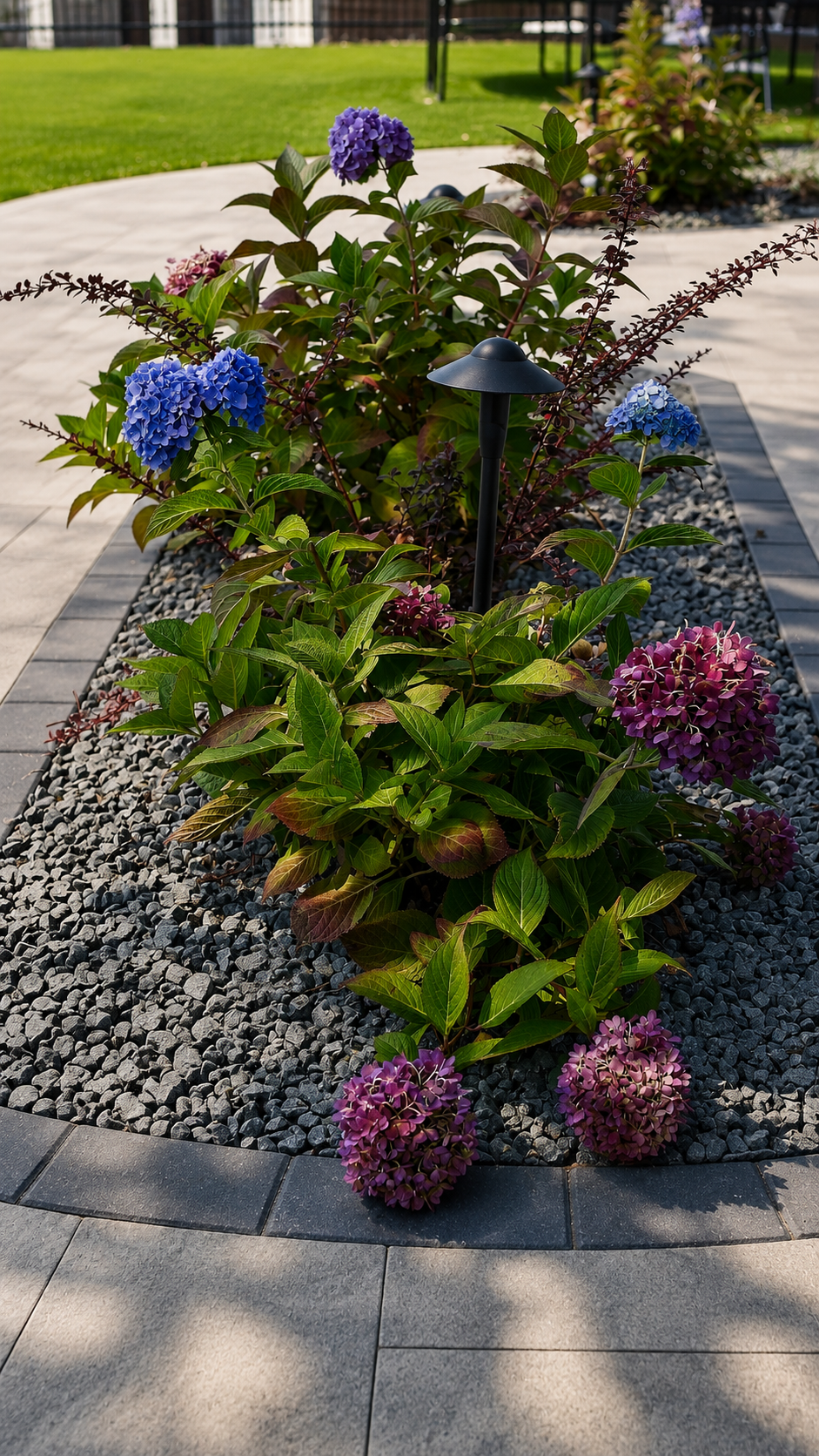
A finished planting bed by Kalagan Outdoor Design
Okanagan-Specific Factors for Planting & Xeriscape Design
Vernon sits mostly in USDA/Canadian hardiness zone 4b–5b, with colder pockets in low-lying areas where cold air settles — always confirm a plant is rated for at least zone 4 before committing to it in those spots. Freeze-thaw cycling through an Okanagan winter is harder on plants than steady cold, so species with proven interior BC track records (like the native red-osier dogwood, Rocky Mountain juniper, and snowberry called out above) tend to outperform coastal-bred cultivars that look similar at the garden centre. The Okanagan’s semi-arid climate also means most of these winter-interest plants are naturally low-water once established, which lets them do double duty in a xeriscape-style planting plan without conflicting with drought-tolerant design goals. Snow load is a real consideration for evergreens near rooflines or walkways — give mugo pine and juniper enough clearance that heavy, wet spring snow doesn’t split branches, and avoid siting brittle evergreens directly under roof snow-shed zones.
Winter-interest planting works best as part of a broader, low-water design — see our Xeriscaping & Planting Design service page for how we build these plant palettes into a full landscape plan. For more real, Okanagan-tested plant lists, see Zone 5 Native Shrubs for the Okanagan, 50 Drought-Tolerant Plants for the Okanagan, and Deer-Resistant Perennials for Vernon.
Want a Yard That Looks Good Year-Round?
Talk to our design team about building a planting plan that carries winter interest alongside your spring, summer, and fall colour.
Explore This Service → Book a Consultation