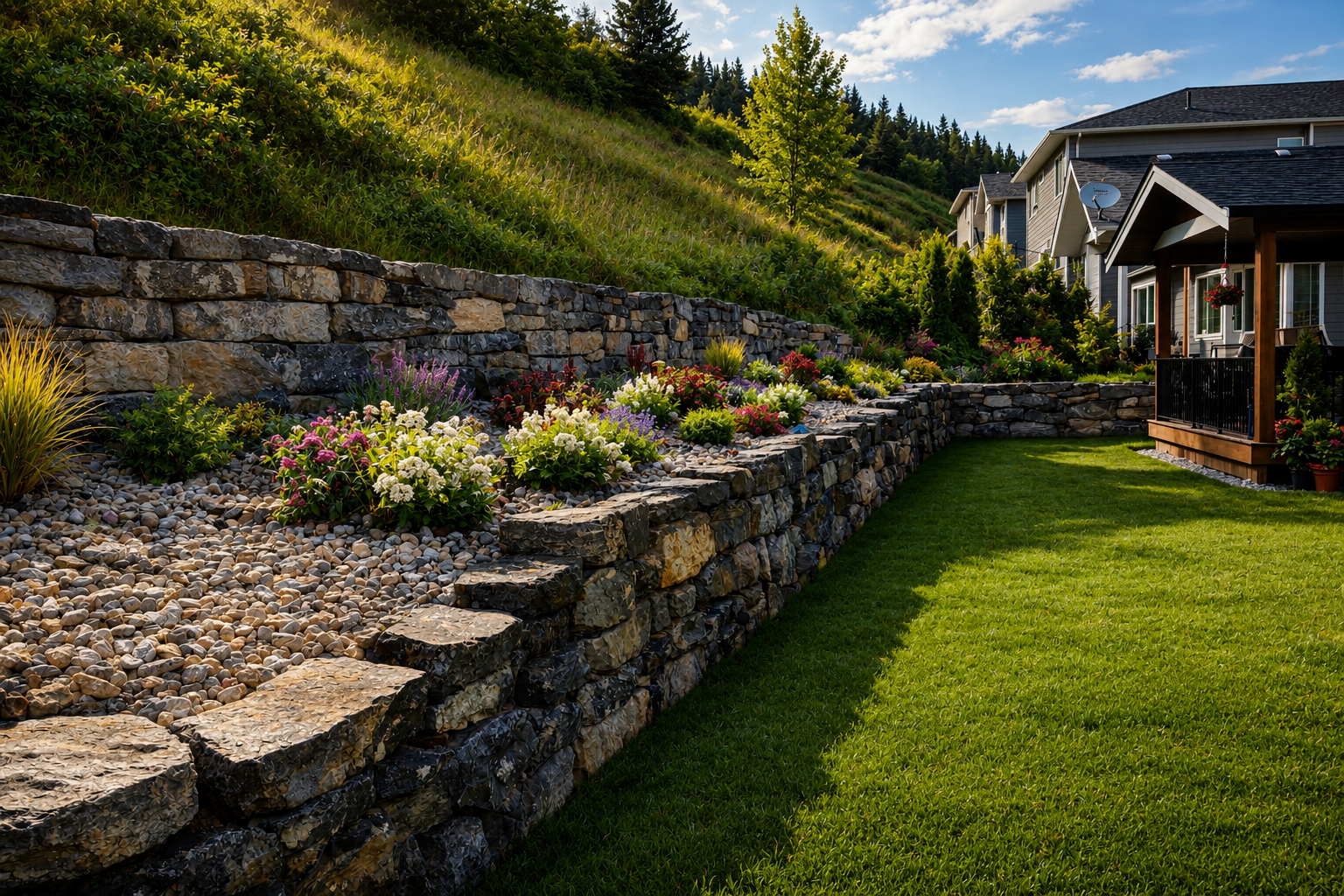
Block vs. Natural Stone Retaining Walls
Segmental block walls cost less and go up faster; natural stone walls cost more but deliver a one-of-a-kind, timeless look. For most Okanagan properties, structural segmental block runs $85-140/sq ft of wall face, while natural stone typically lands at $140-220+/sq ft once you factor in engineering and difficult-access work.
Cost, Speed, Aesthetic, and Engineering Compared
Retaining wall pricing is calculated by wall face — wall length multiplied by average wall height — and both wall types scale up with height, access difficulty, and engineering requirements. Here is how segmental block walls and natural stone walls actually compare on a Kalagan project.
Cost
Across the full range of retaining wall projects we build, small decorative walls run $60-85/sq ft of wall face, structural segmental block walls run $85-140/sq ft, and engineered or difficult-access walls run $140-220+/sq ft — and natural stone almost always lands in that upper band. The gap comes from three things: raw material cost (quarried or reclaimed stone costs more per ton than manufactured concrete units), labour (a skilled mason hand-fitting irregular stone works far slower than a crew setting uniform interlocking block), and engineering (taller natural stone walls more often require a geotechnical or structural engineer to sign off on the design, especially on load-bearing or driveway-adjacent walls).
Segmental block systems use manufactured units engineered to interlock, with built-in setback and drainage features that make it easier to hit a predictable structural rating without a full custom engineering package on every project.
Install Speed
Segmental block walls are faster to build. The units are uniform, so a crew can set courses quickly and consistently, and manufacturer engineering data is often already established for standard wall heights, which shortens the design-approval step. Natural stone walls take longer — each piece is a different size and shape, so a mason has to select, test-fit, and sometimes cut or shim stone to get a tight, stable face. On a comparable wall, expect natural stone construction to take meaningfully longer than block, which also affects labour cost and total project cost.
Aesthetic
This is where the decision often comes down to personal taste rather than budget alone. Segmental block gives you clean, consistent lines and a range of manufactured finishes and colours that read as tidy and modern — a strong fit for contemporary homes, driveway retaining, and tiered patio edges. Natural stone gives you an organic, textured, one-of-a-kind face where no two walls look identical; it tends to suit rustic, estate, or naturalized landscape styles, and it ages and weathers in a way manufactured block does not replicate. Neither is objectively better — it is a style decision layered on top of a budget decision.
Engineering and Longevity
Both wall types can be engineered to hold significant grade change when built correctly with proper base preparation, backfill, and drainage — that is true for either material. What differs is how often engineering is triggered and how forgiving the material is of small settling. Segmental block’s interlocking geometry and manufacturer specs make it easier to standardize; natural stone relies more heavily on the mason’s skill in fitting and setting each piece for long-term stability. Poor drainage behind the wall is the leading cause of failure for both materials, which is why proper drainage design matters as much as the facing material you choose.
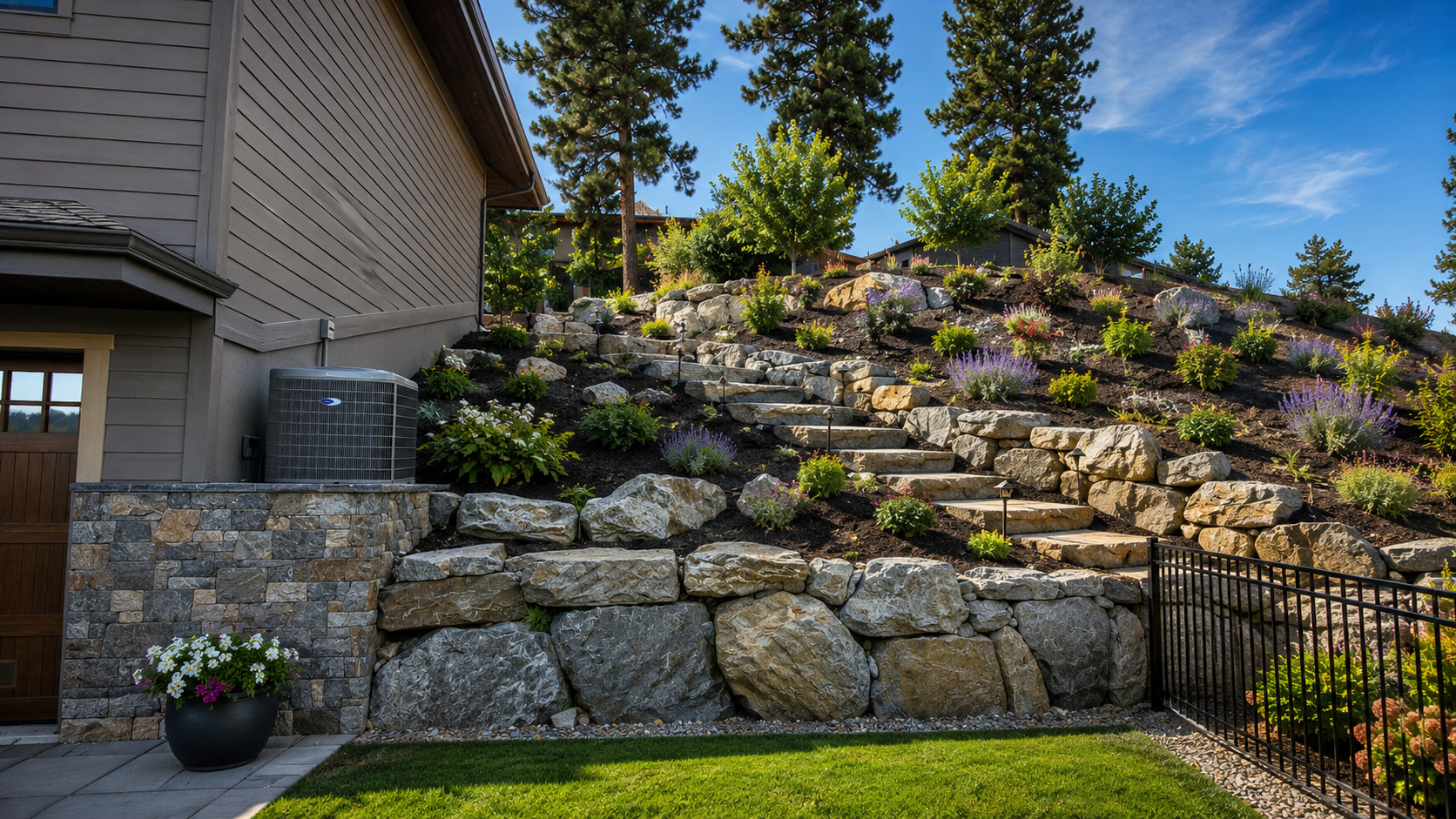
A completed retaining wall build by Kalagan Outdoor Design
Okanagan-Specific Factors for Retaining Walls
Vernon and the wider Okanagan see repeated freeze-thaw cycles through the winter and shoulder seasons, and that cycle is hard on any retaining wall that does not have proper drainage behind it — trapped moisture that freezes and expands can push facing material out of alignment over time, regardless of whether it is block or stone. Good drainage design (gravel backfill, drain tile, and weep points) matters more here than the material choice itself. Many Okanagan properties are also built on sloped or terraced lots, where retaining walls are doing real structural work rather than purely decorative work — on steeper grades or hillside lots with difficult equipment access, expect the universal cost adjustments to apply: limited access adds 10-20%, very difficult or hand-access sites add 20-35%, existing material removal adds 10-25%, and moderate slope adds 10-20%, with steep slope conditions requiring a site consultation before pricing can be finalized. Because many walls here are load-bearing rather than purely aesthetic, engineering sign-off is common on taller walls in either material, and it is worth budgeting for from the start rather than treating it as a surprise add-on.
See Real Retaining Wall Projects
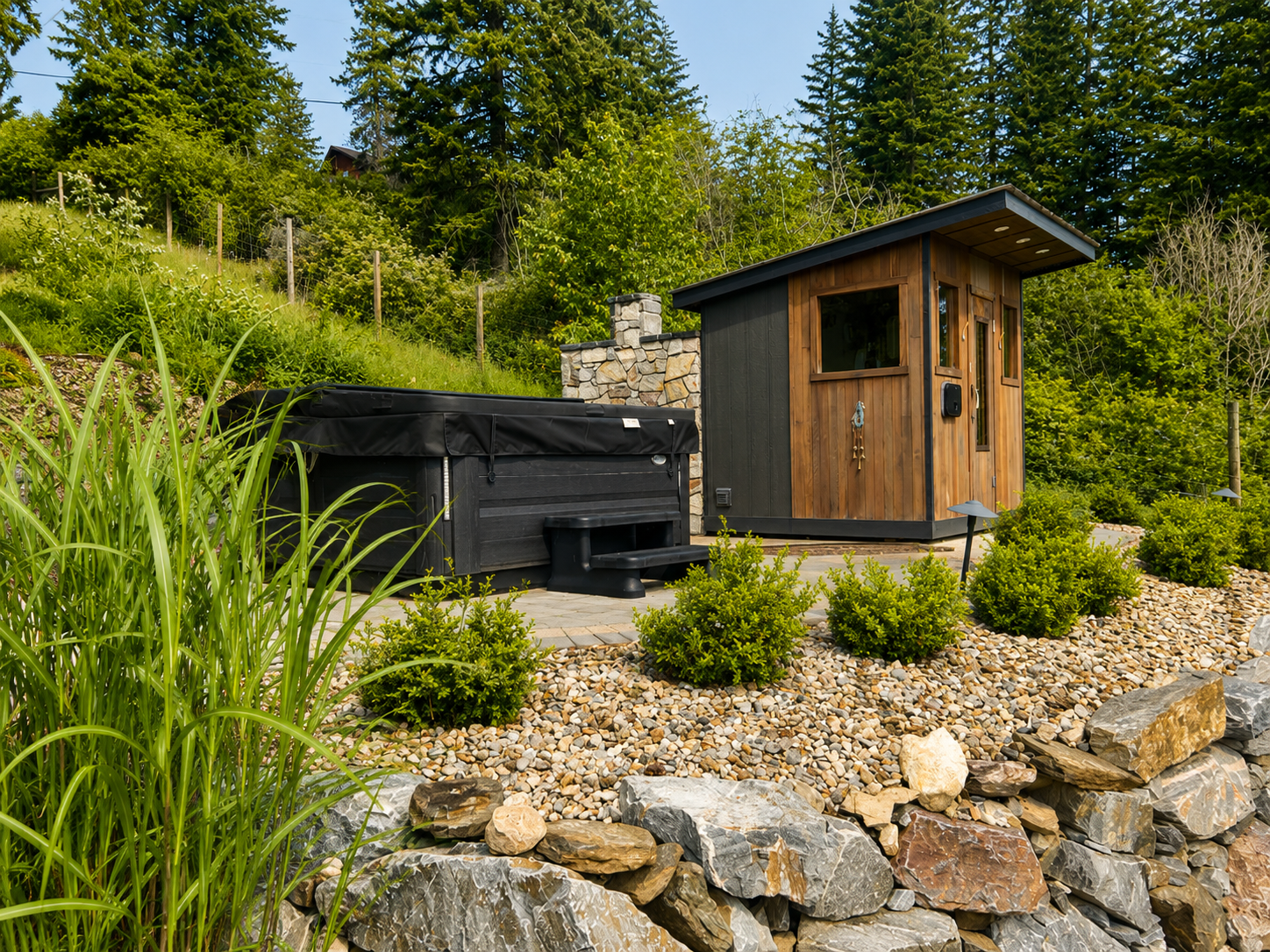
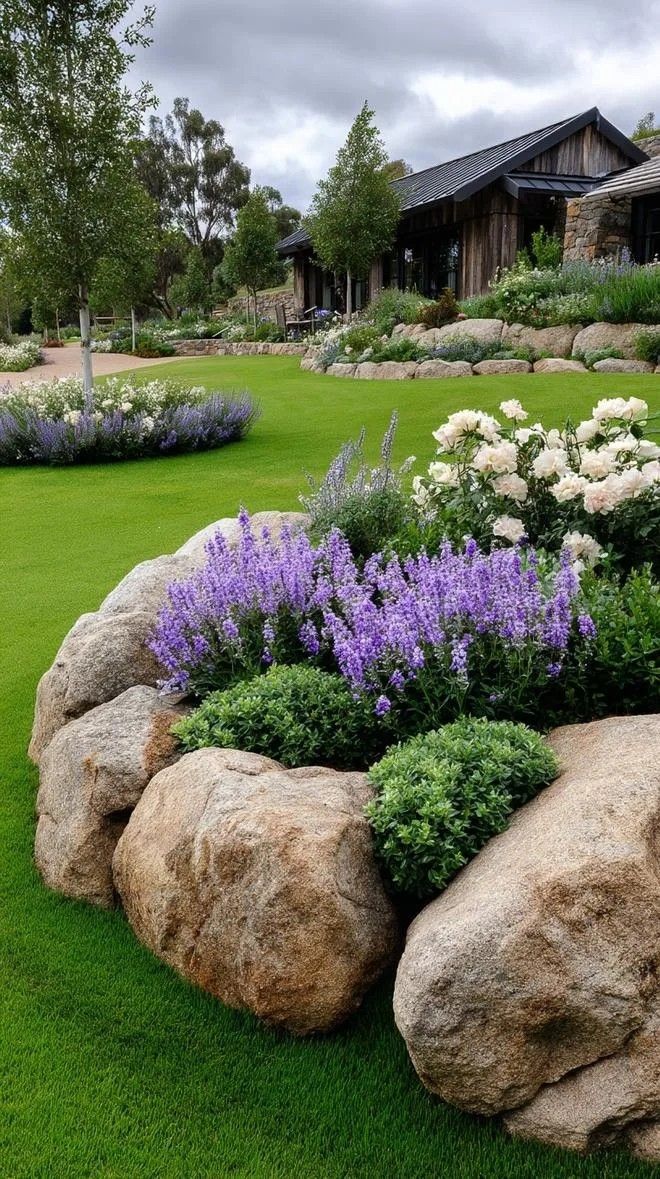
For the full range of wall options and to see project examples, visit our Retaining Walls service page. If you are weighing similar material trade-offs elsewhere on your property, see Paver Patio vs. Natural Stone Patio: Which Is Right for You and Pavers vs. Concrete for Okanagan Patios, both of which walk through the same cost-versus-aesthetic trade-off for hardscape surfaces.
Ready to Get a More Accurate Estimate?
Every retaining wall is different once you factor in your site’s height, access, slope, and material choice — book a consultation and we’ll help you land on the right approach for your property.
Get a More Accurate Project Estimate → Book a Consultation