Coldstream Landscape Bylaws: What Homeowners Should Know
Coldstream’s hillside lots, clay-heavy soils, and shoreline along Kalamalka Lake mean landscape projects here often touch more than one layer of regulation at once. Before you re-grade a slope, build a tall retaining wall, or plan any work near the lake, it’s worth understanding which District of Coldstream approvals typically come into play.
Grading and Drainage
Coldstream’s terrain runs from gentle valley bottom up to steep bench lots overlooking the lake, and a lot of that ground sits on clay-heavy subsoil that doesn’t drain quickly. Because of this, moving significant volumes of soil, altering natural slope, or changing where surface water flows toward a neighbouring property is generally the kind of change local government wants to see reviewed before it happens, not after. This matters just as much for landscaping as for construction: a new patio base, a re-graded planting bed, or a drainage swale can all shift where water goes in a heavy spring melt or summer storm. Homeowners planning anything beyond minor cosmetic grading should expect to discuss drainage plans with the District, particularly on sloped or waterfront lots.
Retaining Walls
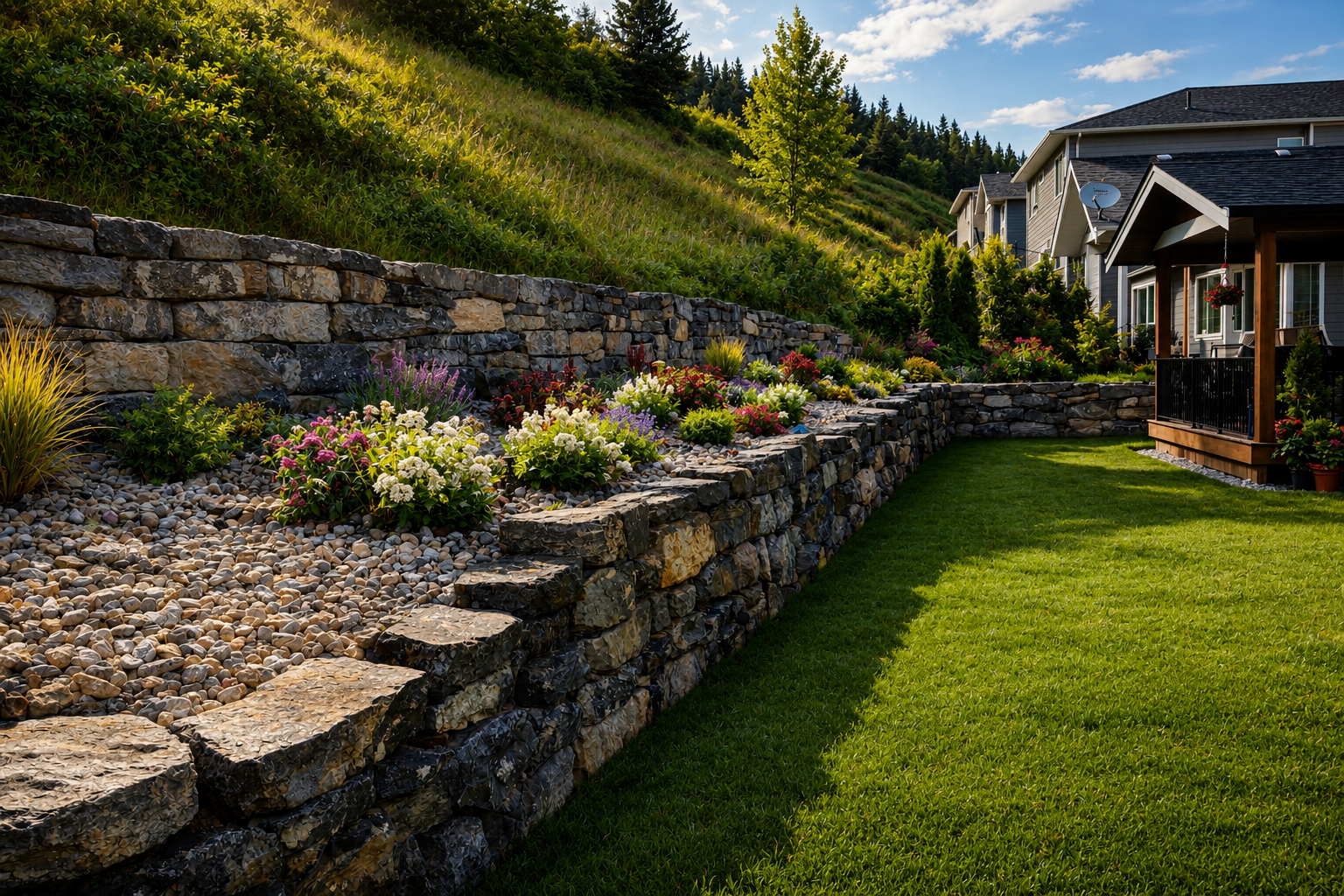
Retaining walls are one of the most common triggers for permit and engineering review on Coldstream properties, largely because so many lots step down toward the lake or up toward the bench. Height is typically the deciding factor: low garden walls are usually straightforward, while taller walls, tiered wall systems, or walls supporting a driveway or structure above them tend to require engineered drawings and District sign-off. Because wall height, setback, and engineering thresholds are set and interpreted by the local government rather than being universal across the province, this is genuinely a “confirm before you build” situation rather than one with a single fixed number. Our companion guide on Retaining Walls Over 4ft: When Is Engineering Required? walks through how that height threshold is generally applied and why it exists.
Waterfront and Shoreline Work Near Kalamalka Lake
Kalamalka Lake’s water quality is one of the region’s defining assets, and shoreline or foreshore work is regulated more tightly than a typical backyard project. Anything that touches the water’s edge, the bank leading down to it, or the riparian vegetation along it usually involves both local government and provincial or federal review, since foreshore areas fall under a different jurisdiction than a standard residential lot. This applies to grading near the bank, retaining walls at the shoreline, and any hard landscaping intended to stabilize or reshape the waterfront. If your Coldstream property has any lake frontage, treat shoreline work as its own approval process, separate from the rest of the yard. Our guide to Okanagan Lake Shoreline Permits: The Foreshore Protocol Explained covers how that layered review generally works, and the logic applies equally to Kalamalka Lake frontage.
A permit-coordinated project by Kalagan Outdoor Design
Okanagan-Specific Factors for Landscape Permits
Coldstream sits in an unusual spot: it’s a lakefront community with a real hillside topography, wrapped in the same dry-summer, wildfire-adjacent climate as the rest of the Okanagan. That combination shapes what a bylaw-conscious landscape plan actually needs to account for. Clay subsoils common through the valley hold water longer than sandy or gravelly ground, which is part of why drainage changes get scrutinized. Steeper lots on the bench above the lake carry more consequence if a retaining wall is under-engineered or grading is done without a plan, since the failure mode isn’t just cosmetic. And because Coldstream borders rural and forested land, properties nearer that interface may also want to weigh FireSmart-conscious landscaping choices alongside their bylaw planning, since defensible-space guidance and municipal rules aren’t the same thing but often need to be satisfied together. None of this is meant to be alarming, it’s simply the reality of designing for this specific municipality rather than treating it like a flat suburban lot.
For property-specific guidance, see our Coldstream location page, or explore our Permit & Regulation Handling and Retaining Walls services. If your property backs onto forested or rural land, our FireSmart Defensive Landscaping service and the Vernon Setback Bylaws for Outdoor Structures guide are also worth a look.
Planning a Coldstream Project?
Book a consultation and we’ll help you understand which approvals your property is likely to need before design work begins.
Book a Consultation →