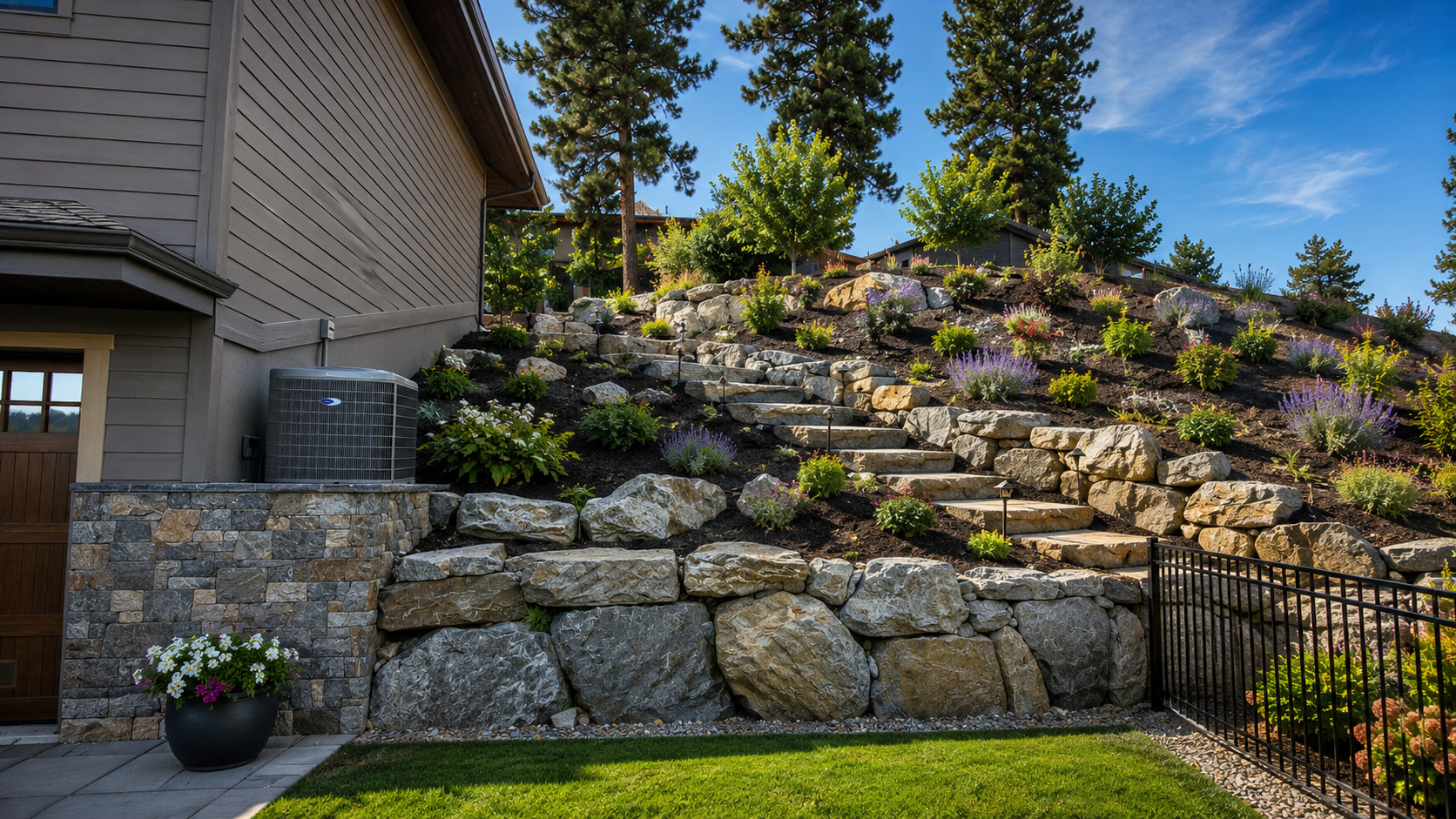
FireSmart Zones: How Landscape Design Fits In
BC’s FireSmart program divides the area around a home into three priority zones, each with its own landscaping goals. Understanding what belongs in Zone 1 versus Zone 2 and Zone 3 is the first step to a yard that’s both beautiful and defensible — and it’s a design conversation as much as a fire-safety one.
The Three Zones, in Plain Language
FireSmart BC’s zone system is built around a simple idea: the closer a combustible material is to your house, the more damage it can do if it ignites. The zones aren’t arbitrary lines — they reflect how embers, radiant heat, and direct flame contact actually behave during a wildfire event.
Zone 1 (0–1.5m / the immediate zone) is the highest-priority area and the one homeowners have the most control over. This is the zone where non-combustible surfaces, careful plant selection, and clearance from siding and eaves matter most. We go deep on exactly what belongs here on our Non-Combustible Zone 1.5m page.
Zone 2 (1.5–10m / the intermediate zone) shifts from elimination to management. Trees and shrubs can stay, but spacing, pruning height, and “ladder fuel” reduction (the low branches and shrubs that let a ground fire climb into a tree canopy) become the priority. This is where hardscape features — patios, pathways, and retaining walls — do double duty as both design elements and fuel breaks. Our Ember-Resistant Hardscape page covers how paver surfaces, gravel beds, and non-combustible edging get used strategically through this zone.
Zone 3 (10–30m / the extended zone) is mostly a forest and vegetation management question rather than a landscape design one — thinning tree density and removing dead fuel. Most residential lots in Vernon, Kelowna, and Lumby only have partial Zone 3 on their own property, with the rest extending onto neighbouring land, crown land, or municipal green space.
Where Landscape Design Actually Fits
The zone system tells you what to remove and what to keep back from the house. It doesn’t tell you what to do instead — that’s the design problem. A FireSmart-informed design plan translates those clearance and spacing rules into an actual yard: which patio material sits where the mulch bed used to be, which drought-tolerant, lower-flammability plants replace the ones that had to move, and how irrigation and lighting get routed around the new layout. Plant choice in particular is its own topic with real nuance around moisture content, resin and oil content, and growth habit — we cover that in detail on our Fire-Resistant Plant Palette page.
Done well, a FireSmart yard doesn’t look like a fire-safety yard. It looks like a well-designed one that happens to also reduce risk — because the same principles that create defensible space (open sightlines, intentional plant groupings, hard surfaces used as design features rather than just utility) are principles good landscape design already leans on.

A permit-coordinated project by Kalagan Outdoor Design
Okanagan-Specific Factors for Landscape Permits
The Okanagan’s long, dry summers and interface communities — properties that back onto grassland, forest, or steep dry slopes in areas like Lumby, Predator Ridge, Coldstream, and the hillside neighbourhoods around Kelowna — put a meaningful share of local homes inside what’s classified as the wildland-urban interface. That’s the zone where FireSmart planning matters most, and where insurers and local fire departments are increasingly asking homeowners for evidence of mitigation work. Wind patterns through the valley, low summer humidity, and dense dry grass or bunchgrass on undeveloped lots all shorten the margin for error compared to coastal BC. We saw this play out directly in one of our own projects — read the Lumby FireSmart Redesign case study for a real example of the zone system applied to an actual property.
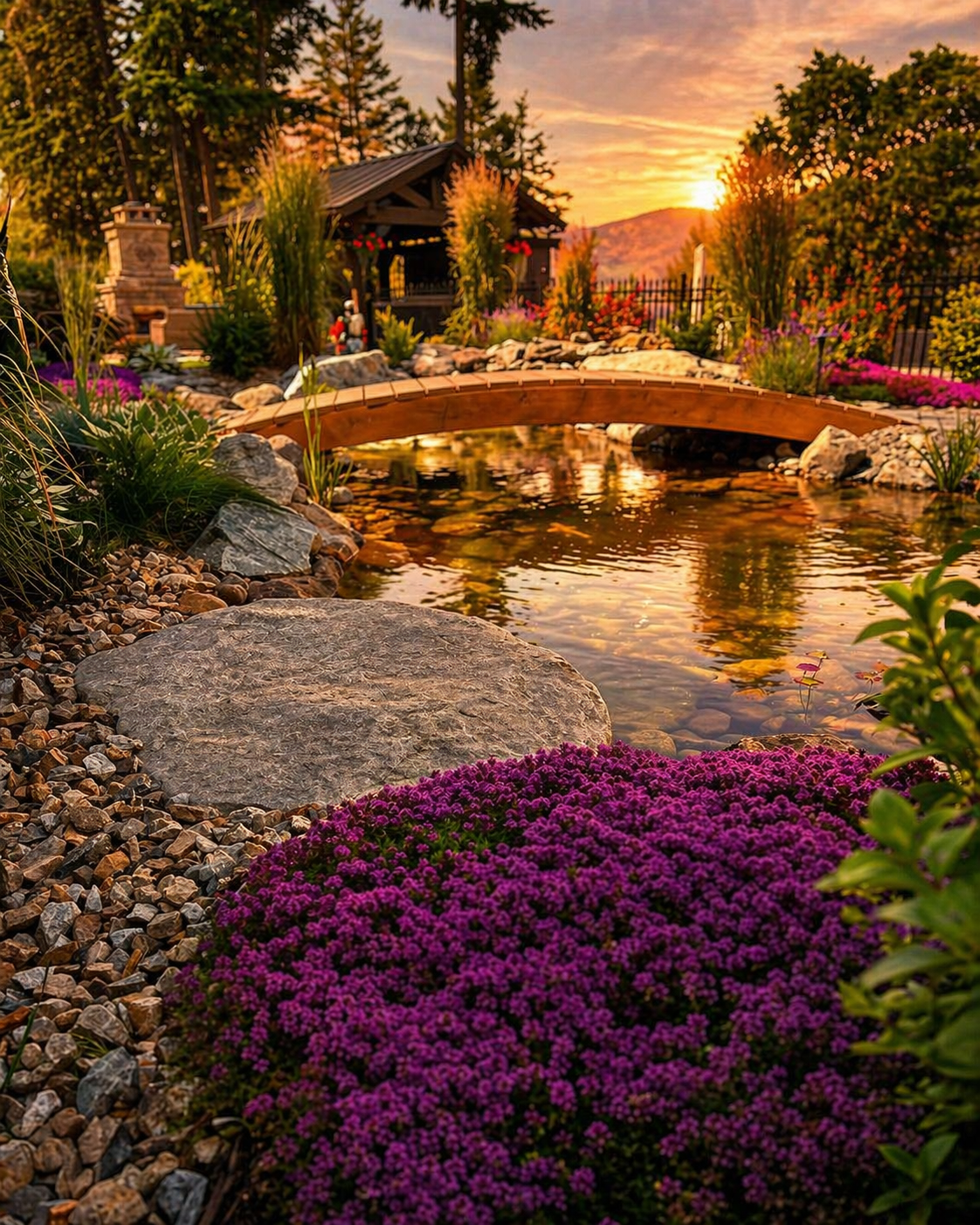
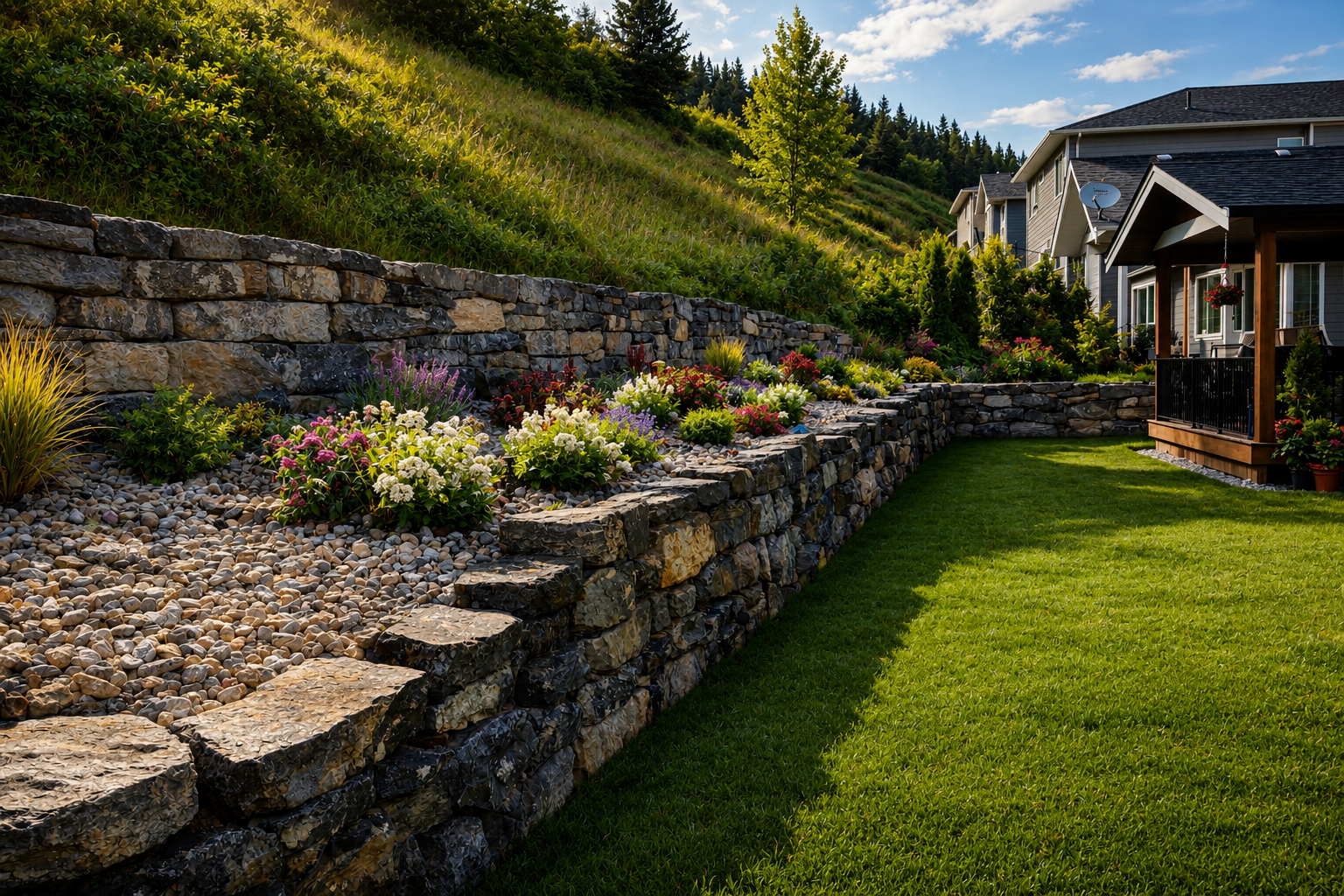
For the full picture of what we build, see our FireSmart Defensive Landscaping service page, or dig into the zone-specific pages linked above for non-combustible surfacing, ember-resistant hardscape, and the fire-resistant plant palette. If your FireSmart project touches a slope, retaining wall, or waterfront lot, our guide on Retaining Walls Over 4ft: When Is Engineering Required? is a useful companion read.
Ready to FireSmart Your Property the Right Way?
Book a consultation and we’ll walk your property zone by zone to design a yard that’s both defensible and genuinely beautiful.
Book a Consultation →