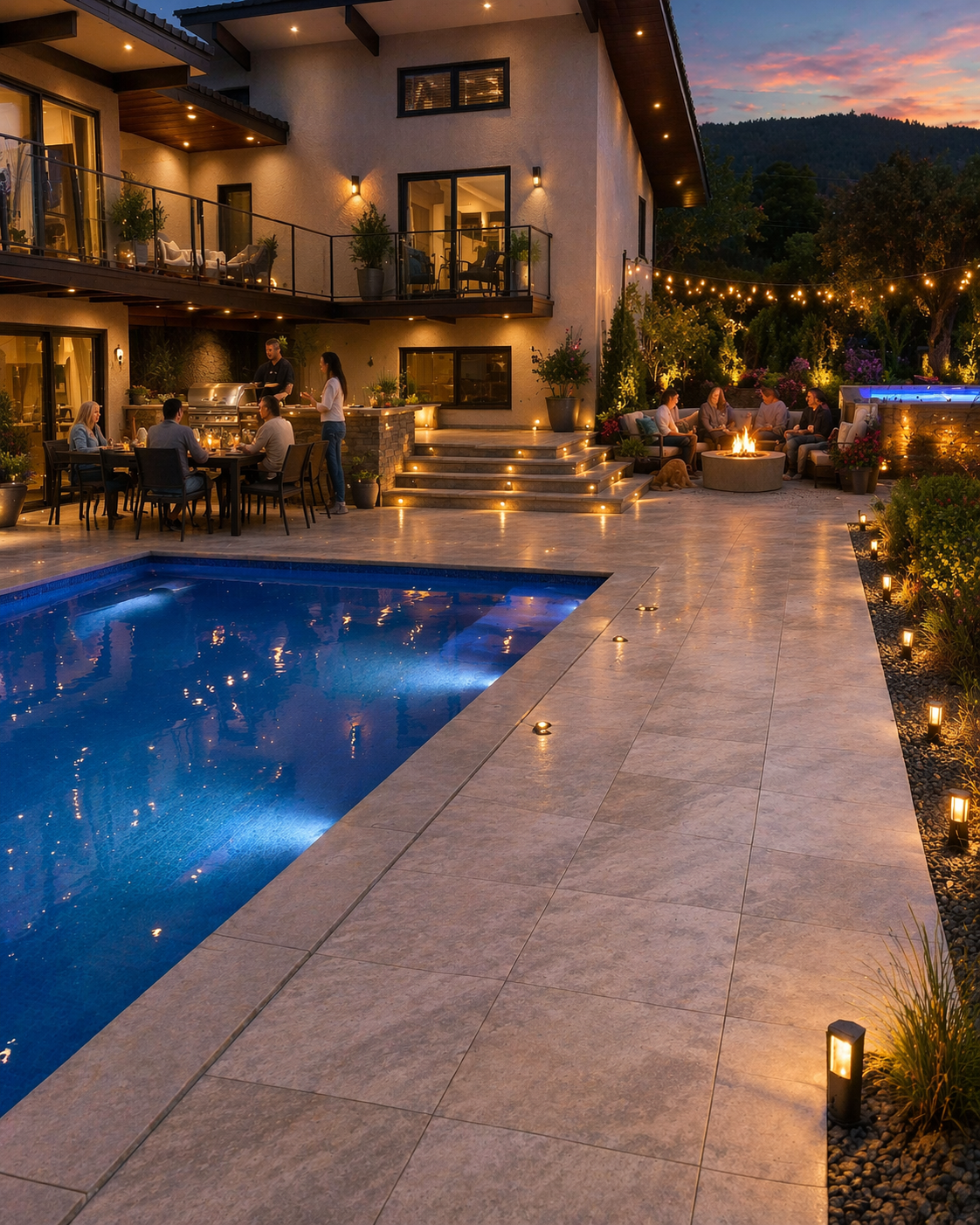
Fiberglass vs. Concrete vs. Plunge Pools: Which Is Right for You
Fiberglass pools install fastest and cost least ($110,000–$225,000 with a landscape package), concrete pools cost the most but offer full custom shape and size ($225,000–$300,000+), and plunge pools fit small or tight lots at a lower budget entry point. The right pick comes down to lot size, how custom you want the shape, and how much of the $110,000–$300,000+ range you’re working with.
Fiberglass Pools
A fiberglass pool arrives on site as a single pre-manufactured shell and is set into an excavated hole in a matter of days, not weeks — the fastest of the three by a wide margin. That speed is the main draw: less time with an open excavation on the property, a shorter construction disruption, and a lower total cost. The trade-off is customization — you’re choosing from a set of manufactured shapes and sizes rather than designing a shape from scratch, and very large or unusual pool footprints aren’t an option. Fiberglass fits mid-size lots well and pairs naturally with a landscape package (patio, lighting, planting) built around it in the same project.
Best for: Homeowners who want a pool in the ground fast, a lower entry cost within the range, and a proven shape rather than a custom one.
Typical budget: $110,000–$225,000 depending on shell size and whether the deck/landscape package is basic or upgraded. See our fiberglass pools page for shape options and process.
Concrete Pools
A concrete (gunite/shotcrete) pool is built in place, which means the shape, depth, size, and built-in features (tanning ledges, spa integration, custom steps, unusual angles to fit an odd-shaped lot) are all fully custom to the property and the design. That flexibility is why concrete sits at the top of the pricing range — construction takes considerably longer than a fiberglass install, involves more trades and more site time, and the finish (plaster, aggregate, tile) is applied and cured on site rather than manufactured off-site. If the lot is large, irregular, or the design calls for a shape a manufactured shell can’t produce, concrete is the only option that gets there.
Best for: Larger properties, custom shapes or built-in features, and homeowners prioritizing a fully bespoke result over install speed or cost.
Typical budget: $225,000–$300,000+ for a custom concrete pool with an outdoor-living package. See our concrete pools page for design possibilities.
Plunge Pools
A plunge pool is a small, deep-water pool built for cooling off and soaking rather than swimming laps — and its main advantage is footprint. Where a full-size fiberglass or concrete pool needs a meaningful stretch of yard, a plunge pool can fit into a narrow side yard, a compact urban lot, or a smaller Okanagan property where a full pool was never realistic. It’s also the entry point on cost within pool building generally, since less excavation, less shell or concrete volume, and less surrounding deck are involved. What it doesn’t offer is lap-swimming length or a large social gathering space in the water itself.
Best for: Small or tight lots, homeowners who want the cooling/soaking experience of a pool without the footprint or full budget of a swimming pool, and properties where a full-size pool simply won’t fit.
Typical budget: Generally the lower end of the $110,000–$300,000+ pool-building range, scaling with finish and deck package. See our plunge pools page.
Side-by-Side
- Install timeline: Fiberglass fastest, plunge pool close behind (smaller volume of work), concrete slowest.
- Customization: Concrete fully custom, plunge pool custom within a small footprint, fiberglass limited to manufactured shapes/sizes.
- Cost tier: Fiberglass and plunge pools sit toward the lower-to-mid end of the range; concrete sits at the top.
- Lot-size fit: Plunge pool for small/tight lots, fiberglass for standard mid-size lots, concrete for larger or irregular lots that can accommodate a fully custom shape.
Whichever direction fits, these figures are early budget ranges, not formal quotes — final pricing depends on site access, existing conditions, excavation, grading, drainage, material selections, engineering, permits, and the final approved design. Deck-only work (if you’re adding or replacing a deck around an existing pool) runs separately: $25–35/sq ft for concrete, $30–60/sq ft for pavers, or $65–100+/sq ft for natural stone.
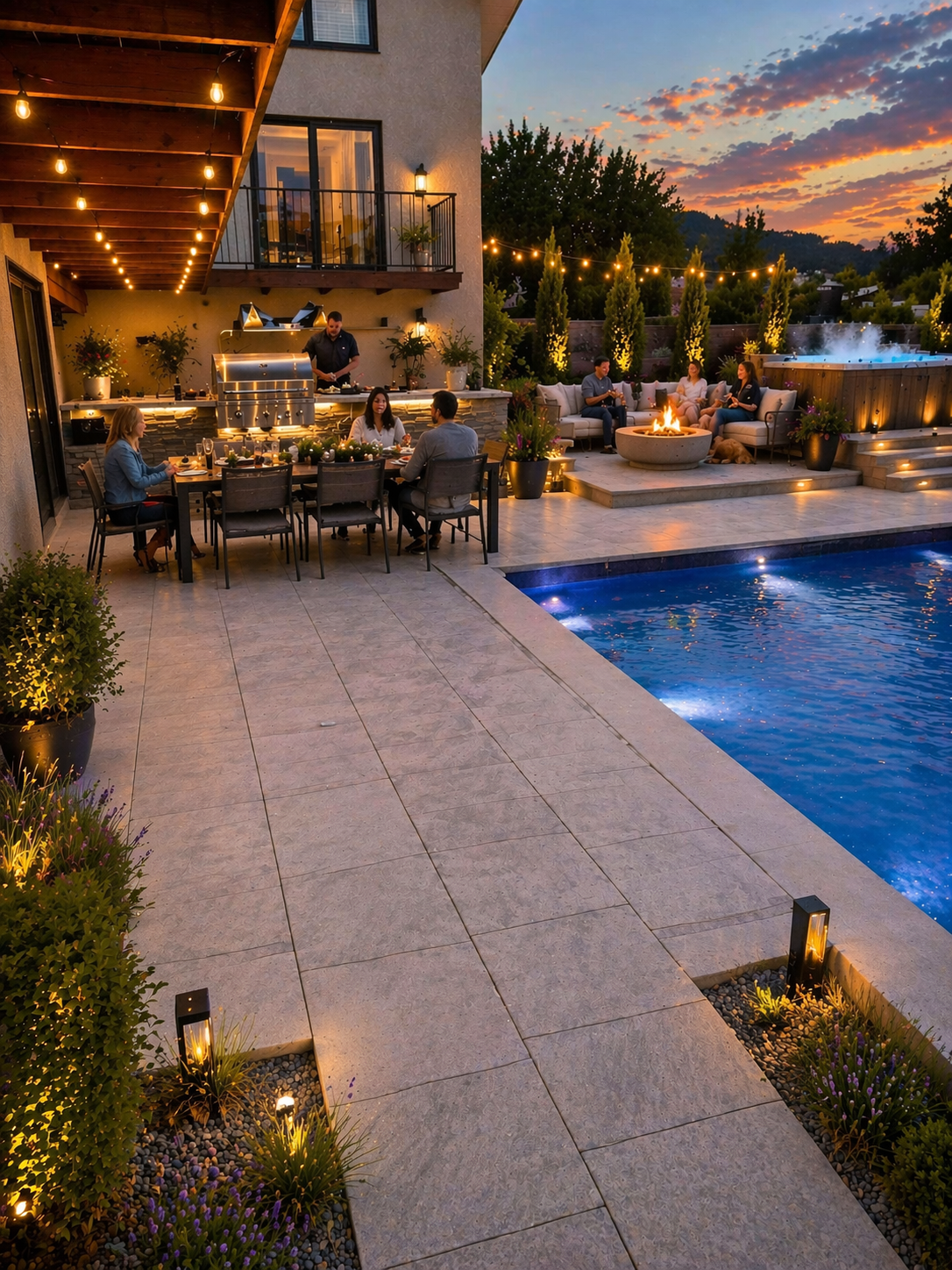
A completed pool build by Kalagan Outdoor Design
Okanagan-Specific Factors for Pool Building
Vernon’s freeze-thaw winters affect all three pool types differently. Fiberglass shells flex slightly with ground movement and handle freeze-thaw cycling well; concrete pools need proper engineering, rebar, and control joints to resist cracking as the surrounding soil expands and contracts through winter; plunge pools, being smaller and often shallower, need the same frost-depth footing and drainage attention as any in-ground structure despite the smaller size. Sloped or hillside lots — common through Vernon, Coldstream, and the Lake Country/West Kelowna hillside areas — add engineering and access complexity for all three, but concrete’s built-in-place construction generally adapts to difficult grading more readily than a fiberglass shell, which needs a relatively clean, accessible excavation to set correctly. Limited-access lots (narrow side yards, no crane access) can rule out a large fiberglass shell delivery entirely, which is often where a plunge pool or a concrete pour becomes the practical choice. All in-ground pools also require permitting, which we handle as part of the process on any pool project.
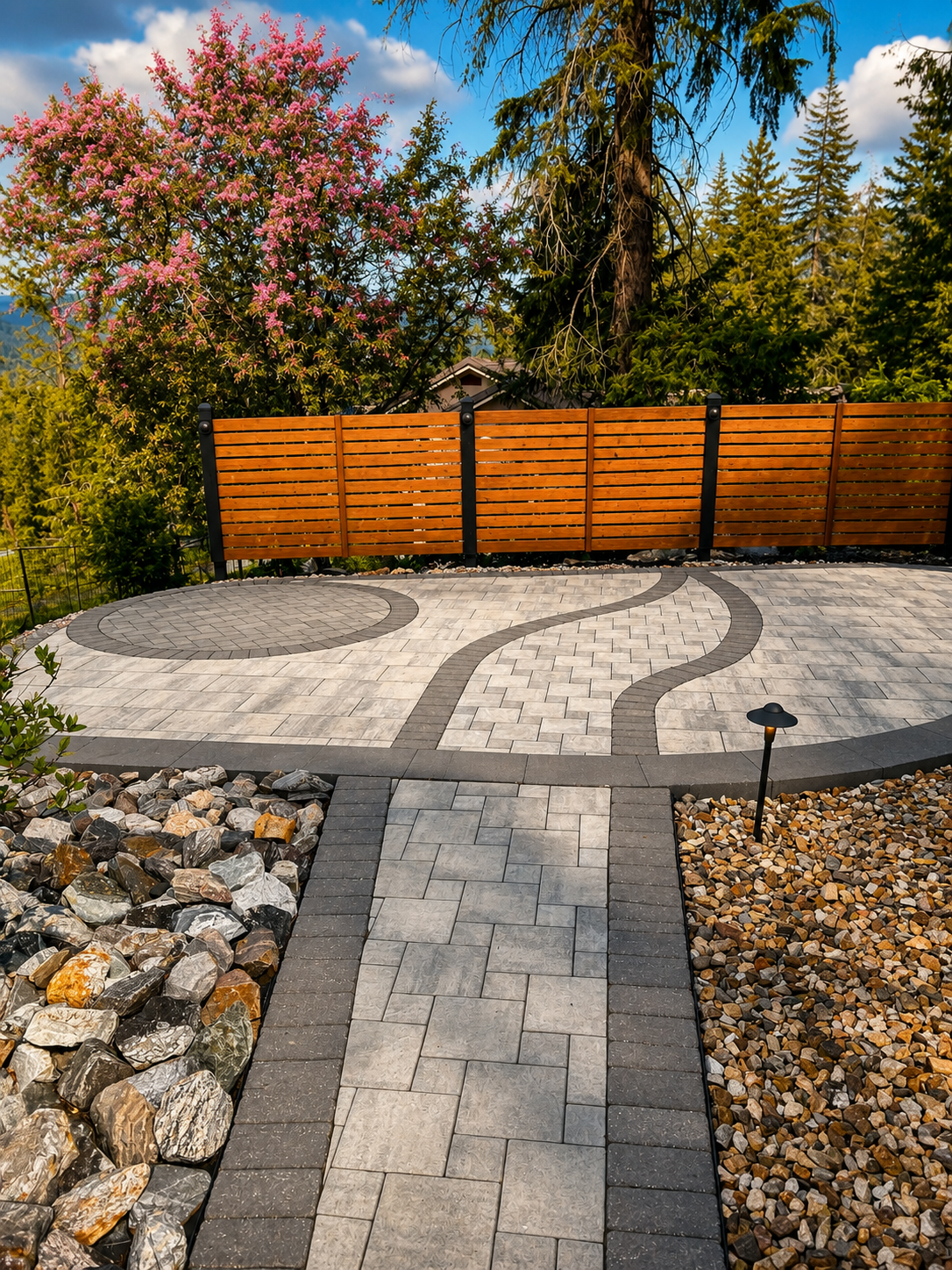
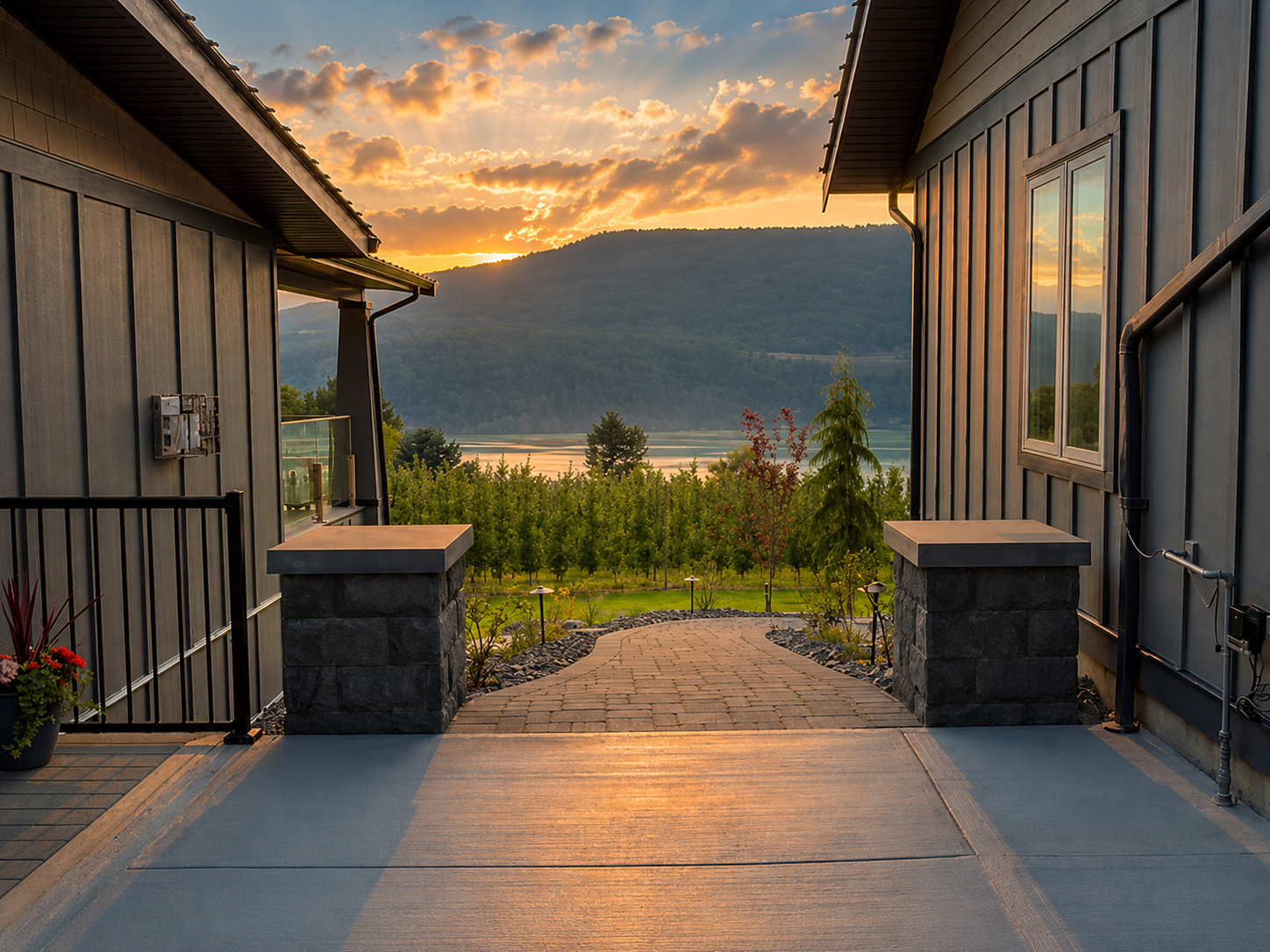
See the full Pool Building service page for our process from design through permitting and construction. If you’re comparing material trade-offs elsewhere on the property, Pavers vs. Concrete for Okanagan Patios and Paver Patio vs. Natural Stone Patio walk through similar cost-versus-customization decisions for the deck and patio areas around a pool.
Ready to Get a More Accurate Estimate?
Tell us about your lot and priorities and we’ll help you land on the pool type that actually fits.
Get a More Accurate Project Estimate → Book a Consultation